Introduction: The Unexpected Celtic Connection
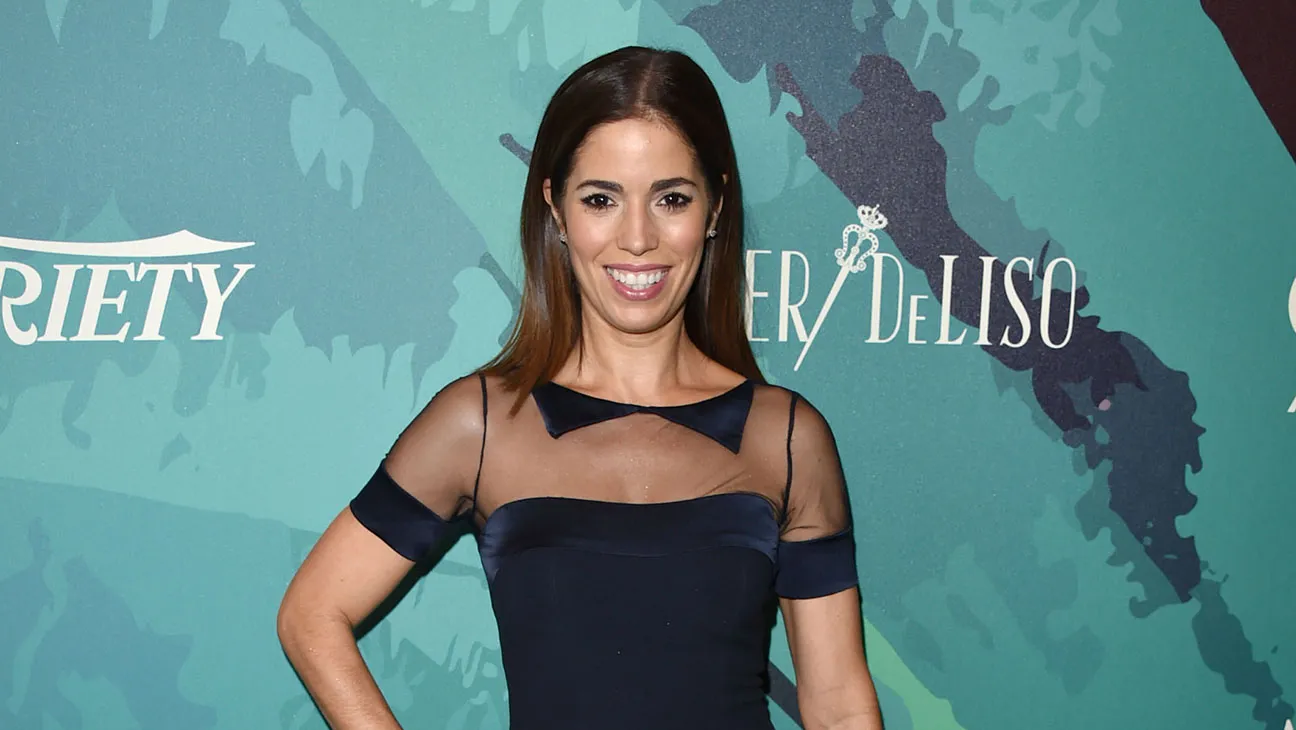
Right, let’s address the elephant in the room—or should I say, the shamrock in the studio. When you think of Ana Ortiz, you probably picture her as the fierce and fabulous Hilda Suarez from “Ugly Betty,” bringing all that Caribbean warmth and New York sass to our screens. Born January 25, 1971, in the Big Apple, Ortiz has built a career that’s as diverse as her heritage, starring in everything from “Devious Maids” to “Promise Land.”
But here’s the plot twist that’s better than anything on her CV: Ana Ortiz has Irish ancestry running through her veins. I know, I know—you’re probably thinking, “Hold on a minute, isn’t she Puerto Rican?” Well, yes, and that’s what makes her story so brilliantly complicated and wonderfully Irish in its own way. Because if there’s one thing the Irish understand, it’s that identity is rarely straightforward, and family trees are more like family forests.
Born to a Puerto Rican mother and an Irish-American father, Ortiz represents the kind of gorgeous cultural collision that makes America what it is—a place where corned beef and arroz con gandules might share the same dinner table, and where St. Patrick’s Day and Three Kings Day are both reasons to throw a proper party.
Understanding Ana’s Irish heritage isn’t just about ticking boxes on a genealogy chart—it’s about appreciating how multiple cultural threads weave together to create something entirely unique. It’s about recognizing that you can carry the spirit of the Emerald Isle while also embodying the passion of the Caribbean, and that both identities can coexist without one diminishing the other.
So pull up a chair (preferably near the fireplace, as the Irish prefer), and let’s explore how a lass from New York City ended up connecting with ancestors from a rainy island thousands of miles away, and how that connection has enriched both her artistry and her advocacy for representation in Hollywood.
From Stage to Screen: The Ana Ortiz Story
Before we dive into the genealogy rabbit hole, let’s talk about what Ana Ortiz has accomplished—because trust me, it’s impressive enough to make any Irish grandmother brag about her at the local parish.
Ana’s big break came with “Ugly Betty,” where she played Hilda Suarez with such warmth and humor that she practically became everyone’s favorite sister-in-law. That role wasn’t just a job—it was a cultural moment, showcasing the complexity and vibrancy of Latina characters at a time when Hollywood was still figuring out that maybe, just maybe, people of color could be more than stereotypes and sidekicks.
But Ortiz didn’t stop there. She went on to star in “Devious Maids,” “Promise Land,” and “The Last Rescue,” proving her range across genres and formats. She’s the kind of actress who can make you laugh one minute and break your heart the next—a skill that, as we’ll discuss, might just have something to do with her Irish roots.
Beyond acting, Ana’s become a proper advocate for diversity in media—not just the “we need more representation” talk that sounds good at award shows, but the real work of pushing for authentic storytelling that reflects actual human experiences. She’s used her platform to challenge stereotypes and promote understanding, which, if you ask me, is very Irish. We’re a people who’ve spent centuries fighting to be seen as we actually are, not as others imagine us to be.
This commitment to authenticity and representation? That’s going to be important as we explore how her dual heritage—Irish and Puerto Rican—has shaped her worldview and her art.
Why Your Family Tree Matters (Even the Confusing Branches)
Let’s have a quick philosophical moment here, because understanding why ancestry matters is crucial before we go digging through parish records and DNA tests.
Your heritage isn’t just a collection of dates and names that make your eyes glaze over at family reunions. It’s the accumulation of every struggle, every triumph, every terrible decision and stroke of luck that led to you existing. It’s your great-great-grandmother choosing to get on that boat to America. It’s your great-uncle deciding to stay when everyone else left. It’s every small choice that cascaded through generations to create you.
For people with mixed heritage like Ana Ortiz, this becomes even more layered and fascinating. She’s not just drawing from one cultural well—she’s got access to multiple traditions, multiple ways of seeing the world, multiple sets of ancestors whispering wisdom (and occasionally nonsense) in her ears.
This multiplicity of identity isn’t a confusion—it’s a gift. It means you can celebrate both Día de los Reyes and St. Patrick’s Day. It means you understand that identity isn’t either/or but gloriously and messily both/and. It means you’ve got twice the family stories, twice the cultural recipes, and twice the excuses to throw parties.
In Ana’s case, acknowledging her Irish ancestry alongside her Puerto Rican heritage doesn’t dilute either—it enriches both. It creates a more complete picture of who she is and where she comes from. And in a world that too often wants to put people in neat little boxes, celebrating the messy reality of mixed heritage is itself a revolutionary act.
The Ortiz Family: Where Two Worlds Collide
Now let’s get into the good stuff—the family history that reads like it was designed to prove that love knows no borders and culture is meant to be shared.
Ana’s mother, a proud Puerto Rican native, brought the warmth of Caribbean culture into the family—the music, the food, the storytelling tradition that treats every family gathering like a theatrical performance (in the best possible way). Her father, an Irish-American, carried with him the traditions and values of the old country—the stubbornness, the dark humor, the tendency to express affection through gentle mockery and overly strong tea.
Imagine the household where young Ana grew up: arroz con gandules simmering on the stove next to a pot of Irish stew. Salsa music competing with Celtic folk songs. A mother who solved everything with warmth and a father who approached life with that particularly Irish combination of pragmatism and whimsy.
This wasn’t just cultural diversity—this was a masterclass in navigating multiple identities. From her father, Ana inherited that Irish sense of determination and community, that understanding that you stick by your people no matter what. From her mother, she got the creativity, the passion, the understanding that life is too short not to celebrate it with music and dancing.
The values her parents instilled—hard work, loyalty, creativity, authenticity—these weren’t Irish values or Puerto Rican values. They were human values, expressed through the particular lenses of two beautiful cultures. And Ana learned to draw from both, creating her own unique perspective that would later inform her work as an artist and advocate.
Growing up in New York City, that gorgeous melting pot where every block can feel like a different country, only added to this rich tapestry. Ana didn’t just learn to navigate between cultures—she learned to embrace the spaces between, the hybrid identities that are becoming increasingly common in our interconnected world.
The Irish Story: From Famine to Freedom
To understand Ana’s Irish roots, we need to take a quick trip through Irish history—don’t worry, I’ll make it painless. Well, as painless as Irish history can be, which isn’t very, but I’ll try.
The Irish exodus, particularly during the 19th and early 20th centuries, was driven by a perfect storm of misery: famine, poverty, political oppression, and the kind of systematic mistreatment that would make anyone want to board a leaky ship to anywhere else. The Great Famine of the 1840s—which was less “act of God” and more “catastrophic policy failure”—sent over a million Irish people fleeing across the Atlantic.
These weren’t organized migrations with welcome committees and housing assistance. These were desperate journeys on “coffin ships” (a name that tells you everything you need to know about survival rates). Those who survived arrived in places like New York to find “No Irish Need Apply” signs and discrimination that would make modern employment law attorneys weep.
But here’s where that legendary Irish stubbornness comes in. Despite facing poverty, prejudice, and conditions that would break lesser spirits, Irish immigrants built communities, supported each other, and gradually carved out space in their new homes. They became police officers, firefighters, politicians, and yes, entertainers—bringing their storytelling traditions to new audiences.
The Irish diaspora spread Irish culture, music, traditions, and values across the globe. In doing so, they created this fascinating thing where you can find Irish pubs in Tokyo, St. Patrick’s Day celebrations in Buenos Aires, and millions of Americans like Ana’s father carrying Irish identity even generations after their ancestors left the Emerald Isle.
This history of migration, resilience, and cultural preservation—that’s part of Ana’s inheritance. It’s in her DNA, both literally and figuratively.
The Irish Spirit: Music, Meaning, and Malarkey
Irish culture isn’t just about the past—it’s a living, breathing tradition that continues to evolve while honoring its roots. And for people like Ana, connecting with Irish heritage means engaging with these cultural touchstones.
Let’s start with the obvious: the music. Irish music isn’t background noise—it’s storytelling set to melody. Whether it’s a mournful ballad about leaving home or a jig that makes you want to dance despite having two left feet, Irish music carries emotion in a way that transcends language. The fiddle, the bodhrán, the tin whistle—these aren’t just instruments; they’re vessels for generations of joy, sorrow, and everything in between.
Then there’s the language. Gaelic (or Irish, depending on who you ask and how pedantic they’re feeling) is experiencing a renaissance. While English dominates, many families encourage learning Irish as a way to connect with heritage. It’s not just about communication—it’s about preservation, about refusing to let a language die just because conquerors tried to kill it.
Irish dance deserves its own paragraph because, let’s be honest, it’s spectacular. From traditional step dancing to Riverdance-style theatrical productions, Irish dance embodies the culture’s spirit—controlled yet wild, traditional yet innovative, serious yet joyful.
And the art! From ancient Celtic knots that still make modern graphic designers jealous to contemporary Irish literature that wins Nobel Prizes, artistic expression is woven into Irish identity. The storytelling tradition, in particular, is sacred—because for a people who spent centuries under oppression, stories were how you preserved history, passed down wisdom, and maintained identity when everything else was being taken away.
For Ana, these cultural influences provide additional layers to draw from in her work. The Irish emphasis on storytelling, on finding humor in darkness, on community and loyalty—these align beautifully with the storytelling traditions of Puerto Rican culture, creating a rich palette of influences.
Ana’s Irish Journey: From Heritage to Heart
For Ana Ortiz, Irish ancestry isn’t just a fact on a family tree—it’s a living connection that she actively nurtures and celebrates.
Growing up in a culturally diverse household meant Irish traditions were woven naturally into family life. St. Patrick’s Day wasn’t just an excuse to wear green and drink (though let’s be honest, it’s definitely that too)—it was a genuine celebration of her father’s heritage. Ana recalls childhood memories of parades filled with bagpipes and green-clad revelers, of traditional Irish dishes appearing on the dinner table alongside Puerto Rican specialties.
And she hasn’t let that connection fade with adulthood. Ana continues the tradition of celebrating St. Patrick’s Day with gatherings where friends and family share classic Irish dishes—corned beef and cabbage making an appearance alongside more contemporary interpretations. It’s this blending of old and new, traditional and modern, Irish and Puerto Rican, that defines her approach to heritage.
But Ana’s connection goes deeper than annual celebrations. She’s actually traveled to Ireland, walking the streets her ancestors might have walked, experiencing the landscapes that shaped their worldview before they ever boarded a ship to America. These journeys aren’t just tourism—they’re pilgrimage, a way of honoring the people whose choices led to her existence.
In interviews, Ana has spoken movingly about visiting Dublin for the first time: “Walking the streets of Dublin, I felt an undeniable connection to my great-grandparents. Their stories are interwoven with mine, and it was enlightening to witness the landscapes that shaped their lives.”
This isn’t performative heritage appreciation—it’s genuine connection. Ana actively explores family history, connects with distant relatives, and engages with Irish communities to ensure that her Irish roots remain a vital part of her identity. She understands that heritage isn’t passive; it requires active participation to keep it alive across generations.
How Irish Roots Shape Hollywood Roles
Now here’s where it gets really interesting: How does having Irish ancestry influence an actress who’s primarily known for playing Latina characters? The answer is more complex and beautiful than you might think.
Ana has openly credited her diverse heritage—including her Irish roots—for shaping her approach to acting and storytelling. In her words: “Embracing my Irish roots has been a journey of self-discovery. It enriched my understanding of identity and significantly shaped my artistic expression.”
That Irish storytelling tradition—the emphasis on emotional honesty, on finding humor in tragedy, on the complexity of human experience—these align perfectly with Ana’s commitment to authentic representation. Irish culture has spent centuries fighting to be portrayed accurately rather than as caricatures. That struggle for authentic representation resonates deeply with Ana’s advocacy for better Latina representation in media.
The Irish gift for balancing light and dark, comedy and tragedy, is evident in Ana’s performances. Watch her work and you’ll see characters who can break your heart and make you laugh, often in the same scene. That emotional range, that refusal to be one-dimensional—that’s drawing from multiple cultural wells.
Beyond her acting, Ana’s Irish heritage informs her advocacy work. She’s been vocal about the need for diversity in Hollywood, for stories that reflect the actual complexity of people’s identities. She champions projects featuring diverse storylines because she understands personally that people contain multitudes—that you can be both Irish and Puerto Rican, both traditional and modern, both rooted in heritage and reaching toward the future.
As Ana herself noted: “Being part Irish has given me a unique perspective on storytelling. It allows me to draw from a rich history while also connecting with various cultures and experiences. This blend resonates with audiences on many levels.”
In Her Own Words: Ana on Identity
When Ana discusses her Irish ancestry in interviews, you can hear the genuine affection and appreciation in her voice. This isn’t someone checking boxes or name-dropping heritage for publicity—this is someone who’s done the work of understanding where she comes from.
In that pivotal trip to Dublin, Ana experienced something many descendants of immigrants describe: a feeling of homecoming to a place you’ve never been. The streets felt familiar despite being foreign. The humor resonated despite cultural differences. The sense of connection transcended logic and geography.
She’s reflected on how this duality of identity—being both Irish and Puerto Rican—enriches rather than complicates her sense of self. In discussions about diversity in arts, she’s emphasized that her Irish heritage isn’t separate from her Puerto Rican identity; they’re intertwined, each informing and enhancing the other.
This perspective is particularly powerful in an industry that often wants to pigeonhole actors into single identity categories. Ana’s refusal to choose, her insistence that she can honor all parts of her heritage simultaneously, challenges those limiting narratives.
And perhaps most importantly, Ana uses her platform to encourage others to explore their own complex identities. She understands that most people’s stories are messier and more interesting than simple labels suggest, and that embracing that complexity is where true authenticity lives.
Conclusion: The Beautiful Messiness of Mixed Heritage
So what have we learned from Ana Ortiz’s journey through her Irish ancestry? Perhaps most importantly, that identity isn’t simple, heritage isn’t singular, and the most interesting stories come from the spaces where cultures collide and merge.
Ana’s Irish roots, intertwined with her Puerto Rican heritage, create something richer than either culture alone—a hybrid identity that’s becoming increasingly common in our interconnected world. She represents a future where people can honor multiple ancestries without diminishing any of them, where St. Patrick’s Day and Three Kings Day can coexist on the same family calendar.
Her story reminds us that celebrating diversity isn’t just about acknowledging that different people exist—it’s about recognizing that within each person exists beautiful diversity. We’re all complex tapestries woven from multiple threads, and pulling on one thread doesn’t unravel the others.
In today’s world, where people are increasingly mobile, where families span continents, where love crosses borders and cultures mix freely, Ana’s story feels both unique and universal. She’s navigating something many of us are experiencing: the challenge and joy of honoring multiple heritages, of being both/and rather than either/or.
By embracing her Irish ancestry alongside her Puerto Rican roots, Ana doesn’t just enrich her own identity—she creates space for others to do the same. She models how to celebrate heritage without hierarchy, how to honor the past while living fully in the present, how to draw strength from multiple cultural traditions.
And isn’t that beautifully, messily, perfectly human?
So here’s to Ana Ortiz—actress, advocate, Puerto Rican, Irish-American, New Yorker, and proof that the best stories come from refusing to fit into neat categories. Here’s to families that blend cultures like ingredients in a recipe, creating something new while honoring what came before. Here’s to the Irish spirit living on in unexpected places, carried by unexpected people, continuing to influence the world in ways the original immigrants could never have imagined.
As the Irish would say: Sláinte to diversity, to heritage, to the gorgeous complexity of identity in the modern world. And as Ana’s Puerto Rican side might add: ¡Salud!
Now, who’s up for celebrating with both Irish whiskey and Puerto Rican rum? Because if Ana’s taught us anything, it’s that we don’t have to choose.
Shop new arrivals
-
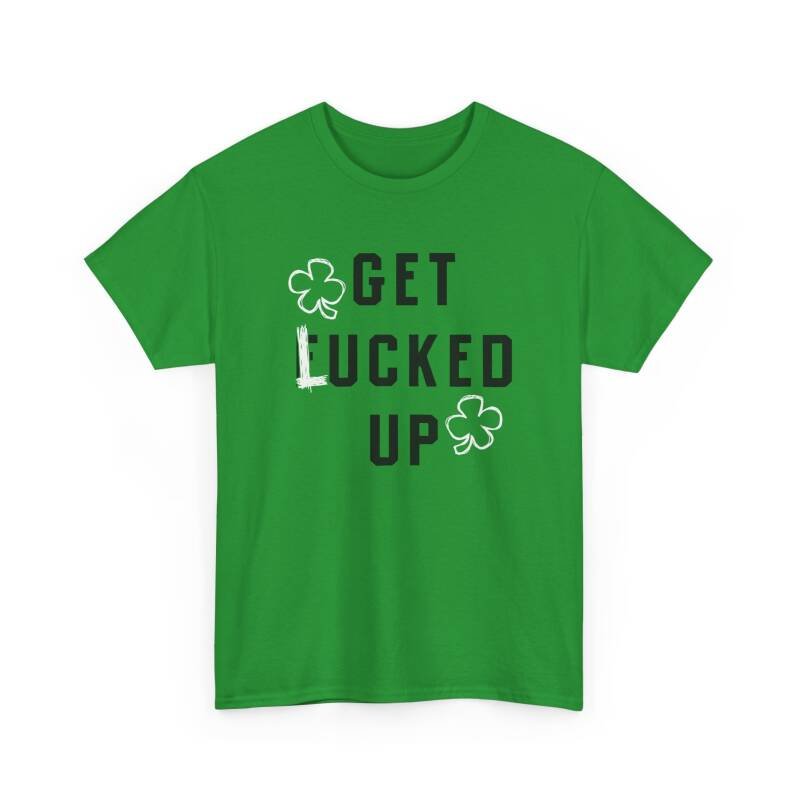
“Get Lucked Up” Unisex T-Shirt – Shamrock Shenanigans
Price range: $19.99 through $25.99 -
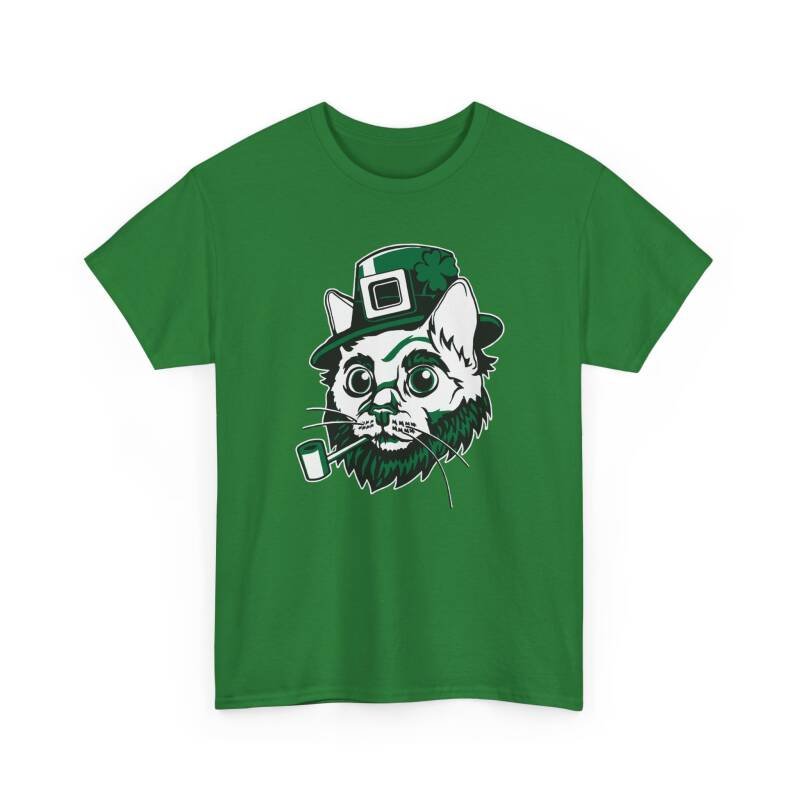
“Leprechaun Cat” Unisex T-Shirt – Purrfectly Lucky
Price range: $19.99 through $25.99 -

4-Leaf Clover USA Flag Unisex T-Shirt – Irish American Pride Tee in Green for Heritage & Gifting
Price range: $22.99 through $27.89 -

American Grown with Irish Roots Unisex T-Shirt – USA & Ireland Flag Heritage Tee
Price range: $22.99 through $27.89 -

Biting Lip Irish Pop Art Unisex T-Shirt – Sexy Green Shamrock Tee with Glitter Vibes
Price range: $22.99 through $27.89