Introduction: The Singing Sister with Celtic Blood
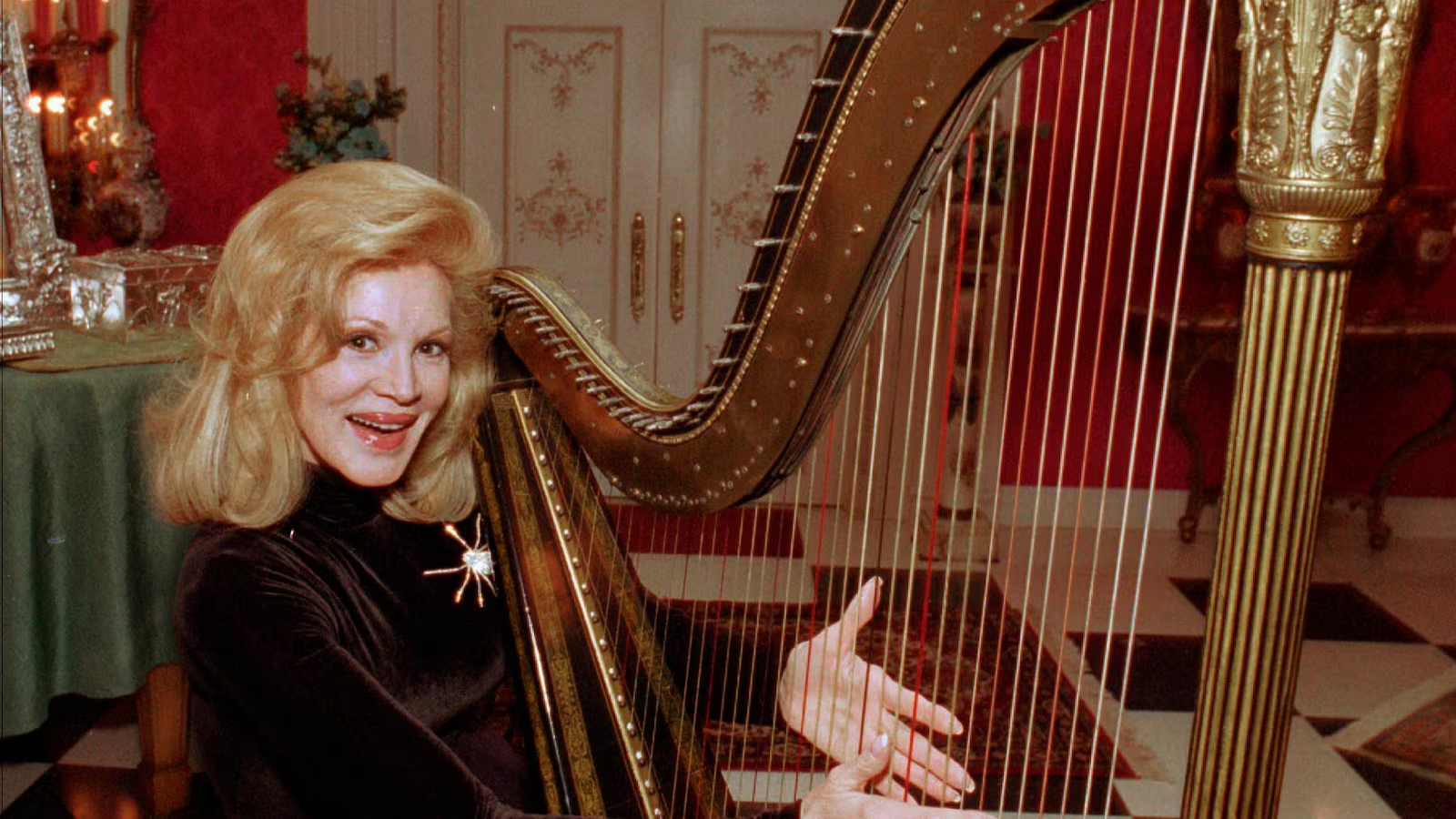
Phyllis Jean McGuire—born February 14, 1931, in Middletown, Ohio (a Valentine’s Day baby, which seems almost too perfect for someone who’d spend her life singing about love)—was one-third of The McGuire Sisters, one of the most beloved vocal groups in American music history. Alongside her sisters Christine and Dorothy, Phyllis created the kind of tight harmonies that made the 1950s and ’60s shimmer with three-part magic.
The McGuire Sisters weren’t just another girl group—they were the girl group for an era. “Sincerely,” “Sugartime,” “Don’t Let the Stars Get in Your Eyes”—these weren’t just hits; they were the soundtrack to American life during the post-war boom. Their sound was polished perfection: wholesome yet sophisticated, traditional yet contemporary, sweet yet substantial. They topped charts, graced television screens (Ed Sullivan loved them), and captivated audiences with harmonies so tight you couldn’t slip a playing card between their voices.
But here’s what makes Phyllis’s story particularly fascinating: that surname “McGuire” isn’t just coincidentally Irish—it’s authentically, genealogically, deeply Irish. The McGuire family name traces back to the Gaelic “Mag Uidhir” (meaning “son of Uidhir”), with roots primarily in County Fermanagh in Northern Ireland. This isn’t distant, abstract ancestry—this is traceable family history connecting Phyllis directly to Irish lineage that spans centuries.
The McGuire family’s Irish story includes everything the immigrant experience entails: prominence in Ireland followed by political upheaval, migration during tumultuous times (particularly the 17th century Williamite Wars), and eventually emigration to America seeking opportunities while maintaining cultural identity. Like millions of Irish families, they faced hardship and adapted, survived and thrived, left Ireland but carried Ireland with them.
Now, you might be thinking, “Sure, lots of American performers have Irish surnames. What does that have to do with singing pop standards in the 1950s?” Fair question. But dig deeper and you’ll find fascinating connections between Irish musical traditions and what The McGuire Sisters did so brilliantly: storytelling through melody, emotional authenticity in performance, harmony singing as communal art form, blending tradition with contemporary expression.
So grab your beverage of choice (and given we’re exploring Irish heritage in the context of 1950s pop perfection, I’m assuming it’s something both sophisticated and strong), and let’s explore how a singing sister from Ohio carried DNA from Fermanagh, how Irish cultural influences might have shaped one of America’s most beloved vocal groups, and why heritage matters even when you’re topping charts with songs about sugar and sincerity.
Fair warning: this journey involves Irish political upheaval, famine-era emigration, and the kind of historical hardship that makes show business look like a picnic. But we’ll also celebrate resilience, cultural preservation, and that particularly Irish tradition of turning emotion into beautiful music—which is exactly what Phyllis and her sisters did for decades.
The McGuire Name: From Mag Uidhir to Middletown, Ohio
Let’s start with the name itself, because “McGuire” carries centuries of Irish history in its syllables.
The surname McGuire derives from the Gaelic “Mag Uidhir,” which translates to “son of Uidhir.” The name is primarily associated with County Fermanagh in Northern Ireland, where the McGuire clan was prominent for centuries. This wasn’t just any Irish family—the McGuires were significant figures in Irish history, particularly in Fermanagh, where they held power and influence.
County Fermanagh sits in the northern part of Ireland, characterized by lakes, waterways, and green countryside. It’s one of those places where Irish history is written into the landscape—ancient ruins, castles, evidence of centuries of human habitation and conflict. The McGuires were part of this landscape, embedded in local governance, military affairs, and community life.
During the 17th century, particularly during the Williamite Wars (1688-1691), many McGuire family members faced the upheaval of their livelihoods. These wars, part of broader conflicts between Catholic and Protestant factions for control of Ireland and Britain, devastated Irish Catholic families. The McGuires, like many Irish Catholic families, faced dispossession, violence, and forced migrations.
Some McGuires migrated within Ireland, seeking safety or opportunity in other regions. Others began the longer journey to overseas territories—particularly America, where land and opportunity beckoned to those willing to risk everything for new beginnings.
Throughout the 18th and 19th centuries, branches of the McGuire family continued emigrating, particularly during and after the Great Famine (1845-1852). The famine killed over a million people and forced another million to flee. Even families not in the worst-affected areas faced economic devastation that made emigration seem like the only viable option.
The McGuire family members who came to America brought more than just their surname—they brought cultural values, musical traditions, storytelling practices, and that particularly Irish combination of resilience and adaptability. They settled in various American communities, often clustering in Irish neighborhoods where cultural identity could be maintained while building American lives.
By the time Phyllis Jean McGuire was born in Middletown, Ohio, in 1931, she was several generations removed from Ireland. But the McGuire name connected her directly to this history—to Fermanagh, to political upheaval, to emigration, to survival and adaptation. That surname wasn’t just identifier; it was inheritance.
Growing Up McGuire: Irish Heritage in an Ohio Household
For Phyllis Jean McGuire, Irish heritage wasn’t distant genealogical fact—it was living culture actively maintained in her Middletown, Ohio, household.
Phyllis grew up in a neighborhood where Irish culture remained vibrant. Middletown had significant Irish-American population, communities that maintained cultural practices, celebrated Irish traditions, and ensured younger generations understood where they came from. This wasn’t assimilation-focused America where immigrants abandoned heritage; this was preservation-minded community where Irish identity remained proud and active.
Phyllis’s mother played crucial role in cultural transmission. She sang traditional Irish folk songs around the house, creating atmosphere where music wasn’t just entertainment but cultural expression, identity preservation, emotional communication. These songs carried stories—of Ireland, of emigration, of longing and loss, of love and resilience. Young Phyllis absorbed not just melodies but narratives, values, perspectives embedded in Irish musical tradition.
These early musical experiences profoundly shaped Phyllis’s artistic development. Irish folk music emphasizes storytelling, emotional authenticity, melodic beauty, and harmony (Irish traditional singing often features close harmonies). These elements would become hallmarks of The McGuire Sisters’ sound: songs that told stories, performances that conveyed genuine emotion, melodies that stayed with listeners, harmonies that created something greater than individual voices.
The values embedded in Irish culture—family loyalty, community bonds, resilience through hardship, finding joy despite difficulties—were transmitted through family practices, stories, traditions. The McGuire household likely celebrated Irish holidays, maintained Irish customs, shared family stories connecting them to Ireland and to emigrant ancestors who’d made the journey to America.
Irish culture emphasizes oral tradition and storytelling. Family gatherings become opportunities to share histories, embellish favorite anecdotes, pass down cultural narratives. Phyllis grew up in this tradition, learning that stories matter, that heritage is preserved through telling and retelling, that identity comes partly from understanding where you came from.
This upbringing gave Phyllis deep appreciation for music as more than entertainment. In Irish culture, music serves multiple functions: it preserves culture, transmits values, builds community, processes emotions, celebrates joy, mourns loss. Music is fundamental to Irish identity. Phyllis absorbed this understanding, which would inform her entire career approach.
Irish Musical Traditions and The McGuire Sisters’ Sound
Now here’s where it gets fascinatingly speculative: how might Irish musical traditions have influenced The McGuire Sisters’ distinctive sound? More profoundly than you might initially think.
Traditional Irish music emphasizes several elements that appear prominently in The McGuire Sisters’ work:
Harmony singing: Irish traditional music frequently features close vocal harmonies, particularly in sean-nós singing and folk ballads. Multiple voices blending to create unified sound is fundamental to Irish musical tradition. The McGuire Sisters’ trademark tight three-part harmonies, where individual voices disappear into seamless blend, reflects similar aesthetic—voices supporting each other, creating something greater than individual parts.
Melodic storytelling: Irish songs tell stories. Even instrumental Irish music often has narrative quality, melodies that seem to convey emotions or scenarios. The McGuire Sisters’ repertoire emphasized songs with strong narratives, emotional arcs, stories audiences could connect with. Their delivery brought stories to life, made listeners care about the narratives.
Emotional authenticity: Irish music values genuine feeling over technical flash. You can be technically brilliant, but if emotion isn’t authentic, Irish audiences dismiss you as all technique and no heart. The McGuire Sisters never sounded like they were just executing vocal arrangements—they sounded like they meant every word, felt every emotion. That’s very Irish.
Blending tradition with contemporary: Irish music has always evolved while maintaining connection to tradition. Traditional Irish musicians might incorporate new instruments or styles while keeping folk melodies and structures. The McGuire Sisters did something similar: they took traditional pop song structures and melodies and added contemporary arrangements, making something that honored musical tradition while sounding fresh and modern.
Community and collaboration: Irish music emphasizes communal creation—sessions where musicians play together, building on each other’s contributions, creating collective music rather than individual showpieces. The McGuire Sisters’ three-part harmony required exactly this: individual voices serving the collective sound, collaboration over solo spotlight, unified artistic vision.
Listen to “Sincerely” or “Sugartime” with Irish musical traditions in mind. The tight harmonies, the emotional delivery that makes you believe every word, the way melody serves story, the blend of traditional and contemporary—these align remarkably well with Irish musical values, even though the songs aren’t explicitly Irish.
From Fermanagh to Ed Sullivan: Career Achievements
The McGuire Sisters’ career achievements were spectacular by any measure, and Phyllis’s Irish heritage might have contributed more than you’d think.
The trio dominated 1950s and ’60s pop music. They appeared on major television shows—Ed Sullivan, Dean Martin, all the prestigious variety programs that defined American entertainment. These weren’t just performances; they were cultural moments, opportunities to reach millions of viewers simultaneously.
Their hits—”Sincerely,” “Sugartime,” “Something’s Gotta Give,” “Don’t Let the Stars Get in Your Eyes”—became timeless classics. These songs topped charts, received constant radio play, and remain beloved decades later. That longevity suggests something deeper than just catchy melodies; it suggests emotional authenticity that transcends specific eras.
The McGuire Sisters were inducted into the Vocal Group Hall of Fame, recognition of their significant impact on American music. They influenced countless subsequent vocal groups, demonstrated possibilities of female harmony singing, proved that wholesomeness and sophistication aren’t mutually exclusive.
But how might Irish heritage have contributed to this success? Several ways:
Work ethic: Irish immigrants were known for working harder than anyone else, for being reliable and dedicated. The McGuire Sisters’ decades-long career, their professionalism, their consistent quality—these reflected values Phyllis would have absorbed from Irish cultural upbringing.
Emotional connection: Irish culture values authentic emotional expression. The Sisters’ ability to make audiences genuinely feel the songs, to create emotional connections through performance—that’s deeply Irish approach to music.
Resilience: Show business is brutal, especially for women, especially over long careers. The McGuire Sisters maintained success through changing musical trends, industry challenges, personal difficulties. That resilience, that refusal to quit when things get hard—very Irish cultural trait.
Community focus: Rather than competing as solo artists, the Sisters maintained collaborative group dynamic for decades. That prioritization of collective over individual success aligns with Irish cultural values around community and loyalty.
The McGuire Family’s Cultural Contributions
Beyond Phyllis’s individual success, the broader McGuire family has contributed significantly to Irish cultural preservation in America.
McGuire family members have been actively involved with organizations like the Gaelic League, dedicated to promoting Irish language and culture. This isn’t passive acknowledgment of heritage—it’s active cultural work, ensuring Irish traditions survive in American context.
The family has helped organize local Irish festivals, providing platforms for traditional Irish music, dance, storytelling, and arts. These festivals serve crucial function: they maintain cultural identity, build community among Irish-Americans, educate broader public about Irish contributions to American culture.
Through participation in Irish diaspora organizations, the McGuires have connected with global Irish community, promoting cultural exchange and understanding internationally. These networks help Irish-Americans maintain connections to Ireland while building bridges between Irish communities worldwide.
The family’s commitment to preserving Irish language is particularly significant. Irish (Gaelic) nearly died out due to British colonial suppression and famine-era devastation. Efforts to revive and maintain Irish language represent cultural resistance, refusal to let heritage disappear. McGuire family involvement in these efforts demonstrates serious commitment to cultural preservation.
By supporting Irish arts organizations, cultural associations, and heritage initiatives, the McGuire family has helped ensure that Irish cultural traditions remain vital parts of American cultural landscape rather than fading into historical footnotes.
This broader family commitment to Irish cultural preservation provides context for Phyllis’s own relationship with heritage. She wasn’t just individual with Irish surname; she was part of family actively maintaining and celebrating Irish identity across generations.
Personal Reflections: Phyllis on Heritage and Identity
Phyllis Jean McGuire has spoken thoughtfully about her Irish ancestry and how it influenced her identity and artistry.
She’s articulated deep appreciation for Irish storytelling traditions and how they informed her approach to music. For Phyllis, songs aren’t just melodies and lyrics—they’re narratives, stories that convey emotions and experiences. This perspective aligns perfectly with Irish cultural approach to music as storytelling medium.
Phyllis has discussed how traditional Irish melodies and folklore influenced her artistic style. She found inspiration in rhythms and tales resonating through her lineage, incorporating these elements into her musical expressions. This wasn’t appropriation or superficial adoption—it was drawing from genuine cultural inheritance.
She’s emphasized importance of understanding one’s background as means of cultivating strong sense of identity. For Phyllis, knowing where you come from provides foundation for understanding who you are. Irish heritage isn’t just historical fact; it’s living connection that informs present identity.
Phyllis has expressed hope that her work inspires young artists to explore their own familial legacies and incorporate them into unique artistic expressions. She views heritage not just as personal journey but as communal narrative, enriching artistic landscape for those who follow.
Her commitment to honoring ancestry plays vital role in her legacy. By weaving elements of Irish cultural heritage into her music and public persona, she keeps essence of Irish roots alive while contributing to American musical tradition. This dual identity—Irish and American—creates richer artistic expression than either alone would provide.
Phyllis sees heritage as bridge connecting past to present, ancestors to descendants, Ireland to America. This understanding transforms ancestry from abstract genealogy into living, breathing influence on daily life and artistic creation.
Conclusion: Harmonizing Heritage and Artistry
So what have we learned from exploring Phyllis Jean McGuire’s Irish ancestry? Perhaps most importantly, that cultural heritage provides artistic foundation—musical traditions, storytelling approaches, emotional authenticity, communal values—that enriches creative expression in profound ways.
Phyllis’s Irish roots, traced through the McGuire family name back to County Fermanagh, represent more than genealogical facts. They represent cultural continuity—values about music, storytelling, community, resilience—that survived political upheaval, emigration, and multiple generations to influence a granddaughter who’d become one of America’s most beloved vocal performers.
The journey from Fermanagh through political turmoil and famine-era emigration to 1950s American pop stardom spans centuries and involves enormous cultural preservation effort. Phyllis’s Irish ancestors couldn’t have imagined their descendant would harmonize on Ed Sullivan’s stage, top American charts, or become vocal group legend—but they’d recognize the values: music as cultural expression, storytelling as preservation, community over individualism, resilience through challenges.
How does Irish heritage influence a pop singer? Through channels both obvious and subtle. The emphasis on harmony singing, emotional authenticity, melodic storytelling, blending tradition with contemporary expression—these Irish musical values informed The McGuire Sisters’ distinctive sound even when they weren’t singing explicitly Irish songs.
The McGuire family’s broader commitment to Irish cultural preservation—through Gaelic League involvement, festival organization, diaspora connections—provides context for Phyllis’s personal relationship with heritage. She wasn’t isolated individual acknowledging Irish ancestry; she was part of family actively maintaining Irish identity across generations.
For those of us with Irish ancestry (or any immigrant heritage), Phyllis’s story reminds us that heritage matters not as limitation but as creative resource, not as nostalgia but as living influence on present identity and artistic expression. Those Irish ancestors who survived political upheaval, crossed oceans, built American lives while maintaining cultural identity—their courage and determination live on in descendants who honor their memory by creating beauty that draws from ancestral wells while offering something uniquely their own.
So here’s to Phyllis Jean McGuire—vocalist, harmonizer, storyteller, and descendant of Fermanagh McGuires who crossed an ocean seeking survival and whose dreams found fulfillment in ways they couldn’t have imagined.
Here’s to The McGuire Sisters, who created harmonies so perfect they still shimmer decades later, who made millions of people feel deeply through authentic emotional expression.
Here’s to the McGuire family, who carried Irish values across oceans and through generations, who actively preserved cultural heritage, who ensured descendants understood the power of their roots.
Here’s to County Fermanagh and all the Irish places that sent their people abroad while remaining alive in hearts, songs, and cultural memory.
And here’s to all of us with Irish ancestry, whether we’re creating three-part harmonies or living ordinary lives—may we honor our ancestors by drawing from cultural wells they preserved, by creating beauty that reflects both heritage and innovation, by maintaining connections to roots while reaching toward new possibilities.
As the Irish would say: Sláinte to heritage, to the musical traditions surviving through new forms, to the storytelling that transforms emotions into melodies, to the harmony—both musical and cultural—that creates something greater than individual parts, and to the families who ensure cultural memory persists across oceans and generations.
Now if you’ll excuse me, I need to listen to “Sincerely” with completely fresh appreciation for how Irish musical traditions around harmony, storytelling, and emotional authenticity might inform perfect pop perfection. Phyllis and her sisters made it look effortless—and I suspect that’s exactly what their Fermanagh ancestors would have wanted: descendants who create beauty, honor community, and maintain cultural connections while being brilliantly, harmoniously themselves.
Erin go Bragh—Ireland forever, even when the music is 1950s pop rather than traditional folk, even when heritage manifests through tight harmonies and chart-topping hits rather than obvious Celtic imagery. The spirit persists where we honor it, and The McGuire Sisters honored it through every perfectly blended note, every emotionally authentic performance, every story told through song.
🎵
Shop new arrivals
-

“Get Lucked Up” Unisex T-Shirt – Shamrock Shenanigans
Price range: $19.99 through $25.99 -
“Leprechaun Cat” Unisex T-Shirt – Purrfectly Lucky
Price range: $19.99 through $25.99 -

4-Leaf Clover USA Flag Unisex T-Shirt – Irish American Pride Tee in Green for Heritage & Gifting
Price range: $22.99 through $27.89 -

American Grown with Irish Roots Unisex T-Shirt – USA & Ireland Flag Heritage Tee
Price range: $22.99 through $27.89 -

Biting Lip Irish Pop Art Unisex T-Shirt – Sexy Green Shamrock Tee with Glitter Vibes
Price range: $22.99 through $27.89