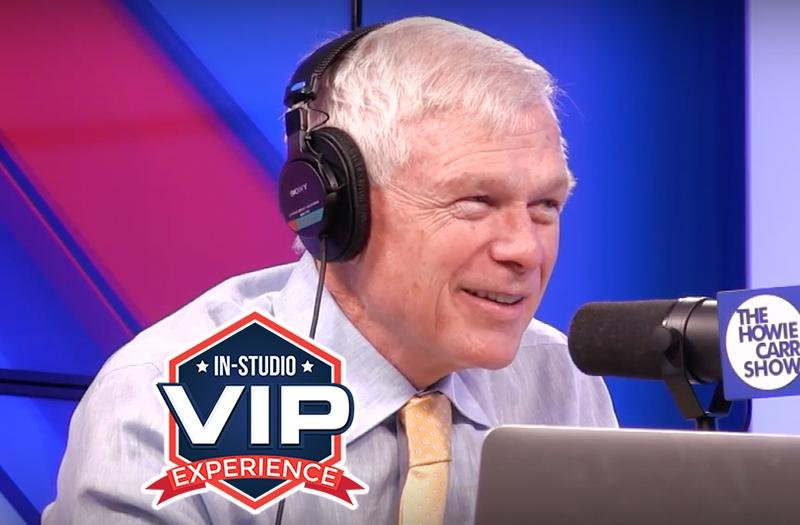
Howie Carr’s Irish heritage from County Kerry adds grit, wit, and a cultural backbone to his decades in American radio and journalism.
The Accidental Heir to Irish Rebellion
Turn on talk radio in Boston and you’ll hear a voice that’s unmistakably local, undeniably conservative, and thoroughly Irish in ways that go deeper than the surname. Howie Carr doesn’t just talk about politics—he performs it, wielding words like weapons, deploying humor like artillery, mixing outrage with irony in ways that make enemies furious and fans delighted.
This is Irish political discourse transplanted to American airwaves. This is what happens when County Kerry’s gift for confrontation meets Boston’s combative media culture. This is Irish stubbornness and wit adapted to talk radio format—and it’s been making waves for decades.
Born in 1952 in Portland, Maine, to parents who carried Ireland in their bones, Carr inherited more than DNA from ancestors who fled poverty and oppression. He inherited attitude: the Irish refusal to defer to authority, the instinct to question official narratives, the certainty that the powerful deserve mockery rather than reverence. These aren’t just personality traits—they’re cultural inheritance, passed down like heirlooms through generations of Irish families who learned that survival sometimes requires saying what everyone’s thinking but nobody else dares to voice.
Carr’s career—from Boston Herald columnist to radio host to author—represents Irish-American success story. But it’s particular kind of success, one that doesn’t require abandoning heritage or smoothing rough edges. Carr’s Irishness isn’t background detail in his biography—it’s the engine driving his entire approach to media, politics, and public discourse.
His radio show isn’t just conservative commentary. It’s Irish pub conversation projected across the airwaves: argumentative, humorous, personal, willing to go places polite company avoids. His columns aren’t just political analysis—they’re storytelling in Irish tradition, weaving personal anecdotes with broader themes, using humor to land punches that straight argument would fumble.
When Carr takes on politicians, bureaucrats, or anyone else he deems pompous or corrupt, he’s channeling centuries of Irish resistance to authority. When he tells stories that make his points through indirection rather than direct argument, he’s using techniques Irish storytellers perfected over millennia. When he refuses to moderate his voice or apologize for his positions, he’s embodying Irish stubbornness that views compromise as defeat and authenticity as non-negotiable.
Kerry and Tipperary: The Source Code
Howie Carr’s paternal grandfather left County Kerry for America, joining the tide of Irish immigrants fleeing a homeland that offered little but poverty and limited horizons. Kerry, in Ireland’s southwest, is a place of stunning beauty—dramatic coastlines, green mountains, landscapes that look like they were painted rather than grown. It’s also a place that, historically, couldn’t feed its children, couldn’t offer opportunities to its young, couldn’t provide futures worth staying for.
So they left. By the hundreds of thousands, across the decades, Irish families made impossible choice: abandon everything familiar or watch your children inherit poverty as permanent condition. Carr’s grandfather chose America, chose possibility over certainty, chose struggle in foreign land over slow suffocation in beautiful but broken homeland.
The O’Brien side (Carr’s mother’s family) came from County Tipperary, another region rich in history and culture but poor in prospects for its people. Tipperary’s story mirrors Kerry’s: ancient monuments and folklore, dramatic landscapes and cultural heritage, all wrapped in economic reality that forced best and brightest to seek futures elsewhere.
These weren’t pleasure cruises or adventures. These were desperate gambles by people who understood that staying meant accepting defeat, that leaving meant possibly never seeing home again, that success in America would require working jobs nobody else wanted, living in neighborhoods nobody else would inhabit, fighting prejudice that treated Irish Catholics as barely human.
The experiences carved themselves into family identity. You don’t forget being unwanted. You don’t forget “No Irish Need Apply” signs in shop windows. You don’t forget working brutal hours for minimal pay while being told you should be grateful for the opportunity. These memories get passed down—not always in explicit stories, but in attitudes, in the particular way family views authority and privilege, in reflexive skepticism toward anyone claiming things are “just the way they are.”
Carr grew up saturated in these family narratives. His father John and mother Mary didn’t just tell stories about Ireland—they embodied Irish values, maintained Irish customs, preserved Irish perspective on the world. Around the Carr family dinner table, Irish food got served alongside Irish stories, traditional celebrations blended with American holidays, and children absorbed lessons about resilience, stubbornness, and the importance of remembering where you came from.
Work Ethic as Inheritance
Ask Irish-Americans what they inherited from ancestors and “work ethic” tops nearly every list. But this isn’t generic hard-work-pays-off platitude. It’s specific understanding born from specific history: Irish immigrants learned they’d have to work twice as hard to get half as far, that nobody would hand them anything, that the only way to prove you belonged in America was through undeniable excellence and relentless effort.
Carr’s career embodies this ethic. From his start at the Boston Herald through decades of radio broadcasting and multiple books, he’s maintained output that would exhaust less driven personalities. Daily radio shows. Weekly columns. Books that require research, writing, and promotion. Speaking engagements. Social media presence. The volume alone is staggering—but volume without quality is just noise. Carr delivers both, maintaining standards while churning out content at pace that suggests Irish immigrant understanding: you can’t rest, you can’t coast, you can’t assume success today guarantees anything tomorrow.
This work ethic isn’t about money or fame (though both are nice). It’s about validation, about proving worth, about honoring ancestors who worked themselves to exhaustion so their descendants could have opportunities they never imagined. When Carr works long hours, when he pushes himself to produce content day after day, year after year, he’s channeling Irish immigrant determination that viewed rest as luxury they couldn’t afford.
His father John instilled these values explicitly, modeling the hard work and dedication that Irish families treated as non-negotiable. But beyond individual lessons, Carr absorbed broader Irish-American understanding: you owe it to those who came before to make the most of opportunities they created through their sacrifice. Success isn’t just personal achievement—it’s fulfillment of ancestral hopes, proof that the gamble of immigration paid off.
Storytelling: The Irish Superpower
If there’s one Irish gift that translates perfectly to radio and journalism, it’s storytelling. The Irish have always been a nation of storytellers—it’s how they preserved culture when everything else could be stripped away, how they maintained identity under foreign rule, how they passed down history when official records either didn’t exist or were controlled by oppressors.
The old Irish seanachies weren’t just entertainers—they were cultural guardians, living libraries, the keepers of community memory. They developed sophisticated techniques: narrative structures that made stories memorable, rhythmic patterns that aided retention, emotional resonance that ensured stories got passed down rather than forgotten. They understood that how you tell a story matters as much as what the story says.
Carr inherits this tradition. His radio show isn’t just him reading news and offering opinions—it’s performance, it’s theater, it’s storytelling that makes political commentary entertaining. He doesn’t just state positions; he tells stories that illustrate them, uses anecdotes that make abstract arguments concrete, employs humor that makes bitter medicine go down easier.
Listen to any Carr broadcast and you’ll hear Irish storytelling techniques in action. He circles back to themes rather than proceeding linearly. He uses repetition for emphasis (and humor). He creates characters—the corrupt politician, the incompetent bureaucrat, the hardworking taxpayer—and lets them populate narratives that make his points more vividly than straight argument could.
He also uses classic Irish storytelling device: the personal anecdote that illuminates larger truth. Irish storytellers have always understood that universal emerges from specific, that telling your grandmother’s immigration story reveals something about all immigration, that personal experience properly told becomes collective wisdom.
This approach creates connection with audience that straight political analysis can’t achieve. When Carr tells stories, he’s not lecturing at listeners—he’s inviting them into shared narrative space, creating community through storytelling just like Irish families did around fires and dinner tables for centuries.
Irish Humor: Sharp as Broken Glass
There’s a particular quality to Irish humor that Americans often misunderstand. It’s not just being funny—it’s using humor as analytical tool, as weapon, as way of maintaining dignity when circumstances conspire to strip it away. The Irish learned to laugh at oppressors when they couldn’t defeat them, to find absurdity in injustice when they couldn’t correct it, to use wit as shield when no other defense existed.
This tradition produces specific kind of humor: sharp, irreverent, comfortable with darkness, willing to find comedy in pain without denying it hurts. It’s humor that punctures pretension, refuses automatic respect for power, finds absurdity in contradiction and self-importance.
Carr’s entire approach embodies this Irish comic sensibility. He doesn’t just criticize politicians—he mocks them, finds the ridiculous in their self-seriousness, describes them in ways that make pretension impossible. His humor isn’t gentle or kind—it’s cutting, designed to wound, wielded with precision against targets he deems deserving.
This isn’t mean-spiritedness for its own sake. It’s Irish understanding that powerful people who take themselves too seriously need deflating, that laughter can accomplish what serious argument cannot, that mockery is sometimes more effective than outrage. When Carr finds perfect nickname for politician he dislikes, when he describes bureaucratic incompetence in ways that make listeners laugh while infuriating, when he uses irony to expose hypocrisy—he’s using Irish humor as his ancestors did: as weapon disguised as entertainment.
The Irish also understand humor’s role in community building. Shared laughter creates bonds, establishes in-groups, makes people feel they’re part of something larger than themselves. Carr’s audience doesn’t just agree with his politics—they laugh with him, which creates deeper connection than mere agreement could forge. This is Irish pub culture translated to radio: the feeling that you’re part of conversation, part of community, part of group that sees the world similarly and isn’t afraid to laugh at its absurdities.
Irish Skepticism Meets American Politics
Irish people have historically maintained profound skepticism toward authority. This isn’t random personality trait—it’s learned behavior, acquired through centuries of being ruled by foreign power that used authority to oppress rather than serve. The Irish learned that official explanations are often lies, that power corrupts reliably, that those in charge usually serve themselves rather than those they ostensibly lead.
This skepticism survived immigration intact. Irish-Americans brought with them deep distrust of government, wariness toward anyone claiming authority, reflex to question rather than accept official narratives. These attitudes shaped Irish-American political culture, creating communities that value independence, resist control, and view all power structures with appropriate suspicion.
Carr channels this inheritance directly into his political commentary. His default setting isn’t trust but suspicion. When politicians make promises, he questions their sincerity. When bureaucrats defend policies, he looks for hidden agendas. When powerful people claim noble motives, he assumes self-interest until proven otherwise.
This isn’t cynicism—it’s Irish realism, born from long experience that the powerful rarely have ordinary people’s interests at heart. Carr’s conservatism is rooted partly in this Irish skepticism: the belief that government power tends toward corruption, that individual liberty requires vigilance, that the best defense against tyranny is citizenry unwilling to trust authority blindly.
His critiques of Massachusetts politics (a favorite target) employ this Irish lens. He sees bloated bureaucracy as natural tendency of unchecked power. He interprets political corruption as inevitable result of concentrating authority. He views taxpayer money as something politicians will waste unless constantly monitored. These aren’t just conservative talking points—they’re Irish political wisdom accumulated across centuries of watching power abuse itself.
Identity Politics, Irish-American Style
Carr’s commentary on identity, immigration, and American culture draws (consciously or not) from Irish-American historical experience. His ancestors were immigrants who faced discrimination, who struggled against prejudice, who fought for acceptance in country that didn’t want them. This history shapes how he approaches contemporary debates about immigration, assimilation, and national identity.
His position seems paradoxical to some: the grandson of Irish immigrants taking hard line on immigration issues. But from Irish-American perspective, there’s no contradiction. Irish immigrants (in this narrative) played by rules, worked hard, assimilated (somewhat) while maintaining cultural identity, earned their place in America through effort and loyalty. This experience creates particular expectations about how immigration should work, what immigrants owe their adopted country, how cultural preservation balances against national integration.
Whether you agree with Carr’s positions or not, they’re comprehensible through Irish-American lens. He’s not rejecting immigration—his own family benefited from it. He’s arguing (from his perspective) for particular kind of immigration, one that mirrors what he believes Irish immigrants represented: willingness to work hard, respect for American institutions, gradual integration without complete cultural erasure.
His Irish identity also informs his perspective on what it means to be American. Irish-Americans fought to be accepted as fully American while maintaining distinct cultural identity. They proved (in their own narrative) that you could be both Irish and American, that ethnic heritage and national loyalty weren’t opposed but complementary. This experience shapes views on multiculturalism, assimilation, and the question of whether America is melting pot or mosaic.
St. Patrick’s Day: More Than Green Beer
For Carr, St. Patrick’s Day isn’t just excuse for parties or commercial opportunity—it’s affirmation of identity, celebration of heritage, public declaration that Irish culture survives and thrives in America. His participation in St. Patrick’s Day events goes beyond personal enjoyment; it’s cultural preservation, community building, bridge between generations.
The parades, the festivals, the celebrations—these serve functions beyond entertainment. They create space where Irish-Americans can gather, where cultural identity gets publicly affirmed, where younger generations connect with heritage that modern American life often pushes to margins. When Carr participates, he’s not just having fun—he’s contributing to ongoing Irish-American conversation about identity, belonging, and cultural continuity.
These celebrations also demonstrate Irish-American success. The fact that major cities shut down streets for Irish parades, that millions of people (Irish and otherwise) participate, that Irish culture gets celebrated rather than hidden—all of this represents victory for people whose grandparents faced “No Irish Need Apply” signs. St. Patrick’s Day becomes both celebration and vindication: proof that Irish-Americans not only survived discrimination but thrived despite it.
Carr understands this deeper significance. When he discusses St. Patrick’s Day on his show or participates in related events, he’s engaging with Irish-American identity politics: the question of how ethnic heritage functions in increasingly diverse America, the balance between assimilation and cultural preservation, the role of public celebration in maintaining community bonds.
The Grandmother’s Stories
In interviews, Carr often references his grandmother and the stories she told about Ireland—tales of hardship and hope, loss and persistence, the old country and the new. These weren’t just family history lessons; they were cultural transmission, identity formation, the preservation of Irish memory across generations and oceans.
She would recount the journey from Ireland to America—not romanticized version but honest accounting of fear, uncertainty, and determination. She’d describe the Ireland she left behind, making it vivid for grandchildren who would never see it. She’d explain what it meant to be Irish in America when that identity carried stigma, when opportunities were limited, when acceptance required proving worth again and again.
These stories shaped Carr profoundly. They gave him connection to heritage he didn’t directly experience, made Irish history personal rather than abstract, instilled pride in identity that he might otherwise have taken for granted. They also taught him storytelling’s power—how the right story, told right way, could make the past present, could preserve memory, could shape identity.
When Carr tells stories on his show or in his writing, he’s channeling his grandmother’s tradition. He’s doing what Irish people have always done: using narrative to preserve, to teach, to connect. The content might be different—politics rather than immigration, contemporary corruption rather than historical oppression—but the methodology is ancient: storytelling as cultural practice, as community building, as way of making sense of world.
His grandmother taught him that Irish people have particular way of looking at the world, one that “blends skepticism with wit.” This lesson became Carr’s trademark, the combination that defines his public persona and professional approach. It’s Irish inheritance made manifest in American media.
The Unbreakable Bond
Carr has said, “There’s an unbreakable bond between the Irish and their storytelling. It’s how we navigate our past and embrace our future.” This isn’t just poetic sentiment—it’s recognition of cultural reality. Irish identity, particularly in diaspora, gets preserved and transmitted largely through storytelling. Without the stories, the connection weakens, the heritage fades, the identity becomes abstract rather than lived.
This understanding drives Carr’s engagement with Irish culture and his incorporation of Irish themes into his work. He’s not just Irish-American who happens to work in media—he’s Irish-American who uses media to continue Irish storytelling tradition, to maintain cultural bonds, to ensure next generation understands what came before.
His involvement in Irish cultural events, his public acknowledgment of his heritage, his weaving of Irish references and sensibilities into his commentary—all of this serves larger purpose. He’s helping keep Irish-American culture alive, demonstrating that ethnic identity doesn’t require abandoning American identity, showing younger Irish-Americans that their heritage is source of strength rather than irrelevant footnote.
This commitment matters in era when ethnic identities often get treated as either divisive (identity politics gone wrong) or irrelevant (we’re all just Americans now). Carr demonstrates third way: ethnic heritage as lived reality, as source of perspective and values, as cultural resource that enriches rather than limits. His Irish ancestry doesn’t make him less American—it makes him particular kind of American, one whose perspective is informed by specific history and culture.
Why the Voice Matters
Love him or hate him (and people definitely divide on this), Carr represents important phenomenon: ethnic heritage channeled into contemporary media, cultural inheritance adapted to modern format, Irish-American identity finding expression in talk radio conservatism.
His success demonstrates that ethnic specificity isn’t liability in modern media—it can be asset, something that makes voice distinctive rather than generic. Carr doesn’t succeed despite his Irish identity; he succeeds partly because of it, because it gives him perspective that resonates with audience, because it shapes approach that stands out in crowded media landscape.
He also demonstrates that Irish-American culture remains vital force generations after peak immigration. The values, the humor, the storytelling, the skepticism toward authority—these didn’t disappear into melting pot. They adapted, evolved, found new expression in American context while maintaining essential Irish character.
For Irish-Americans listening to Carr, there’s recognition: he sounds like family, like the uncle at Thanksgiving who has opinions about everything and isn’t shy about sharing them, like the grandfather who told stories that made points without preaching, like the Irish-American community that values authenticity over politeness and prefers hard truths to comfortable lies.
The Legacy Continues
Every day Howie Carr sits behind his microphone, he’s continuing conversation that started in County Kerry and Tipperary generations ago. The subjects have changed—contemporary American politics rather than survival in new country—but the approach remains recognizably Irish: combative, humorous, skeptical of power, committed to truth-telling even when it makes people uncomfortable.
His career proves that Irish inheritance isn’t just genealogical fact—it’s living influence, shaping how people see world and engage with it. The work ethic learned from immigrant parents, the storytelling absorbed from grandmother’s tales, the humor that uses laughter as weapon, the skepticism born from ancestors’ experience with authority—all of this flows into Carr’s work, making it distinctively Irish-American even when discussing purely American subjects.
From Kerry to Portland, from “No Irish Need Apply” to successful media career, from immigrant grandparents to influential commentator—the journey represents Irish-American story writ small. It’s about people who refused to be broken by hardship, who maintained identity despite pressure to assimilate completely, who used cultural inheritance as foundation for American success.
Carr’s voice—argumentative, humorous, unapologetic—carries Ireland forward into American discourse. Every story he tells, every politician he mocks, every official narrative he questions, he’s channeling Irish tradition of resistance, irreverence, and resilient independence. His ancestors who fled poverty brought with them gifts that couldn’t be confiscated at customs: ways of seeing, ways of speaking, ways of maintaining dignity in face of those who would strip it away.
These gifts found new expression in Howie Carr’s career, proving that cultural heritage doesn’t fade—it transforms, finding new contexts while maintaining essential character. The Irish storyteller became radio host. The Irish skepticism became conservative commentary. The Irish humor became media brand. But underneath the American veneer: Ireland, still speaking, still shaping, still very much alive.
That’s not just Carr’s legacy—it’s his ancestors’ legacy, continuing through him, proving that the journey from County Kerry to American media was distance measured in miles but continuity measured in values, voice, and unbreakable bonds between past and present.
Shop new arrivals
-

“Get Lucked Up” Unisex T-Shirt – Shamrock Shenanigans
Price range: $19.99 through $25.99 -
“Leprechaun Cat” Unisex T-Shirt – Purrfectly Lucky
Price range: $19.99 through $25.99 -

4-Leaf Clover USA Flag Unisex T-Shirt – Irish American Pride Tee in Green for Heritage & Gifting
Price range: $22.99 through $27.89 -

American Grown with Irish Roots Unisex T-Shirt – USA & Ireland Flag Heritage Tee
Price range: $22.99 through $27.89 -

Biting Lip Irish Pop Art Unisex T-Shirt – Sexy Green Shamrock Tee with Glitter Vibes
Price range: $22.99 through $27.89