
Introduction: The Metal Warrior with Celtic Blood
Matt Heafy—born January 26, 1986, in Iwakuni, Japan—is one of those musicians who defies easy categorization. As the lead vocalist and guitarist of Trivium, he’s spent over two decades establishing himself as one of modern metal’s most formidable talents. With his powerful vocal range that can shift from melodic singing to guttural screams, his technical guitar mastery, and his compositional brilliance, Heafy has helped Trivium become one of the most respected bands in contemporary heavy metal.
Trivium exploded onto the metal scene with their 2005 album “Ascendancy,” which showcased a devastating blend of metalcore, thrash, and melodic death metal. Subsequent albums like “Shogun” and “In Waves” cemented their reputation as a band that refuses to be confined by genre boundaries—they’re technically proficient without being sterile, brutal without sacrificing melody, progressive without becoming pretentious.
Born in Japan to an American serviceman father and a Japanese mother, Heafy’s multicultural background already makes his story interesting. But here’s something that might surprise you: beneath those crushing riffs and aggressive vocals runs Irish blood. Heafy has spoken openly about his Irish heritage, with ancestral connections tracing back to counties Kerry and Tipperary—regions known for their rich history, vibrant traditions, and people who survived centuries of hardship while maintaining cultural identity.
Now, before you think “What does Irish ancestry have to do with playing metal?” let me stop you right there. The connection is more profound and fascinating than you might imagine. Irish culture has been telling epic stories, celebrating warriors, lamenting loss, and finding beauty in darkness for millennia. Traditional Irish music balances melody with intensity, complexity with emotion, technical skill with raw feeling. Sound familiar? That’s basically a description of what great metal does.
Heafy himself has discussed how his Irish heritage influences his music—not through obvious Celtic folk elements (though we’ll get to those), but through deeper cultural values: storytelling tradition, appreciation for struggle and resilience, emotional depth, and that particularly Irish ability to find beauty and meaning in conflict and hardship.
So grab your beverage of choice (and given we’re discussing Irish heritage in a metal context, I’m assuming it’s either whiskey or something equally formidable), and let’s explore how a metal icon born in Japan carries the DNA of Irish ancestors from Kerry and Tipperary, how Celtic cultural influences might have shaped one of modern metal’s most distinctive voices, and why heritage matters even when you’re shredding face-melting guitar solos.
Fair warning: this journey involves discussion of famine, emigration, and historical trauma—but also celebration of resilience, cultural richness, and that particularly Irish tradition of turning suffering into art. Which, honestly, is exactly what heavy metal does. The connection runs deeper than you think.
The Heafy Heritage: A Multicultural Tapestry
Let’s start by acknowledging that Matt Heafy’s background is fascinatingly complex—a gorgeous multicultural tapestry that includes Japanese, American, and Irish threads all woven together.
Born in Iwakuni, Japan, Matt is the son of an American father (who was in the military, hence the Japan birth) and a Japanese mother. This Japanese-American heritage is significant—it gave Matt exposure to both Eastern and Western cultural perspectives, both traditional and contemporary influences, both discipline-focused Japanese culture and individualism-focused American culture.
But within that American paternal lineage runs Irish blood. Historical records and genealogical research suggest that Heafy’s Irish ancestors originated from counties Kerry and Tipperary—two regions in the south of Ireland with rich histories and distinct characters.
County Kerry sits in the southwest, famous for its stunning natural beauty (the Ring of Kerry is one of Ireland’s most photographed tourist routes), ancient ruins, vibrant traditional music scene, and people known for their storytelling ability and dark humor. If you’ve imagined Ireland as impossibly beautiful and slightly mystical, Kerry probably contributed to that image.
County Tipperary is in the south-central region, known as “the premier county” for its sporting prowess, its fertile farmland (the Golden Vale), and its historical significance in Irish rebellion against British rule. Tipperary people have reputation for being fierce, proud, and resilient—traits that served them well through centuries of hardship.
The Heafy family’s Irish ancestors likely emigrated during the 19th or early 20th century—part of that massive wave of Irish people leaving due to famine, poverty, and limited opportunities. Like millions of other Irish emigrants, they crossed the Atlantic seeking survival and better futures, bringing with them cultural values, traditions, and stories that would persist across generations.
This multicultural heritage—Japanese, American, Irish—creates someone with unusually broad cultural literacy. Matt can draw from multiple wells: Japanese aesthetics and discipline, American individualism and innovation, Irish storytelling and emotional depth. Each influence informs the others, creating something unique while maintaining connections to multiple ancestral traditions.
From Kerry and Tipperary to America: The Migration Story
To understand Matt Heafy’s Irish roots, we need to understand why his ancestors left counties Kerry and Tipperary for America—and that story, while specific to the Heafy family, echoes millions of similar journeys.
Irish emigration in the 19th century was driven by catastrophe. The Great Famine (1845-1852) killed over a million people and forced another million to flee. But economic hardship existed before the famine and persisted after—rural poverty was crushing, opportunities were nearly nonexistent, and British colonial policies made improvement virtually impossible.
Counties Kerry and Tipperary were both devastated by the famine. Rural populations dependent on potatoes faced starvation when the crop failed year after year. Entire communities were wiped out. Survivors faced impossible choice: stay and likely die, or leave everything familiar and board ships to America with no guarantee of surviving the voyage, much less thriving upon arrival.
Imagine the Heafy ancestors making that decision. You’re abandoning your home, your land (if you had any), your extended family, your language (many Kerry and Tipperary people spoke Irish Gaelic), your entire cultural context. You’re boarding a “coffin ship”—called that because disease, starvation, and overcrowding killed so many passengers that bodies were routinely thrown overboard during crossing.
If you survived the Atlantic crossing (and many didn’t), you arrived in American cities to face new challenges. Irish immigrants were despised by many Americans. “No Irish Need Apply” signs were common. Political cartoons depicted Irish people as ape-like, violent, stupid, racially inferior. They were considered undesirable—Catholic in a Protestant country, poor in a nation that valued wealth, foreign in a place increasingly hostile to immigrants.
Irish emigrants took jobs nobody else wanted: dangerous construction, backbreaking railroad work, domestic service, factory labor with brutal conditions. They worked for wages barely sufficient for survival, lived in crowded tenements, faced constant discrimination. But they persevered.
They built communities—tight-knit Irish neighborhoods where cultural identity could survive, where you could find work through connections, where familiar accents and traditions provided comfort in hostile environment. They established churches, schools, organizations. They supported each other because often nobody else would.
And crucially, they told stories. Irish culture has always used storytelling as survival tool—when written records are controlled by oppressors, oral tradition preserves history, culture, identity. The Heafy family’s Irish ancestors would have passed down stories of Ireland, of the journey, of struggles in America, of values worth preserving.
These stories—of resilience, of survival against overwhelming odds, of maintaining identity through displacement, of finding meaning in struggle—these would become part of family cultural DNA, passed down through generations even as specific details faded, eventually reaching a descendant who’d channel similar themes into metal music.
Irish Cultural Values in Metal Music: The Connection
Now here’s where it gets fascinatingly speculative: how does Irish heritage influence a metal musician? More profoundly than you might think.
Irish culture has been telling epic stories for millennia. Ancient Irish mythology is full of warriors, battles, gods, struggles against impossible odds, tragic heroes, and conflicts that test human limits. The Táin Bó Cúailnge (Cattle Raid of Cooley) is essentially an epic metal song waiting to be written—complete with superhuman warriors, brutal combat, honor codes, and tragic consequences.
This storytelling tradition emphasizes narrative depth, emotional complexity, and finding universal truths in specific stories. Irish folklore balances beauty and brutality, celebrates warriors while acknowledging war’s cost, finds meaning in struggle without glorifying suffering. Sound familiar? That’s exactly what great metal does.
Traditional Irish music, while sonically different from metal, shares surprising structural and philosophical similarities. Both emphasize technical proficiency—Irish traditional musicians spend years mastering their instruments, just like metal musicians. Both balance complexity with emotional authenticity—technical skill serves expression rather than replacing it. Both use music to process difficult emotions and experiences.
Irish music also emphasizes dynamics—shifting between quiet, melodic passages and intense, driving rhythms. Listen to traditional Irish session music: it builds, it breathes, it creates tension and release. That’s fundamental metal songwriting structure right there.
Irish culture values resilience—centuries of occupation, famine, poverty, and displacement created cultural narratives about enduring hardship without breaking, about maintaining identity despite attempts to erase it, about finding beauty and meaning even in darkest circumstances. Metal, at its core, explores similar themes—confronting darkness, processing pain, finding strength through adversity.
The Irish relationship with conflict is nuanced. We’re not a culture that glorifies violence, but we recognize that struggle is often unavoidable, that standing up to oppression requires courage, that defending what matters sometimes means fighting. Metal explores similar territory—acknowledging darkness and conflict while searching for meaning within it.
Emotionally, Irish culture values authenticity and depth. We feel intensely but often channel it through indirect expression—music, stories, humor rather than direct emotional declaration. Genuine emotion is sacred; emotional manipulation is contemptible. Matt’s ability to access genuine emotional intensity in his performances while maintaining artistic integrity aligns perfectly with this cultural value.
Celtic Elements in Trivium’s Sound: Listening with New Ears
Now let’s get specific about how Irish cultural influences might manifest in Trivium’s music. This isn’t about obvious Celtic folk interludes (though metal bands certainly use those)—it’s about deeper structural and thematic elements.
Traditional Irish music uses specific scales and modes that create distinctive melodic character—mixolydian, dorian, aeolian modes that feel both ancient and emotionally resonant. Listen to Trivium’s melodic passages with this in mind, and you might hear echoes of these modal choices, creating melody that feels simultaneously epic and melancholic.
Irish music emphasizes ornamentation—the way notes are approached, decorated, connected. While metal guitar techniques differ from Irish fiddle or tin whistle ornamentation, the underlying philosophy is similar: notes aren’t just hit; they’re shaped, bent, given character and emotion through how they’re executed.
Rhythmically, Irish traditional music features complex patterns, shifting meters, and polyrhythmic elements. Trivium’s progressive tendencies—their comfort with odd time signatures, their rhythmic complexity, their willingness to shift feels within songs—could reflect similar aesthetic appreciation for rhythmic sophistication.
Thematically, Trivium’s lyrics frequently explore conflict, struggle, resilience, identity, and confronting darkness. These are universal themes, certainly, but they’re also deeply embedded in Irish cultural narratives. Songs about warriors, about standing against overwhelming odds, about maintaining identity through hardship—these resonate with centuries of Irish storytelling tradition.
The Irish concept of “thin places”—locations or moments where the boundary between physical and spiritual worlds becomes permeable—appears throughout Irish folklore and literature. Metal music often explores similar territory: moments of transcendence, confronting mortality, experiencing something beyond ordinary existence. Trivium’s more atmospheric passages sometimes create exactly this sense of accessing something beyond the mundane.
Irish mythology is full of transformation narratives—people becoming animals, gods becoming mortals, heroes transcending human limitations. Metal explores similar themes of transformation, transcendence, and exceeding perceived limits—both musically (technical achievements that seem impossible) and thematically (lyrical explorations of human potential and limitation).
Matt’s Personal Connection: Pride in Heritage
For Matt Heafy, Irish heritage isn’t abstract genealogy—it’s a living connection that he actively acknowledges and celebrates as part of his identity.
In interviews, Matt has discussed his Irish ancestry with evident pride, explaining how understanding his roots influences both his identity and his artistry. He’s spoken about the importance of knowing where you come from, about how cultural heritage provides context for understanding yourself and your creative impulses.
Matt has specifically mentioned how Irish storytelling traditions influence his approach to lyric writing. The Irish emphasis on narrative, on finding universal truths in specific stories, on balancing beauty and brutality—these align with his artistic philosophy. He doesn’t just write lyrics; he tells stories, creates narratives, explores themes with the kind of depth that Irish culture has valued for millennia.
He’s also discussed resilience—how Irish history of surviving catastrophe, maintaining identity through displacement, finding strength in community resonates with his personal experiences and informs his music. Metal culture often emphasizes similar values: community support, resilience through hardship, refusing to let circumstances destroy you.
The Irish appreciation for technical skill paired with emotional authenticity also resonates with Matt’s approach to music. He’s a technically brilliant guitarist, but technique serves emotion rather than replacing it. His solos aren’t just displays of speed and precision—they’re emotional expressions, narratives told through notes. That’s very Irish, actually: valuing skill while insisting it must serve deeper purpose.
Matt’s engagement with Irish culture extends beyond acknowledging ancestry. He’s expressed interest in Irish music, Irish history, Irish storytelling traditions—treating heritage as living culture to engage with rather than static genealogical fact. This active engagement keeps cultural connection vital rather than letting it fade into abstraction.
Irish Metal Culture: Finding Kinship
Matt Heafy’s Irish heritage creates particular connection with metal fans in Ireland—and Ireland has a vibrant, passionate metal community that’s produced influential bands and devoted fans.
Irish metal culture is fascinating because it blends traditional Irish cultural values with metal’s aesthetic and philosophy. Irish metalheads tend to be fiercely loyal to their scene, supportive of local bands, and deeply appreciative of technical skill and emotional authenticity—all very Irish cultural priorities adapted to metal context.
Ireland has produced numerous influential metal bands across subgenres: Primordial (black metal with Irish mythological themes), Mael Mórdha (doom metal drawing from Irish folklore), Cruachan (Celtic metal blending traditional instruments with metal), among many others. These bands demonstrate how Irish heritage and metal aesthetics can combine to create something distinctive.
For Matt and Trivium, playing in Ireland creates special connection. Irish metal fans recognize his heritage, appreciate his acknowledgment of Irish roots, and respond enthusiastically to his engagement with Irish culture. There’s sense of kinship—”he’s one of us”—that creates particularly intense audience energy.
Matt has reciprocated this connection, speaking fondly of Irish audiences, engaging with Irish metal community, acknowledging the special relationship. This mutual appreciation creates virtuous cycle: Irish fans support Matt because he honors his heritage; Matt honors his heritage partly because Irish fans make him feel connected to it.
The broader metal community has noticed how Irish themes and influences enrich metal music. Bands incorporating Celtic elements, drawing from Irish mythology, or simply acknowledging Irish heritage often find receptive audiences both in Ireland and globally. There’s growing appreciation for how different cultural traditions can inform metal aesthetics while maintaining metal’s core values.
Matt represents modern incarnation of this fusion—someone whose Irish heritage informs his music not through superficial adoption of Celtic imagery but through deeper engagement with cultural values: storytelling, resilience, emotional depth, appreciation for technical skill, finding meaning in struggle.
Traditional Irish Elements in Modern Metal: A Broader Context
To fully appreciate Matt Heafy’s Irish heritage in metal context, we should acknowledge how Irish cultural elements have influenced metal more broadly—because Matt exists within this larger tradition.
Celtic metal as subgenre explicitly incorporates traditional Irish instruments (tin whistles, fiddles, bodhráns, uilleann pipes) alongside metal instrumentation. Bands like Cruachan, Eluveitie, and others create music that’s simultaneously authentically traditional and authentically metal—proving these traditions aren’t incompatible.
Irish mythology provides rich source material for metal themes. Stories of Cú Chulainn (legendary warrior), the Tuatha Dé Danann (mythological race), the Morrigan (goddess of war and fate)—these tales feature exactly the kind of epic conflict, heroic struggle, and supernatural elements that metal explores.
Irish rebellion history—centuries of resistance against British occupation, famous uprisings like the Easter Rising of 1916—resonates with metal’s anti-authoritarian ethos. Songs about fighting oppression, maintaining identity against attempts to erase it, collective resistance—these themes align perfectly with metal philosophy.
The Irish language itself has influenced some metal bands, with lyrics in Irish Gaelic appearing in various songs. Even for non-speakers, Irish has distinctive sound—guttural consonants, flowing vowels, rhythmic quality—that creates particular aesthetic when combined with metal.
Irish traditional music’s structural elements—use of modes, rhythmic complexity, emphasis on ornamentation—have influenced how some metal bands approach composition. You don’t need tin whistles to incorporate Irish musical sensibilities; the underlying structures can inform metal songwriting.
Most importantly, Irish cultural values—community loyalty, appreciation for storytelling, emotional authenticity, resilience through adversity, finding beauty in darkness—these align remarkably well with metal culture’s values. Irish heritage and metal aesthetic are more compatible than many realize.
Matt Heafy’s Irish ancestry places him within this broader tradition of Irish influence in metal, even when his music doesn’t explicitly incorporate Celtic elements. The cultural foundation is there, informing artistic approach and thematic choices.
Contributions to Metal: Beyond Irish Heritage
While we’re focusing on Matt’s Irish ancestry, we should acknowledge his broader contributions to metal—because heritage informs but doesn’t fully explain his impact.
Matt has been instrumental in keeping Trivium relevant and respected for over two decades—a remarkable achievement in metal scene where bands frequently burn out, break up, or fade into irrelevance. His commitment to musical evolution, technical improvement, and artistic integrity has kept Trivium vital.
His engagement with fans through social media, streaming platforms, and direct interaction has created unusually strong artist-fan relationship. He shares songwriting insights, practice techniques, personal struggles—treating fans as community rather than consumers. This approach aligns with Irish cultural values around community and mutual support.
Matt has actively supported emerging metal musicians, offering advice, collaboration opportunities, and platform visibility. He understands success as opportunity to lift others rather than just personal achievement—again, very Irish cultural priority around community support.
His openness about mental health, addiction recovery, and personal challenges has helped reduce stigma in metal community. Metal culture can sometimes valorize toughness to point of denying vulnerability; Matt’s honesty creates space for more nuanced understanding of resilience that includes seeking help and doing recovery work.
Musically, Matt has pushed Trivium to explore diverse influences while maintaining metal foundation. He’s incorporated elements from various metal subgenres, integrated different cultural influences, experimented with vocal techniques and compositional approaches—all while keeping Trivium’s core identity intact.
His technical guitar skills are formidable, but he uses technique to serve songs rather than just displaying ability. This approach—valuing skill while insisting it must serve artistic purpose—reflects both metal values and, interestingly, Irish cultural priorities around craftsmanship.
Conclusion: Heritage as Creative Foundation
So what have we learned from exploring Matt Heafy’s Irish ancestry? Perhaps most importantly, that cultural heritage provides creative foundation—values, perspectives, aesthetic sensibilities—that enriches artistry even when influence isn’t obvious.
Matt’s Irish roots, traced through his paternal lineage back to counties Kerry and Tipperary, represent more than genealogical curiosity. They represent cultural continuity—storytelling traditions, appreciation for resilience, emotional depth, technical skill serving expression—that survived transatlantic crossing and multiple generations to influence a descendant who’d channel similar values into metal music.
The journey from famine-era Ireland to modern metal stardom spans generations and involves enormous struggle, adaptation, and cultural preservation. Matt’s Irish ancestors couldn’t have imagined their descendant would play crushing riffs to thousands of headbanging metalheads worldwide, but they’d recognize the values: storytelling to preserve and transmit truth, finding beauty and meaning in struggle, technical mastery as expression of dedication, community loyalty and support.
How does Irish heritage influence a metal musician? Through deeper channels than obvious Celtic instrumentation. Irish cultural values—storytelling tradition, emotional authenticity, appreciation for complexity and technical skill, resilience through adversity, finding transcendence in darkness—these align remarkably well with what great metal does.
Matt’s multicultural background—Japanese, American, Irish—creates particularly rich foundation. Each cultural influence informs the others, creating artistic perspective that’s uniquely his while drawing from multiple ancestral wells. His Irish heritage is thread in larger tapestry, essential to pattern while not defining it entirely.
For those of us with Irish ancestry (or any cultural heritage), Matt’s story reminds us that heritage provides foundation without determining destiny. Those Irish ancestors who boarded coffin ships, who survived discrimination and poverty, who maintained cultural identity while building American lives—their courage and determination live on in descendants who honor their memory by creating beauty, telling stories, and refusing to let hardship destroy human spirit.
So here’s to Matt Heafy—metal warrior, technical virtuoso, storyteller, and descendant of Irish emigrants from Kerry and Tipperary who crossed an ocean seeking survival and whose dreams find fulfillment in ways they couldn’t have imagined.
Here’s to the Heafy family, who carried Irish values across oceans and through generations.
Here’s to counties Kerry and Tipperary, and all Irish places that sent their people abroad while remaining alive in cultural memory and artistic expression.
And here’s to all of us with Irish ancestry, whether we’re crushing riffs on stage or facing ordinary battles in ordinary lives—may we honor our ancestors by embodying resilience, creating beauty, telling truth, and finding meaning in struggle.
As the Irish would say: Sláinte to heritage, to the cultural values persisting across oceans and generations, to the storytelling traditions that survived when everything else was stripped away, and to the music—whether traditional Irish or modern metal—that transforms suffering into something transcendent.
Now if you’ll excuse me, I need to listen to Trivium with completely new appreciation for how Irish cultural influences might inform their songwriting, and maybe research traditional Irish music to hear those modal and rhythmic connections. Matt’s made both look far too compelling to ignore—and I suspect that’s exactly what his Irish ancestors would have wanted: descendants who create powerful art, tell compelling stories, and honor heritage while being brilliantly, crushingly themselves.
Erin go Bragh—Ireland forever, even when the music is metal rather than traditional, even when heritage manifests through values rather than obvious Celtic imagery, even when you’re born in Japan to a multicultural family. The spirit persists where we honor it, and few things honor the Irish spirit of resilience, storytelling, and finding beauty in darkness better than great metal music.
\m/
Shop new arrivals
-
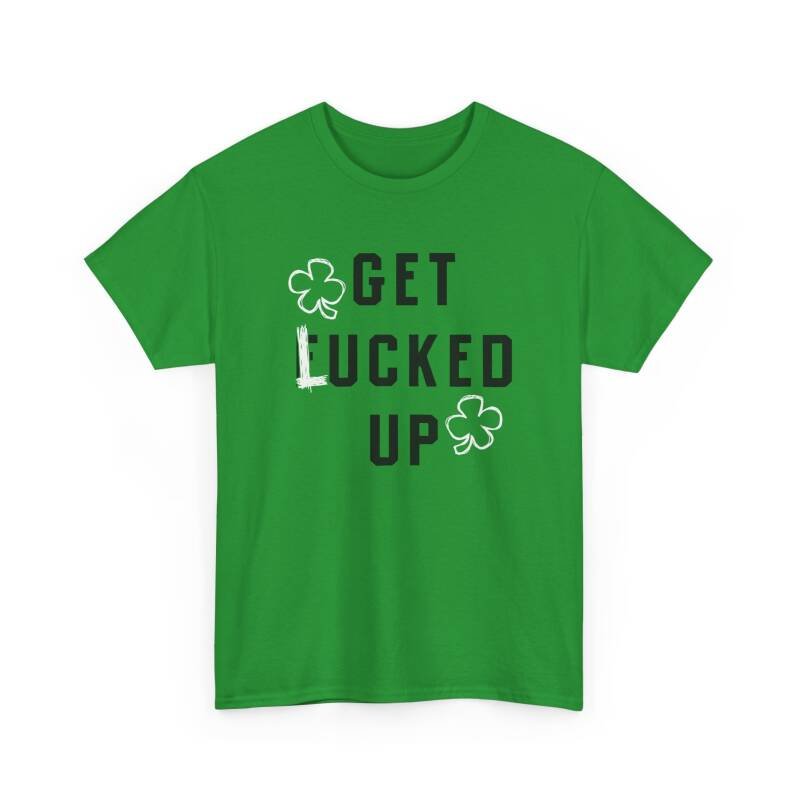
“Get Lucked Up” Unisex T-Shirt – Shamrock Shenanigans
Price range: $19.99 through $25.99 -
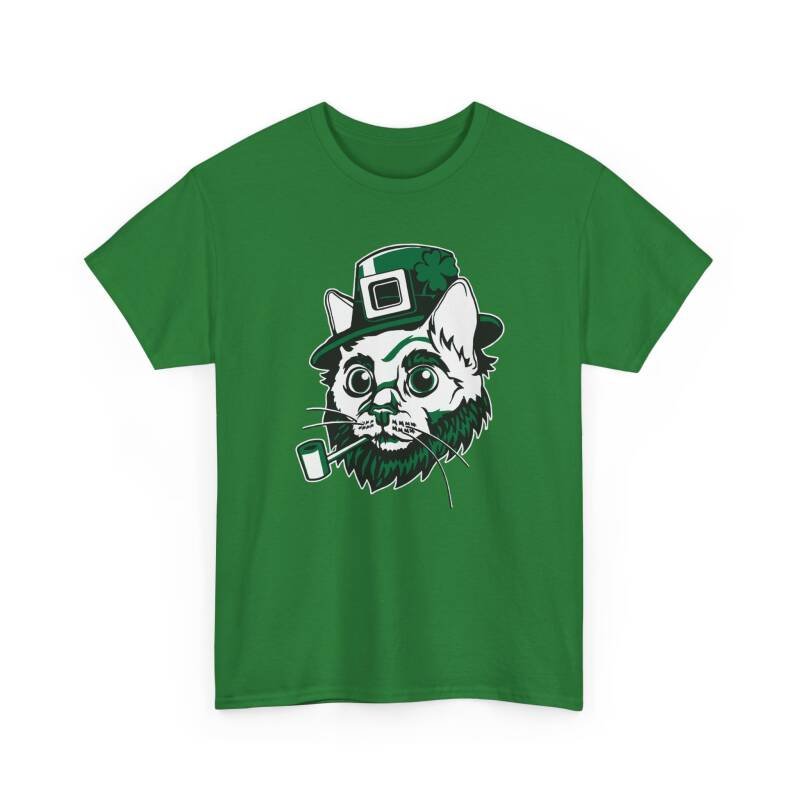
“Leprechaun Cat” Unisex T-Shirt – Purrfectly Lucky
Price range: $19.99 through $25.99 -

4-Leaf Clover USA Flag Unisex T-Shirt – Irish American Pride Tee in Green for Heritage & Gifting
Price range: $22.99 through $27.89 -

American Grown with Irish Roots Unisex T-Shirt – USA & Ireland Flag Heritage Tee
Price range: $22.99 through $27.89 -

Biting Lip Irish Pop Art Unisex T-Shirt – Sexy Green Shamrock Tee with Glitter Vibes
Price range: $22.99 through $27.89