Poet Alice Fulton’s Irish heritage pulses through her language and lyricism. Explore how her ancestry shapes her literary voice and poetic imagination.
A Voice Forged in Two Worlds
New York, 1952. Post-war America is booming, suburbs are sprawling, and the children of immigrants are being told to forget where they came from and become “real Americans.” But some things refuse to be forgotten. Some inheritances can’t be assimilated away.
Alice Fulton arrived in this world carrying something invisible but indelible: the linguistic DNA of Ireland, the storytelling instinct of ancestors who understood that words could be weapons, shields, and salvation all at once. She would grow up to become one of contemporary poetry’s most innovative voices, pushing boundaries and inventing new forms. But underneath all that experimentation, underneath the Pushcart Prizes and the Ruth Lilly Poetry Prize, underneath the academic accolades and critical acclaim: Ireland.
Not the Ireland of tourist brochures or St. Patrick’s Day parades. The real thing—complicated, contradictory, carried in the bloodstream like a recessive gene that suddenly expresses itself in unexpected ways. The Ireland of oral tradition and linguistic acrobatics, of finding beauty in darkness and meaning in ambiguity, of understanding that the simplest word can carry the weight of centuries.
Fulton’s poetry doesn’t announce its Irishness with shamrocks and Celtic knots. It’s subtler than that, more profound. Her work explores identity, mortality, the intricate dance between nature and human consciousness—universal themes, yes, but approached with a sensibility that’s distinctly Irish in its love of language, its comfort with paradox, its refusal to choose between intellect and emotion.
Her collections—”Polarities,” “Cascade,” and others—showcase technical innovation that seems thoroughly modern. She invents new punctuation marks, plays with form in ways that make traditionalists nervous, embraces scientific language and concepts that feel light-years from Celtic mists. Yet scratch the surface and you’ll find something ancient: the Irish understanding that language is magic, that the right words in the right order can transform reality itself.
Roots That Run Deep
Trace Fulton’s family tree backward and you’ll find yourself in Ireland—not as abstraction or vacation destination, but as homeland. Her ancestors lived in those “lush landscapes” that sound cliché until you’ve actually stood in an Irish field at twilight and felt the weight of accumulated history pressing down through the atmosphere.
These weren’t wealthy Anglo-Irish with country estates. These were the people who worked the land, who survived on potatoes and prayer, who maintained their culture through sheer stubborn will when everything conspired against them. The people who kept Irish alive when speaking it could cost you opportunities. The people who preserved stories by memorizing them, passing them down through generations like precious cargo.
When Fulton’s ancestors emigrated—and they did emigrate, because staying meant choosing poverty as permanent condition—they brought only what they could carry. But here’s the thing about oral tradition: it weighs nothing. Stories, songs, ways of thinking about the world—these travel light. They don’t require suitcases or customs declarations. They smuggle themselves into the new world inside the minds of people who might lose everything else but refuse to lose their words.
This is Fulton’s true inheritance. Not documents or photographs or family heirlooms, but linguistic patterns. Storytelling strategies. A particular relationship with language that treats it as living entity rather than mere communication tool. The Irish have always understood something that English departments spend years trying to teach: words matter. Not just what they mean, but how they sound, how they feel in the mouth, how they connect to other words in chains of association that defy logic but resonate with truth.
The Irish experience—emigration, resilience, survival through artistic expression—isn’t just biographical background for Fulton. It’s the foundation of her poetic architecture. Her ancestors may have left Ireland physically, but Ireland never left them. And several generations later, it emerges in Alice Fulton’s poetry like genetic memory made visible.
The Oral Tradition Goes Vertical
Irish storytelling has always been a performance art. Before literacy was widespread, before books were common, Irish culture preserved itself through people who could memorize epic poems, who could recite genealogies going back centuries, who understood that forgetting meant cultural death.
These weren’t casual entertainers. They were cultural guardians, human archives, the living memory of a people. And they developed techniques—intricate patterns of sound and sense, mnemonic devices disguised as beauty, ways of making language stick in the mind so it could survive.
Fulton inherits this tradition, but she doesn’t simply replicate it. She transforms it. Where ancient bards used repetition and formulaic phrases to aid memory, Fulton uses intricate wordplay and linguistic innovation to make language unforgettable for different reasons. Her poetry demands attention not because you need to memorize it for cultural survival, but because it’s so densely packed with meaning that casual reading misses half the brilliance.
Her “fervent appreciation for language and nuance” isn’t just personal preference—it’s ancestral inheritance. The Irish have always been drunk on language, intoxicated by its possibilities. They took English (the colonizer’s tongue, forced upon them) and twisted it, played with it, made it dance to Irish rhythms until it became something new. Joyce did it. Yeats did it. Beckett did it. And Fulton does it, proving that this linguistic playfulness survives diaspora, survives generational distance, survives even the homogenizing pressure of American culture.
Look at Fulton’s “intricate wordplay”—the puns, the double meanings, the way single words shimmer with multiple interpretations. This is Irish literary tradition channeled through contemporary sensibility. The surface might be thoroughly modern, but the impulse is ancient: make language do more than it should be able to do. Pack more meaning into fewer words. Create sentences that operate on multiple levels simultaneously.
Where Landscape Becomes Language
Irish writers have always understood that place isn’t just setting—it’s character, theme, and metaphor all at once. The land speaks, if you know how to listen. Every stone wall tells a story. Every field remembers who worked it and who died trying to keep it.
Fulton writes about the Irish landscape not as tourist but as descendant. When she invokes Ireland’s terrain in her poetry, she’s not describing picturesque scenery—she’s accessing something deeper. The land becomes allegory for identity, memory, belonging. It’s simultaneously specific and universal, deeply personal yet broadly resonant.
This is classic Irish literary territory. Heaney did it, digging through layers of soil and history simultaneously. Boland did it, finding in landscape the traces of women’s lives erased from official history. And Fulton does it, understanding that when Irish poets write about land, they’re really writing about everything: identity, history, loss, persistence, the stubborn refusal of memory to fade.
Her poetry explores “the question of what it means to belong”—to a place, to a lineage, to a culture you’ve inherited but never directly experienced. This isn’t abstract philosophy. For Irish-Americans (and immigrants of all backgrounds), this is lived reality. You carry a culture you don’t fully inhabit. You’re connected to a place you might never have visited. You’re shaped by history you didn’t experience firsthand.
This displacement—this being between worlds—produces a particular kind of vision. You see your adopted country with immigrant eyes, still noticing things the native-born take for granted. But you also see your ancestral homeland through the distorting lens of distance and imagination. You belong fully to neither place, which means you can write about both with clarity born from productive alienation.
The Irish-American Hyphen
That hyphen in “Irish-American” isn’t just grammatical punctuation—it’s existential space. It’s the gap between what was and what is, between heritage and assimilation, between ancestral identity and American reinvention. And it’s precisely in this gap that Fulton’s poetry lives and breathes.
She’s not Irish. She’s not quite unhyphenated American either. She’s something more interesting: a poet whose work emerges from cultural negotiation, from the productive tension of being more than one thing simultaneously. Her poetry doesn’t resolve this tension—it explores it, celebrates it, mines it for everything it’s worth.
This is where Fulton joins the conversation with Irish literary tradition while also departing from it. Heaney wrote from Northern Ireland, Boland from Dublin—they inhabited Ireland physically even as they questioned what Irish identity meant. Fulton writes from America, from a position of inherited rather than lived Irish experience. But this distance doesn’t weaken her connection—it changes it into something equally valuable.
She brings Irish sensibility to American poetry, enriching both traditions. Her work demonstrates that you don’t have to be born in Ireland to write poetry informed by Irish literary values. The love of language, the comfort with ambiguity, the willingness to let mystery remain mysterious rather than explained away—these travel across oceans and generations.
Folklore as Foundation
Irish folklore isn’t quaint stories about fairies and leprechauns (though those exist too). It’s a complex system of meaning-making, a way of understanding the world that coexists with but doesn’t contradict rational thought. The Irish have always been comfortable holding contradictory ideas simultaneously: the world is explicable through science AND it’s also enchanted. Things mean what they obviously mean AND they also mean something else entirely.
This both/and thinking (rather than either/or) permeates Irish culture and Irish literature. It allows for poetry that operates on multiple levels, that refuses to reduce complex reality to simple statements. Fulton’s work embodies this sensibility—her poems resist easy interpretation, demand that readers hold multiple meanings in suspension, trust that ambiguity can be more truthful than clarity.
The “traditional Irish motifs” and “folklore” in Fulton’s work aren’t decorative elements borrowed for exotic flavor. They’re structural principles, ways of organizing experience and language that she’s inherited along with her surname. When she weaves myth into contemporary poetry, she’s not being whimsical—she’s following Irish literary tradition that has always understood myth as truth told slant, as deeper reality accessed through indirection.
Irish folklore preserves pre-Christian ways of understanding the world—animistic, magical, acknowledging forces that rational thought can’t quite capture. This worldview seeps into Irish literature even when writers aren’t consciously invoking it. The sense that the world is more than material, that language connects to reality in mysterious ways, that meaning operates on levels deeper than surface sense—all of this comes from folklore tradition transformed into literary technique.
Fulton’s engagement with these elements isn’t nostalgic or romantic. She’s not trying to recreate peasant Ireland or preserve dying traditions in amber. She’s doing something more sophisticated: taking the underlying principles of Irish folklore and mythic thinking and adapting them to contemporary poetry. The content is modern, but the methodology is ancient.
Language as Inheritance
If you listen closely to Irish English—and Fulton, however many generations removed, carries its echo—you hear something distinctive. The syntax that doesn’t quite follow standard English patterns. The love of the subjunctive mood (that grammatical form expressing hypotheticals and wishes). The tendency toward indirection, toward saying things sideways rather than straight on.
These aren’t mistakes or deficiencies. They’re traces of Irish Gaelic grammar influencing English syntax, creating something hybrid and powerful. When Irish speakers adopted English (sometimes voluntarily, often under duress), they didn’t simply learn a new language—they transformed it, bent it to patterns their minds were already tuned to.
Fulton’s “linguistic elements that evoke the land and its people” aren’t obvious accents or dialect spellings. They’re deeper than surface features. They’re in the rhythm of her sentences, the way her thoughts unfold across lines, the particular relationship between sound and sense that her poetry embodies. She writes in English, but it’s English that’s been through the Irish filter, even if that filtering happened generations ago.
This is how culture persists—not through conscious preservation efforts, but through unconscious transmission. Linguistic patterns pass from parent to child, encoded in the very structure of thought before words are even chosen. Fulton didn’t need Irish language lessons to inherit Irish ways of thinking about language. It came with the family, silent instruction written into her cognitive architecture.
The Universal Through the Specific
Here’s the paradox Fulton navigates brilliantly: the more specifically she engages with her Irish heritage, the more universally her poetry resonates. By refusing to sand down her cultural edges, by embracing rather than hiding her particular background, she creates work that speaks to everyone.
This is the opposite of how assimilation is supposed to work. The conventional wisdom says: minimize your ethnic particularities, speak in universal terms that anyone can relate to, don’t alienate readers with cultural specificity. But great ethnic literature proves this wrong. The more deeply writers dig into their specific heritage, the more they tend to unearth universal truths.
Fulton’s exploration of Irish identity becomes exploration of all identity. Her questions about belonging to a place and a lineage become everyone’s questions. Her wrestling with inherited culture in a globalized world mirrors struggles faced by anyone trying to maintain connection to roots while growing in new directions.
“In a world increasingly characterized by globalization, the exploration of one’s roots can cultivate a sense of belonging and purpose.” This isn’t just nice sentiment—it’s literary strategy. By grounding her work in Irish specificity, Fulton gives readers a concrete entry point into abstract questions. Heritage becomes handrail guiding readers through complex emotional and philosophical territory.
Innovation Rooted in Tradition
Fulton is known as an innovator, someone who pushes poetry into new territory. She invented the “bride sign” (==) to indicate a particular kind of pause in her verse. She incorporates scientific language and concepts into her poems. She experiments with form in ways that feel cutting-edge, even radical.
But here’s what’s easy to miss: innovation and tradition aren’t opposites. The Irish literary tradition has always valued innovation. The ancient bards who seemed to preserve unchanging tradition were actually constantly adapting, incorporating new material, responding to contemporary circumstances. Joyce’s “Ulysses” was revolutionary precisely because it was so deeply rooted in Irish literary and mythic tradition.
Fulton does the same thing. Her innovations aren’t random experimentation—they’re traditional Irish playfulness applied to contemporary poetry. The impulse to make language do new things, to surprise readers with unexpected moves, to treat the poem as a space for discovery rather than just communication—this is thoroughly Irish even when the specific techniques are entirely original.
She proves that honoring heritage doesn’t mean repeating what came before. It means taking the underlying principles—the Irish love of linguistic play, the comfort with ambiguity, the sense that poetry should be both intellectually rigorous and emotionally resonant—and adapting them to present circumstances.
Memory as Method
Irish culture has always understood that memory isn’t passive storage—it’s active force. The way you remember shapes who you are. The stories your family tells (and doesn’t tell) construct your identity as surely as DNA determines eye color.
Fulton’s poetry engages deeply with memory—personal memory, cultural memory, the kind of memory that might actually be imagination but feels true anyway. Her exploration of “memory and belonging” isn’t just thematic interest—it’s methodological approach. She writes the way memory works: associative rather than linear, emotionally weighted, blurring boundaries between past and present.
This is Irish literary territory. The past doesn’t stay put in Irish writing—it intrudes on the present, demands recognition, refuses to be filed away as “over.” History isn’t something that happened; it’s something that’s still happening, still shaping current reality in ways both visible and hidden.
For Irish-Americans specifically, memory becomes even more complex. How do you remember a place you’ve never been? How do you maintain connection to culture you didn’t directly experience? Fulton’s answer: through imagination working in concert with inherited stories, through language that carries cultural memory even when specific facts are lost, through poetry that makes ancestral experience vivid enough to feel like personal memory.
Poetry as Bridge
Ultimately, Fulton’s Irish ancestry functions in her work as bridge—connecting past to present, Ireland to America, tradition to innovation, personal identity to universal human experience. She doesn’t write “Irish poetry” in some narrow ethnic sense. She writes American poetry that’s been enriched, deepened, and complicated by Irish heritage.
This matters beyond Fulton’s individual achievement. She demonstrates that ethnic heritage isn’t limiting factor or special interest category—it’s resource, perspective, way of seeing the world that adds to rather than subtracts from literary possibility. In increasingly diverse America, writers who successfully integrate their cultural backgrounds into their work without being reduced to ethnic representatives perform crucial cultural labor.
Fulton shows that you can be thoroughly contemporary while honoring ancient traditions. You can push boundaries while respecting roots. You can speak to everyone while remaining true to your particular background. The hyphen in Irish-American doesn’t split identity—it joins different strengths into something more powerful than either alone could be.
The Gift That Keeps Giving
Alice Fulton continues writing, continues innovating, continues proving that Irish literary tradition is alive and adaptable. But her influence extends beyond her own poems. She’s shown younger poets—Irish-American and otherwise—that heritage is asset, not liability. That the way to universal is through particular. That innovation grows from tradition rather than abandoning it.
Her Irish ancestry gave her linguistic inheritance, thematic preoccupations, ways of thinking about poetry’s purpose and possibilities. She took these gifts and transformed them, proved they could thrive in contemporary American poetry without being diluted or domesticated. She honored her heritage by refusing to preserve it in amber, instead letting it evolve, adapt, become something new while remaining recognizably itself.
This is how culture survives—not through museum preservation, but through living artists who take inherited material and make it urgent, relevant, necessary for contemporary readers. Fulton’s work demonstrates that Irish literary tradition didn’t end with Joyce or Yeats or Heaney. It continues in diaspora, in places far from Ireland, in poets who might never have set foot in County Cork or Kerry but who carry Ireland in their linguistic DNA.
The girl born in 1950s New York to a family with Irish roots became one of America’s most important contemporary poets. She invented new forms, won prestigious prizes, earned critical acclaim for innovation. But underneath all that newness: something old. Ancient, really. The Irish understanding that words are magic, that language shapes reality, that poetry matters not just aesthetically but existentially.
Alice Fulton proves that you can be four or five generations removed from Ireland and still write poetry that’s fundamentally Irish in its sensibility. The inheritance doesn’t dilute with distance—it concentrates, becomes essence rather than detail. Her work shows that Irish literary tradition is portable, adaptable, capable of thriving anywhere its inheritors choose to plant it.
And that’s the final gift of her Irish ancestry: demonstrating that culture is resilient, that heritage persists even when everything seems designed to erase it, that the voices of ancestors can speak through descendants who transform the message while keeping its essential spirit intact.
The Irish crossed the ocean carrying stories. Generations later, Alice Fulton transforms those stories into contemporary poetry that earns its place in the American canon while never forgetting where it came from. That’s not just literary achievement—it’s cultural miracle, the kind that happens when talent meets heritage and creates something neither tradition alone nor innovation alone could produce.
The poetry in her DNA expresses itself in every line she writes, every formal experiment she attempts, every thematic exploration she undertakes. Ireland lives in her work not as subject matter but as methodology, not as content but as consciousness. And that makes all the difference.
Shop new arrivals
-
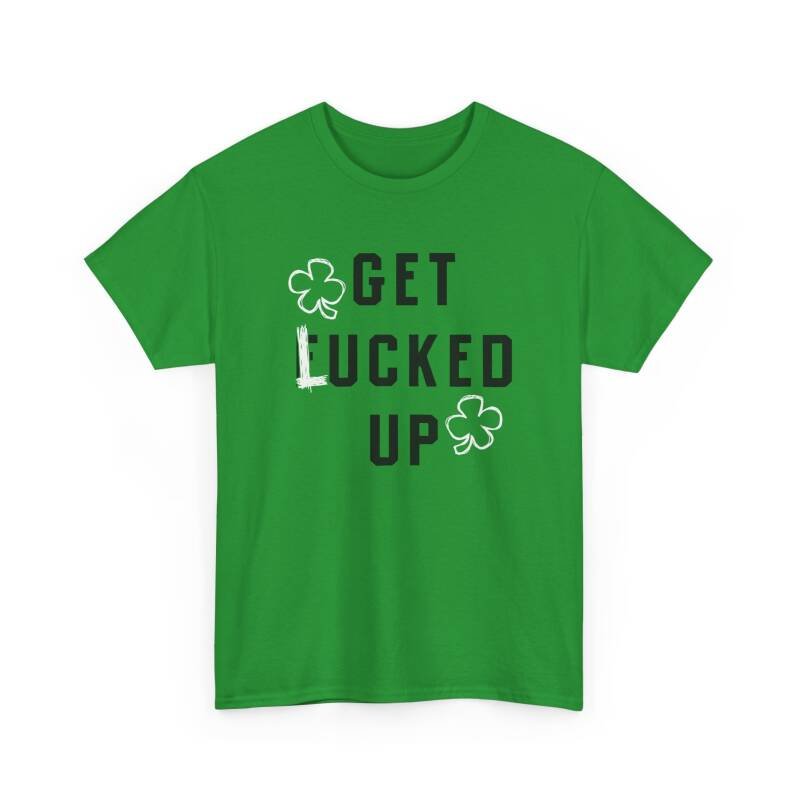
“Get Lucked Up” Unisex T-Shirt – Shamrock Shenanigans
Price range: $19.99 through $25.99 -
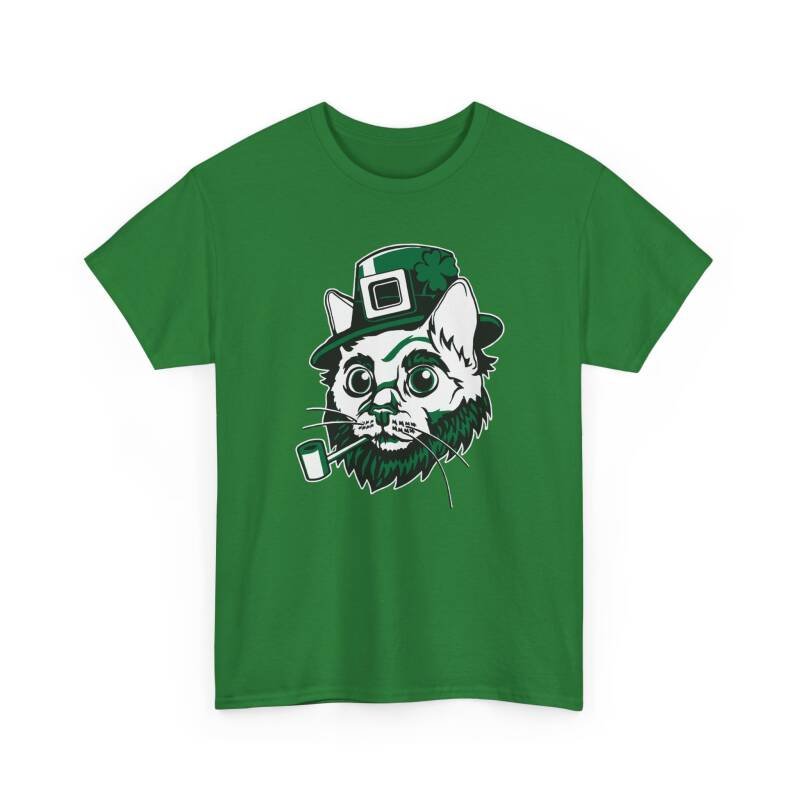
“Leprechaun Cat” Unisex T-Shirt – Purrfectly Lucky
Price range: $19.99 through $25.99 -

4-Leaf Clover USA Flag Unisex T-Shirt – Irish American Pride Tee in Green for Heritage & Gifting
Price range: $22.99 through $27.89 -

American Grown with Irish Roots Unisex T-Shirt – USA & Ireland Flag Heritage Tee
Price range: $22.99 through $27.89 -

Biting Lip Irish Pop Art Unisex T-Shirt – Sexy Green Shamrock Tee with Glitter Vibes
Price range: $22.99 through $27.89