
When Chicago Met County Kerry
Picture a January day in 1962 Chicago—a city of steel and snow, far from the green hills of Ireland. Yet when Campbell McGrath entered the world on that winter day, he carried within him the songs, sorrows, and stories of the Emerald Isle. His very name, McGrath, whispers of windswept Irish coasts and generations of voices waiting to be heard.
What makes a poet? Is it education—the years at the University of Chicago, the MFA from Arizona? Or is it something deeper, something inherited like eye color or a particular turn of phrase? For McGrath, the answer seems to lie in the soil of his ancestors’ homeland, in the ancient cadence of Irish storytelling that runs through his veins like a second bloodstream.
His celebrated collections—”Capitalism,” “Road Atlas,” “How to Write a Study”—have earned him fellowships and accolades that would make any writer envious. But strip away the prestigious Guggenheim Fellowship and the literary awards, and you’ll find something more elemental: a poet grappling with the oldest questions of all. Who am I? Where do I belong? What stories must I tell before I’m gone?
Echoes of the Great Hunger
To understand McGrath’s Irish roots is to understand a history written in tears and tenacity. Ireland’s story isn’t just about shamrocks and folk songs—it’s about survival. When the Great Famine ravaged the countryside in the 1840s, it scattered Irish families across the globe like seeds on the wind. Some took root in America, carrying with them memories of stone cottages, lost relatives, and a language slowly slipping away.
This diaspora created something remarkable: a people defined as much by absence as by presence, by what was left behind as by what was carried forward. Irish poets have always understood this duality. Their verses carry the weight of colonization, the sting of cultural suppression, the fierce pride of a people who refused to be erased.
McGrath inherits this tradition. His poetry doesn’t just reference Irish themes—it breathes them, inhabits them, wrestles with them in the dark hours before dawn.
Names That Carry Weight
McGrath. O’Sullivan. These aren’t just surnames on a family tree—they’re lifelines stretching back across the Atlantic to County Kerry, where mountains meet the sea and the land itself seems to remember. County Kerry, with its dramatic landscapes and rich artistic heritage, isn’t merely McGrath’s ancestral homeland; it’s the ghost that walks through his poetry, whispering of places he’s never lived but somehow knows intimately.
Genealogical threads connect him to immigrants who made impossible choices: leave everything familiar or watch your children starve. Come to America or stay and fade away. His ancestors chose the future, but they brought the past with them—in their accents, their prayers, their fierce love of language and story.
This duality pulses through McGrath’s work. He’s simultaneously American and Irish, modern and ancient, grounded in concrete Chicago sidewalks yet haunted by green hills he knows only through blood memory.
In “The Last of the Irish,” McGrath confronts this inheritance head-on. The poem doesn’t romanticize the immigrant experience—it excavates it, revealing both beauty and pain. He explores what it means to be the last link in a chain, the final voice speaking in a dialect that’s fading, the keeper of stories that risk dying with his generation.
His poetry transforms landscapes into emotional terrain. The Irish countryside becomes a metaphor for longing, for the gap between who we are and where we come from. He writes of places that shaped ancestors he never met, yet their influence flows through his lines like water through bedrock—invisible but essential.
When Memory Becomes Music
If Irish culture gave McGrath anything, it’s an understanding that memory isn’t passive—it’s an active force, a living presence that demands acknowledgment. Like W.B. Yeats spinning myths into modernism or Seamus Heaney digging through language like peat, McGrath recognizes that the past isn’t dead; it’s not even past.
His poem “The Lost Poems” captures this haunting quality. Memory here is slippery, unreliable, yet utterly vital—much like the oral traditions that kept Irish culture alive during centuries of oppression. What happens when memories fade? What’s lost when a generation dies without passing on their stories?
These questions resonate beyond Irish experience into universal human territory, which is precisely what makes McGrath’s work so powerful. He’s specific enough to honor his heritage but expansive enough to speak to anyone who’s ever felt caught between two worlds.
The landscapes in McGrath’s poetry do more than provide scenery—they’re characters, witnesses, repositories of meaning. In “Carthy’s Folly,” physical description and emotional introspection merge until you can’t separate the external landscape from the internal one. This is pure Irish tradition: the land as living entity, as keeper of secrets, as silent judge of human folly.
The Music of Language Itself
Listen closely to McGrath’s poetry and you’ll hear something distinctly Irish: the rhythm of folk songs, the cadence of ballads, the musicality that made Irish poetry sing long before it was written down. His lines don’t just convey meaning—they sound, they resonate, they demand to be read aloud.
This isn’t accidental. Irish poetry has always understood that sound carries as much weight as sense, that the music of language can convey truths that mere meaning cannot. From ancient bards to contemporary voices, Irish poets have treated language as an instrument, and McGrath plays that instrument with virtuoso skill.
Why It Matters
In an increasingly homogenized world, McGrath’s poetry reminds us that our origins matter—not as limitations but as foundations. His Irish heritage doesn’t constrain his voice; it amplifies it, gives it depth and resonance that pure originality could never achieve.
He’s part of a continuum, a conversation that stretches back centuries and forward into an uncertain future. By honoring his Irish roots while speaking in a distinctly American voice, McGrath creates something new: a bridge between worlds, a translation of ancestral memory into contemporary meaning.
His work proves that you don’t have to choose between past and present, between heritage and innovation. You can be both—and in that both-ness, in that productive tension, great art happens.
The Poet as Bridge
Campbell McGrath stands at a crossroads where Chicago meets Kerry, where the 21st century converses with the 19th, where American ambition embraces Irish soul. His poetry doesn’t resolve these tensions—it lives in them, explores them, celebrates them.
For readers navigating their own complex identities, McGrath offers not answers but company. He reminds us that wrestling with heritage isn’t a burden—it’s a gift, a source of richness that deepens everything we create.
In the end, McGrath’s Irish ancestry isn’t just a biographical footnote or a thematic flavor. It’s the underground river that feeds his poetic garden, the invisible architecture that supports his visible achievements. Understanding this Irish foundation doesn’t just help us read McGrath better—it helps us understand how deeply our own roots run, how powerfully ancestry shapes art, and how the voices of the dead continue speaking through the living.
That January baby born in Chicago carried Ireland in his bones. Lucky for us, he learned to transform that inheritance into poetry that speaks across all borders, all generations, all the artificial divisions we create. He proves that the most powerful way to honor where we come from is to use it as fuel for creating something beautifully, defiantly new.
Shop new arrivals
-

“Get Lucked Up” Unisex T-Shirt – Shamrock Shenanigans
Price range: $19.99 through $25.99 -
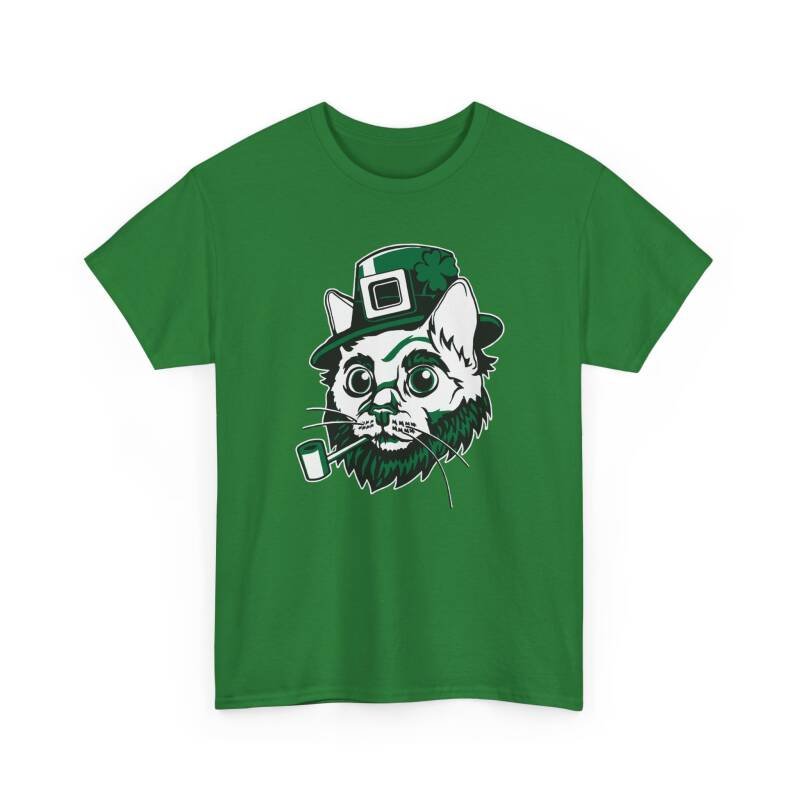
“Leprechaun Cat” Unisex T-Shirt – Purrfectly Lucky
Price range: $19.99 through $25.99 -

4-Leaf Clover USA Flag Unisex T-Shirt – Irish American Pride Tee in Green for Heritage & Gifting
Price range: $22.99 through $27.89 -

American Grown with Irish Roots Unisex T-Shirt – USA & Ireland Flag Heritage Tee
Price range: $22.99 through $27.89 -

Biting Lip Irish Pop Art Unisex T-Shirt – Sexy Green Shamrock Tee with Glitter Vibes
Price range: $22.99 through $27.89