When Kerry Wit Meets American Satire
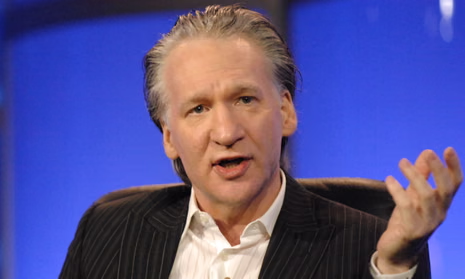
Bill Maher doesn’t just offend people—he does it with surgical precision, targeting sacred cows with gleeful irreverence that makes half his audience cheer while the other half fumes. Born January 20, 1956, in New York City, he’s built five-decade career on saying things others won’t, tackling subjects others avoid, refusing to moderate opinions for broader appeal. “Real Time with Bill Maher” has run on HBO since 2003, becoming essential viewing for those who appreciate political commentary delivered without safety net or apology.
His comedic style is distinctive: sharp, confrontational, unapologetically smug, willing to attack left and right with equal vigor. He’s been called brilliant and insufferable, courageous and obnoxious, prophetic and pompous—often by same person in same conversation. Love him or hate him (and people seem incapable of moderate feelings about Maher), you can’t ignore him. He’s cultural force, comedian who shapes political discourse rather than just commenting on it.
But here’s what the controversy and confrontation obscure: Maher carries Ireland in his blood, channeling heritage from counties Kerry and Limerick through generations to create comedic sensibility that’s distinctly Irish even when tackling thoroughly American subjects. His great-great-grandfather emigrated from County Kerry during mid-19th century waves of Irish immigration, fleeing famine and poverty, seeking survival in America where discrimination meant trading one set of hardships for another.
By the time Bill was born in 1950s New York, his family was American—but Irish values, Irish communication patterns, Irish relationship with authority and establishment remained. His mother wasn’t raised explicitly emphasizing Irish heritage, but cultural values got transmitted nonetheless: questioning authority, using wit as weapon, finding absurdity in serious institutions, understanding that challenging power is moral obligation not social transgression.
Maher absorbed these before he understood their origins. The Irish gift for verbal combat, the comfort with being contrarian, the understanding that humor serves serious purposes beyond entertainment, the refusal to defer to authority simply because it’s authority—these became his trademarks, the qualities that made him unlike other political comedians.
His grandmother’s storytelling tradition, those family gatherings where tales of Irish lineage were recounted with pride and humor—these taught him that narrative matters, that how you tell story affects what story means, that finding humor in difficult circumstances is Irish survival mechanism that translates perfectly to political satire.
From Famine Ships to New York: The Journey
To understand Maher’s Irish heritage is to understand catastrophe that scattered Irish families across globe. The Great Famine of 1845-1852 wasn’t just agricultural disaster—it was humanitarian catastrophe enabled by British colonial policies that valued profit over Irish lives.
When potato blight destroyed crops that most Irish depended on for survival, British landlords continued exporting Irish-grown grain for profit while Irish people starved. The British government’s response was criminally inadequate, shaped by ideology that viewed Irish poverty as deserved consequence of Irish character flaws. Million died. Another million fled.
Maher’s great-great-grandfather left County Kerry during these waves—not just because of Famine but because Ireland offered no future worth staying for. British colonial policies had systematically impoverished the country, creating conditions where owning land was nearly impossible for Irish Catholics, where opportunities were scarce, where young people saw futures of grinding poverty or emigration to countries that at least offered possibility.
He chose America, chose possibility over certainty, chose future over past even though price was leaving Ireland forever. He landed in New York, joining waves of Irish immigrants settling in urban centers, facing “No Irish Need Apply” discrimination that treated Irish Catholics as racial inferiors, taking whatever work they could get while building communities that preserved Irish culture.
The immigrant experience carved itself into family psychology across generations. You don’t forget being treated as inferior. You don’t forget that Irish surname meant people assumed less of you. You don’t forget that acceptance required constant proving, that system wasn’t designed to help you succeed. These memories got transmitted through values: question authority that hasn’t earned respect, don’t defer to institutions that discriminated against your people, use intelligence and wit as weapons when you lack other forms of power.
By the time Bill was born, explicit connection to Ireland had faded. But underneath: Irish patterns of thought, Irish communication styles, Irish relationship with power and authority that would define his entire approach to comedy and commentary.
The Irish Gift: Wit as Weapon
Irish culture developed particular relationship with language out of necessity. When you’re colonized people whose language is banned, whose culture is suppressed, whose every aspect of life is controlled by hostile power—you learn that wit is weapon, that verbal facility creates power when you lack institutional authority, that making oppressors look foolish is form of resistance.
Irish wit isn’t just being funny—it’s sophisticated political strategy. The ability to puncture pretension, to expose hypocrisy, to make authority figures look ridiculous through perfectly timed observation—this served survival function for people who couldn’t openly rebel but refused to be silently oppressed.
Maher embodies this Irish tradition of wit-as-weapon perfectly. His comedy isn’t gentle or self-deprecating—it’s aggressive, pointed, designed to expose foolishness and hypocrisy in people and institutions that claim authority. He doesn’t defer to power; he mocks it. He doesn’t soften criticism for palatability; he sharpens it for maximum impact.
Watch “Real Time”—he skewers politicians, religious leaders, corporate executives, anyone claiming authority he hasn’t deemed them worthy of. This refusal to defer, this comfort with being provocative, this understanding that comedy serves political purpose beyond entertainment—this is Irish tradition of using wit to challenge power.
His willingness to offend isn’t just personality trait—it’s Irish cultural pattern. Irish wit historically didn’t worry about being liked or maintaining social harmony; it prioritized truth-telling and power-challenging even when that created discomfort. Maher follows this tradition: he’d rather be right and unpopular than wrong and beloved, would rather offend with truth than please with lies.
The Contrarian Spirit: Irish Rebellion Made Manifest
Irish history is catalogue of rebellion—against British rule, against Catholic Church authority when it overreached, against any institution claiming power it hadn’t earned or was using unjustly. Irish culture developed deep skepticism of authority, comfort with being contrarian, understanding that consensus can be wrong and standing apart can be moral necessity.
Maher’s entire career embodies this Irish contrarian spirit. He’s politically homeless—too critical of religion for religious conservatives, too critical of progressive orthodoxy for woke left, too willing to question any ideology to fit neatly into existing political tribes. This independence, this refusal to conform to team expectations, reflects Irish tradition of questioning all authority, refusing to accept claims simply because they’re widely believed.
His attacks on political correctness, his critiques of both major parties, his willingness to say things that make his own audience uncomfortable—this is Irish contrarian tradition. He doesn’t take positions because they’re popular; he takes them because he believes them to be true, regardless of social cost.
His famous controversies—the post-9/11 “Politically Incorrect” comments that got show canceled, his critiques of Islam that alienated liberals, his attacks on Republican policies that infuriated conservatives—all reflect Irish comfort with being outsider, understanding that sometimes standing alone is price of maintaining intellectual honesty.
This Irish contrarian spirit creates both his appeal and his limitations. Those who value independent thinking appreciate his refusal to conform; those who value coalition-building find his purity tests exhausting. But it’s authentically Irish pattern: maintain your principles even when it costs you, refuse to compromise core beliefs for acceptance, understand that being right matters more than being popular.
Storytelling Through Combat: The Irish Style
Irish culture has always valued verbal combat as entertainment and social bonding—the ability to engage in witty arguments, to defend positions eloquently, to enjoy intellectual sparring as form of connection rather than conflict. This tradition of argument-as-art appears throughout Irish literature and persists in Irish-American culture.
Maher’s show format embodies this Irish love of verbal combat. “Real Time” isn’t just panel discussion—it’s structured argument, intellectual sparring where guests defend positions against Maher’s challenges and each other’s critiques. This format reflects Irish understanding that good argument is entertaining, that intellectual combat can be both serious and enjoyable, that disagreement doesn’t preclude respect.
His interviewing style similarly reflects Irish verbal combat tradition. He doesn’t just let guests speak—he challenges them, pushes back, forces them to defend positions rather than just stating them. This aggressive questioning style, which some find refreshing and others find rude, is quintessentially Irish: conversation as intellectual combat, politeness as less important than truth-seeking.
The satisfaction he takes in good argument, regardless of who wins—this too is Irish. When guest makes point that undermines his own position, Maher often acknowledges it with genuine appreciation for well-executed argument. This respect for verbal skill over ideological agreement reflects Irish tradition that values wit and eloquence regardless of which side displays them.
The Religious Skepticism: Irish Complication
Maher’s famous atheism and aggressive critiques of organized religion create interesting relationship with Irish heritage. Ireland is historically Catholic—Catholicism was identity marker during British Protestant rule, way of maintaining Irish identity when everything else could be stripped away.
But Irish relationship with Catholic Church has always been complicated. Same institution that preserved Irish identity during colonization also wielded enormous oppressive power, controlled education and morality, covered up horrific abuses. Many Irish and Irish-Americans maintain cultural Catholic identity while rejecting Church authority—they’re “recovering Catholics,” carrying cultural patterns while discarding religious beliefs.
Maher fits perfectly in this tradition. He rejects religious belief entirely, makes career partly from critiquing religion’s role in politics and society. But his approach—the specific ways he attacks religion, the comfort with questioning sacred institutions, the refusal to defer to religious authority—reflects Irish pattern of complicated relationship with powerful religious institution.
His documentary “Religulous” attacks organized religion from perspective of someone who understands it from inside, who knows the patterns and can critique them with insider knowledge. This is different from someone who was never religious—it’s critique born from familiarity, Irish pattern of questioning institutions you grew up within rather than those you never understood.
Why His Irish Heritage Matters
Maher rarely discusses Irish ancestry explicitly—it’s not central to his public persona the way being politically incorrect is, or being atheist, or being libertarian-leaning liberal. But understanding his Kerry and Limerick roots illuminates aspects of his comedy and commentary that might otherwise seem purely individual rather than culturally transmitted.
His wit-as-weapon approach reflects Irish verbal combat tradition. His contrarian independence embodies Irish rebellious spirit. His comfort with controversy channels Irish history of standing against authority. His love of argument-as-entertainment follows Irish cultural pattern. Even his religious skepticism fits Irish complicated relationship with powerful Church.
For fans trying to understand what makes Bill Maher Bill Maher—why he’s so comfortable being provocative, why he refuses to moderate for broader appeal, why argument seems to energize rather than exhaust him—Irish heritage provides framework. He’s not just combative individual who happened to become political comedian; he’s product of cultural traditions that value wit, reward contrarian thinking, treat intellectual combat as noble pursuit.
For critics who find him insufferable, understanding his Irish background doesn’t excuse what they see as smugness or unnecessary provocation—but it contextualizes it. The qualities that drive critics crazy—the refusal to defer, the comfort with being unpopular, the prioritizing of being right over being liked—these are Irish cultural values, not just personality flaws.
The Legacy Continues
At nearly 70 years old (as of this writing), Maher continues doing exactly what he’s always done—saying things others won’t, challenging orthodoxies left and right, refusing to moderate opinions for commercial considerations or social acceptance. “Real Time” remains relevant because Maher remains unapologetically himself, channeling Irish gifts for wit and contrarian thinking into commentary that shapes political discourse.
From County Kerry to New York to decades of political satire that influences national conversation—the journey represents cultural transmission across generations and oceans. Maher probably doesn’t consciously think “I’m being Irish” when he skewers another sacred cow or takes unpopular position. But he’s channeling heritage nonetheless, drawing from wells dug by Irish ancestors who learned that wit is weapon, that questioning authority is moral obligation, that standing alone is sometimes price of maintaining principles.
The provocateur’s Celtic blood—expressed through aggressive wit and contrarian independence and love of intellectual combat—proves that heritage shapes us even when we don’t name it, that cultural values persist across generations even when specific knowledge fades, that the best satirists draw from traditions deeper than they sometimes recognize.
Bill Maher, product of Irish immigration and New York upbringing and American political landscape, shows that knowing where you came from (even unconsciously) helps you become who you’re meant to be. The Irish gifts for wit and rebellion and refusing to defer to authority that hasn’t earned it—these live on through comedian who makes career from being precisely what Irish culture taught his ancestors to be: smart, sharp, unapologetic, and absolutely unwilling to shut up when shutting up would be easier.
From Kerry to controversy to continuing cultural relevance—the Irish legacy persists, proving that some inheritances are too powerful to ignore, too essential to who we are to ever abandon, and too useful for challenging power to ever suppress. Bill Maher’s Irish soul keeps speaking truth to power, keeps puncturing pretension, keeps proving that wit channeled through courage can change conversations and challenge orthodoxies, one uncomfortable truth at a time.
Shop new arrivals
-
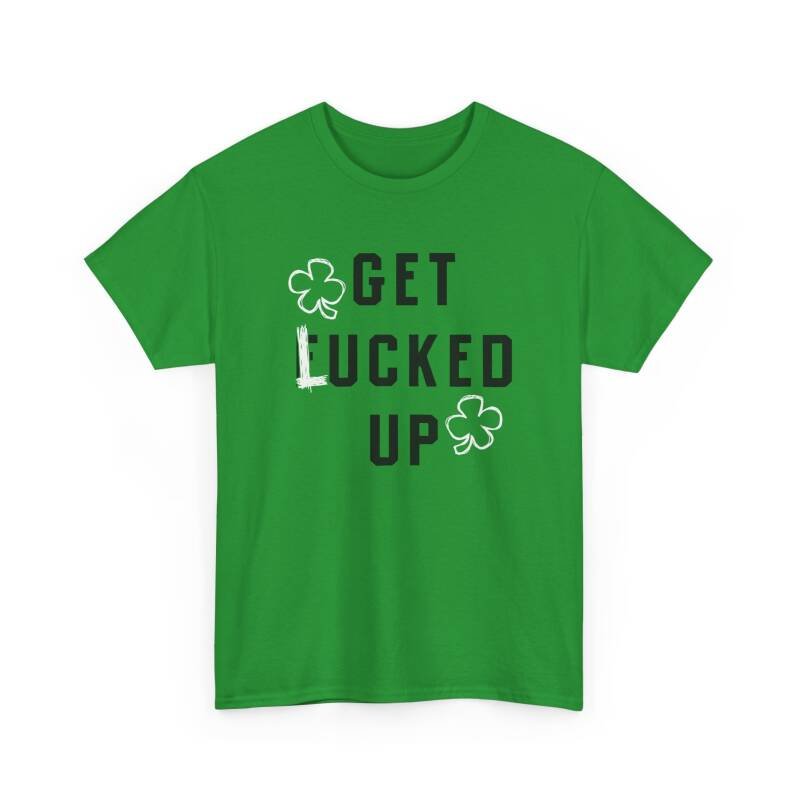
“Get Lucked Up” Unisex T-Shirt – Shamrock Shenanigans
Price range: $19.99 through $25.99 -
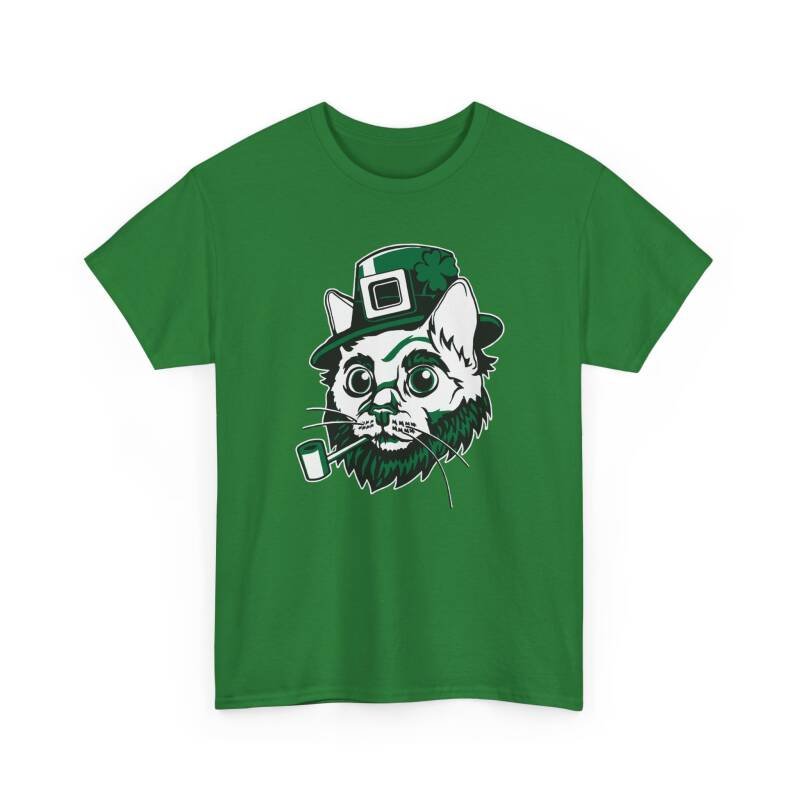
“Leprechaun Cat” Unisex T-Shirt – Purrfectly Lucky
Price range: $19.99 through $25.99 -

4-Leaf Clover USA Flag Unisex T-Shirt – Irish American Pride Tee in Green for Heritage & Gifting
Price range: $22.99 through $27.89 -

American Grown with Irish Roots Unisex T-Shirt – USA & Ireland Flag Heritage Tee
Price range: $22.99 through $27.89 -

Biting Lip Irish Pop Art Unisex T-Shirt – Sexy Green Shamrock Tee with Glitter Vibes
Price range: $22.99 through $27.89