Introduction: The Manic Pixie Dream Girl with Celtic DNA
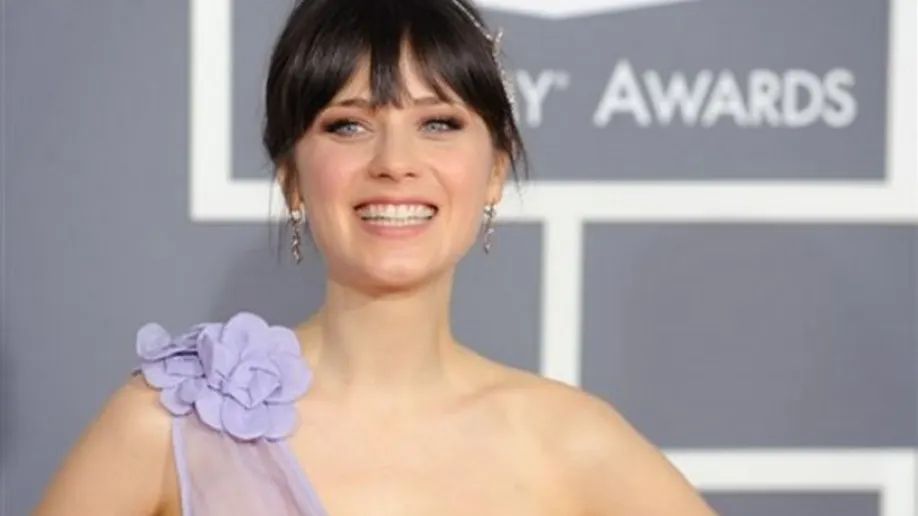
Zooey Deschanel—born January 17, 1980, in Los Angeles, California—is one of those actresses who’s so distinctly herself that she’s basically become a cultural archetype. You know her as the wide-eyed, bangs-wearing, ukulele-playing embodiment of quirky charm from “New Girl,” or as Jovie from “Elf” (the department store worker who can actually sing), or as Summer from “500 Days of Summer” (the one who broke Joseph Gordon-Levitt’s heart while looking impossibly adorable).
Born into Hollywood royalty—her father Caleb Deschanel is a renowned cinematographer, her mother Mary Jo Deschanel an accomplished actress—Zooey seemed destined for the entertainment industry. And she didn’t disappoint. Over nearly two decades, she’s built a career that spans film, television, and music (her indie folk duo “She & Him” with M. Ward is genuinely lovely, not just a celebrity vanity project).
But here’s something that might surprise you about this quintessentially quirky California girl: she’s got Irish blood running through her veins. Her great-great-grandmother hailed from County Kerry, Ireland, making Zooey’s connection to the Emerald Isle more than just genealogical trivia—it’s part of a family story involving the Great Famine, transatlantic emigration, and the kind of resilience that somehow survived ocean crossings and generations of adaptation.
Now, I know what you’re thinking: “Everyone in Hollywood claims to be Irish, especially when St. Patrick’s Day rolls around and publicists need content.” Fair point. But Deschanel’s Irish heritage, traced through her father’s lineage back to County Kerry, represents genuine family history—the kind involving actual famine refugees who left everything behind seeking survival, not celebrities looking for ethnic credibility.
The Deschanel surname itself is French (we’ll get to that delightful complication), but like many American families, the Deschanels are a gorgeous ethnic tapestry—French, Irish, and various European influences all woven together to create something distinctly American while maintaining threads connecting back to the old countries.
So grab your tea (or something stronger—we’re exploring Irish heritage, after all, and County Kerry folks know how to pour a proper drink), and let’s explore how a lass from Los Angeles carries the DNA of Irish emigrants who fled famine, how Celtic storytelling traditions might have influenced one of Hollywood’s most distinctive talents, and why even several generations removed, Irish ancestry still matters.
Fair warning: this journey involves discussion of famine, suffering, and historical trauma that makes contemporary problems seem refreshingly manageable. But it also celebrates resilience, creativity, and that particularly Irish ability to find beauty and humor even in the darkest circumstances—which, when you think about it, describes a lot of Zooey’s best work.
The Deschanel Family: A Gorgeous Ethnic Muddle
Let’s start by acknowledging that the Deschanel family background is beautifully complicated—which is honestly the most American thing possible.
Zooey’s father, Caleb Deschanel, is a cinematographer whose work on films like “The Natural,” “The Passion of the Christ,” and “Never Let Me Go” has earned him multiple Academy Award nominations. He’s an artist with an eye for visual storytelling, and he comes from a family with fascinatingly diverse ethnic roots. The Deschanel surname is French—specifically, it may derive from “du chêne,” meaning “of the oak tree” (very poetic for a cinematographer who captures natural beauty, no?).
But within Caleb’s family tree lurks significant Irish heritage, traced back to his great-grandmother who was born in County Kerry, Ireland. This makes Zooey’s Irish connection maternal great-great-grandmother level—several generations removed, but still traceable and still part of the family narrative.
Zooey’s mother, Mary Jo Deschanel (née Weir), is an actress whose own ancestry adds additional layers to this ethnic tapestry, though specific details about her lineage are less publicly documented. What we do know is that Zooey grew up in a household where artistic expression was valued, cultural heritage was acknowledged, and creativity was practically the family business.
Growing up in Los Angeles with a cinematographer father and actress mother, surrounded by the entertainment industry, Zooey and her sister Emily (also an actress—you might know her from “Bones”) were steeped in storytelling from birth. But unlike some Hollywood families that treat heritage as irrelevant or inconvenient, the Deschanels apparently maintained awareness of their diverse cultural roots.
This French-Irish-European-American blend is quintessentially American, really. The United States is fundamentally a nation of gorgeous ethnic muddles, families whose trees branch across continents and whose dinner tables might feature French wine, Irish soda bread, and California fusion cuisine all at once. The Deschanels embody this beautifully complicated identity.
For Zooey specifically, this multicultural heritage provides a rich cultural foundation. She’s not just Irish, not just French, not just American—she’s all of it simultaneously, each influence informing the others, creating something unique while maintaining connections to multiple ancestral traditions.
County Kerry: Where Zooey’s Story Begins (Several Generations Ago)
To understand Zooey Deschanel’s Irish roots, we need to travel—at least imaginatively—to County Kerry, Ireland, where her great-great-grandmother was born before emigrating to America during the 19th century.
County Kerry sits in the southwest of Ireland, and if you’ve seen photos of Ireland that made you think “that’s impossibly beautiful,” there’s a good chance they were taken in Kerry. We’re talking dramatic coastlines, ancient ruins, the Ring of Kerry tourist route that people travel halfway around the world to drive, Killarney’s lakes and mountains, the Dingle Peninsula stretching into the Atlantic like Ireland’s reaching for America.
But beauty doesn’t fill stomachs, and in the 19th century, County Kerry was devastated by the Great Famine—An Gorta Mór in Irish, which translates to “The Great Hunger” and somehow sounds even more ominous in the original language.
The Great Famine of the 1840s killed over a million Irish people and forced another million to emigrate. This wasn’t a natural disaster that happened to Ireland—it was a catastrophic failure of British colonial policy. Potatoes failed across Europe, but only in Ireland did it become genocide-level catastrophe because the British continued exporting food from Ireland while Irish people starved to death.
County Kerry was hit particularly hard. Rural poverty was already extreme; the famine pushed people past survival. Families faced impossible choices: stay and likely starve, or board disease-ridden “coffin ships” to America with no guarantee of surviving the voyage, much less thriving once you arrived.
Zooey’s great-great-grandmother was among those who left. Imagine what that took: abandoning your home, your land (if you had any), your extended family, your language (many Kerry people spoke Irish Gaelic primarily), your entire way of life. You’re boarding a ship where typhus and cholera are rampant, where many passengers will die before reaching America, where conditions are so horrific that “coffin ship” isn’t metaphor—it’s accurate description.
And if you survive the crossing, you arrive in America to face discrimination, “No Irish Need Apply” signs, brutal working conditions, and a society that considers you subhuman. You’re starting from absolute zero—no money, no connections, no safety net, often not even English fluency.
But here’s the remarkable thing about Irish emigrants: they refused to break. That particularly Irish stubbornness that says “you haven’t beaten me yet, and you bloody well won’t” sustained them through impossible challenges. They built communities, supported each other, maintained cultural identity despite every pressure to assimilate and disappear.
Zooey’s great-great-grandmother from County Kerry was part of this story—one of millions of Irish women who crossed an ocean seeking survival and built American lives while carrying Ireland in their hearts.
Irish Values, American Art: Cultural Influence on Creativity
Now here’s where we get wonderfully speculative: how might Irish heritage—several generations removed—influence an actress and musician known for her distinctive artistic voice? The answer is more fascinating than you might think.
Irish culture places enormous emphasis on storytelling. This isn’t just “Irish people like stories” in some vague way—it’s fundamental to Irish identity. For centuries, when written records were controlled by occupiers, oral storytelling was how history was preserved, cultural knowledge transmitted, identity maintained. Stories were survival tools.
This creates a culture that reveres narrative, that understands the power of a well-told tale to move people, preserve truth, and maintain identity across generations. Irish storytelling balances humor and heartbreak, finds universal truth in specific experiences, and refuses to choose between entertaining audiences and challenging them emotionally.
Watch Zooey Deschanel’s work through this lens. “New Girl” isn’t just a sitcom—it’s character-driven storytelling that balances comedy with genuine emotional complexity. Jessica Day is quirky and funny, yes, but she’s also navigating real challenges, real relationships, real growth. The show finds humor in pain without diminishing either, which is quintessentially Irish storytelling approach.
Her film work often explores similar territory. “500 Days of Summer” deconstructs romantic comedy while maintaining emotional authenticity. “Elf” balances whimsy with genuine heart. Even her music with “She & Him” combines playful retro aesthetics with emotional sincerity—songs that are simultaneously fun and genuinely moving.
Irish culture also emphasizes emotional authenticity. We’re a people who feel deeply but often hide it behind humor or stoicism. Genuine emotion is sacred; emotional manipulation is shameful. This creates artists who can access real vulnerability while maintaining dignity—exactly what Deschanel does in her performances.
Then there’s the Irish relationship with music. Traditional Irish music is storytelling through melody—each tune carries emotion, history, cultural memory. The connection between music and narrative in Irish culture is profound, and Deschanel’s work with “She & Him” reflects deep understanding of music as emotional storytelling, not just entertainment.
Irish culture values wit and cleverness—the ability to think quickly, turn a phrase, find humor in darkness. Deschanel’s comedic timing and her character Jessica Day’s tendency toward elaborate metaphors and enthusiastic tangents? Very Irish, actually. We’re people who never use five words when fifty will do, especially if those fifty words are more entertaining.
Family and community matter intensely in Irish culture. You look after your own, maintain connections, prioritize relationships over individual achievement. “New Girl” is fundamentally about chosen family, about people supporting each other through life’s messiness—themes that resonate deeply with Irish cultural values.
The French-Irish Connection: Complicated Heritage
Let’s address the elephant in the room—or rather, the French surname attached to Irish heritage.
The Deschanel name is French, likely derived from “du chêne” (of the oak tree), yet Zooey carries Irish ancestry through this same family line. How does that work? Well, history is complicated, and European families don’t always stay neatly within national borders.
French and Irish connections aren’t unusual historically. France and Ireland maintained relationships for centuries—both Catholic countries dealing with Protestant powers, both involved in complex European politics, both experiencing emigration for various reasons. Irish soldiers served in French armies (the “Wild Geese” who fled after defeats at home). French Huguenots settled in Ireland after fleeing religious persecution. Families intermarried, moved between countries, created lineages that span borders.
The Deschanel family likely represents this kind of European ethnic complexity—French surname, but Irish ancestry woven through the family tree, possibly along with other European influences. This isn’t contradiction; it’s European reality. Nations are relatively recent inventions; families have been crossing borders for centuries.
For Zooey, this means her heritage is even more beautifully complicated than simple “Irish ancestry” suggests. She carries French, Irish, and other European influences, each contributing to her family story, each informing her cultural foundation.
This complexity reflects American reality. Most Americans claiming “Irish ancestry” also have other ethnic influences. Pure anything is rare; gorgeous ethnic muddles are the norm. And that’s actually wonderful—it means we draw from multiple cultural wells, we understand multiple perspectives, we embody the hybrid vigor of mixed heritage.
Zooey embracing her Irish ancestry doesn’t mean ignoring French or other influences—it means acknowledging all the threads woven into her family tapestry, each valuable, each contributing to who she is.
Public Perception: When Quirky Meets Celtic
Zooey Deschanel’s relationship with her Irish ancestry is interesting partly because it’s not her public brand. She’s not known for performing Irishness or making her Celtic roots central to her persona—which actually makes her engagement with this heritage more authentic.
When Deschanel discusses her Irish ancestry—which she does occasionally, particularly when asked about family heritage—it’s thoughtful rather than performative. She acknowledges this aspect of her background as part of her family story, not as marketing material or publicity angle.
Fans who discover her Irish connection tend to respond with enthusiasm, particularly those of Irish descent who appreciate seeing their heritage represented (even quietly) by someone they admire. Online forums and social media discussions about Zooey’s Irish roots often become spaces where people share their own Irish heritage stories, creating community around shared ancestry.
There’s something refreshing about a celebrity who doesn’t exploit heritage for publicity. Zooey doesn’t suddenly develop an Irish accent on St. Patrick’s Day or do elaborate photo shoots in Aran sweaters. Instead, her Irish ancestry is part of her actual identity—acknowledged when relevant, informing her worldview quietly, but not performed for audiences.
This authentic approach resonates with people tired of celebrities treating heritage like costume jewelry—worn when convenient, removed when not. Deschanel’s Irish roots are family history, not fashion accessory, and audiences can tell the difference.
Moreover, discussions of her heritage often explore how it might influence her artistry—the storytelling tradition, the emotional authenticity, the balance of humor and heart. These conversations elevate beyond “isn’t it neat she’s Irish” to genuine exploration of how cultural background informs creative expression.
Irish Artists in Hollywood: Zooey’s Place in a Larger Tradition
Zooey Deschanel exists within a much larger tradition of artists with Irish heritage who’ve profoundly influenced global culture—though her particular blend of influences creates something uniquely her own.
Irish and Irish-American artists have dominated Hollywood disproportionately for decades. Actors like Liam Neeson, Saoirse Ronan, and Colin Farrell bring emotional depth and technical excellence informed partly by Irish cultural traditions. Their performances often exhibit that Irish balance of strength and vulnerability, humor and tragedy, accessibility and artistic integrity.
Irish writers have been punching spectacularly above their weight for centuries—Joyce, Yeats, Beckett, Shaw, Wilde, Heaney. Four Nobel Prizes in Literature from a small island is absurd until you understand that Irish culture treats language as sacred, storytelling as survival, and words as weapons and shields.
Irish musicians have given the world everything from traditional sessions to U2 to The Cranberries to Hozier. The Irish relationship with music is profound—it’s celebration, lament, resistance, identity, and community all rolled into melody.
Zooey fits into this tradition not by being explicitly Irish (she’s American, specifically California-American with Irish ancestry), but by embodying artistic approaches that align with Irish cultural values: storytelling sophistication, emotional honesty, balance of light and dark, refusal to choose between entertaining audiences and moving them emotionally.
When she discusses being influenced by traditional music, folk narratives, or storytelling traditions, she’s drawing from wells that Irish culture has been filling for centuries. Her indie folk aesthetic with “She & Him” resonates with Irish musical traditions—acoustic instruments, emphasis on melody and lyrics, emotional authenticity over production polish.
Conclusion: Heritage as Creative Foundation
So what have we learned from exploring Zooey Deschanel’s Irish ancestry? Perhaps most importantly, that heritage matters even when it’s not obvious, even when it’s several generations removed, even when it’s one thread among many in a beautifully complicated ethnic tapestry.
Zooey’s great-great-grandmother from County Kerry, who left Ireland during the famine era seeking survival in America, probably couldn’t have imagined her descendant would become a Hollywood star. But she’d likely recognize the values—the storytelling tradition, the emotional authenticity, the ability to find humor in hardship, the commitment to community and relationships—that made that success possible.
The journey from famine-stricken County Kerry to Los Angeles entertainment royalty spans generations and represents the immigrant dream realized in ways those original emigrants couldn’t have conceived. But it’s not just upward mobility—it’s cultural continuity. The values that helped Irish emigrants survive in hostile environments become the artistic sensibilities that create compelling art.
Zooey’s embrace of her Irish heritage—quiet, authentic, integrated into her identity rather than performed for audiences—models how to honor ancestry in the modern world. You don’t have to choose between being Irish and being American, between French heritage and Irish roots, between honoring tradition and forging your own artistic path.
Her multicultural background—French surname, Irish ancestry, European influences, California upbringing—represents the gorgeous complexity of American identity. We’re a nation of ethnic tapestries, families woven from threads crossing oceans and generations, each influence informing the others to create something unique.
For those of us with Irish ancestry (or any immigrant heritage), Deschanel’s story reminds us that heritage isn’t about purity or primacy—it’s about connection, understanding, and drawing creative strength from knowing where you come from. Those Irish ancestors who boarded coffin ships couldn’t have imagined their descendants’ lives, but their courage, resilience, and cultural values live on in ways both obvious and subtle.
Moreover, Zooey’s example shows that exploring heritage enriches artistic expression. Understanding your roots provides additional creative wells to draw from, cultural perspectives to explore, narrative traditions to engage with. Art created with awareness of heritage carries additional depth, additional authenticity, additional resonance.
So here’s to Zooey Deschanel—actress, singer, producer, and descendant of Irish emigrants who crossed an ocean seeking survival and whose dreams find fulfillment in ways they couldn’t have imagined.
Here’s to the Deschanel family, who maintained awareness of diverse cultural roots while building American lives.
Here’s to County Kerry and all the Irish places that sent their people abroad while remaining alive in hearts and stories across generations.
And here’s to all of us with Irish ancestry, whether we’re quirky Hollywood icons or ordinary people simply trying to honor where we came from while building where we’re going.
As the Irish would say: Sláinte to heritage, to the stories connecting us across oceans and generations, to the cultural values that persist when everything else changes, and to the families who maintain connections to roots even as they grow new branches.
Now if you’ll excuse me, I need to go listen to “She & Him” with fresh appreciation for how Irish folk traditions might influence indie music, and maybe rewatch “New Girl” considering how Irish storytelling values inform character-driven comedy.
Zooey’s made both look far too compelling to ignore—and I suspect that’s exactly what her County Kerry great-great-grandmother would have wanted: a descendant who creates beauty, tells stories, and maintains connection to heritage while being brilliantly, uniquely herself.
Erin go Bragh—Ireland forever, even when you’re four generations and 5,000 miles removed, even when your surname is French, even when you’re the most California girl imaginable. Heritage lives where we let it, in the values we carry and the stories we honor.
Shop new arrivals
-
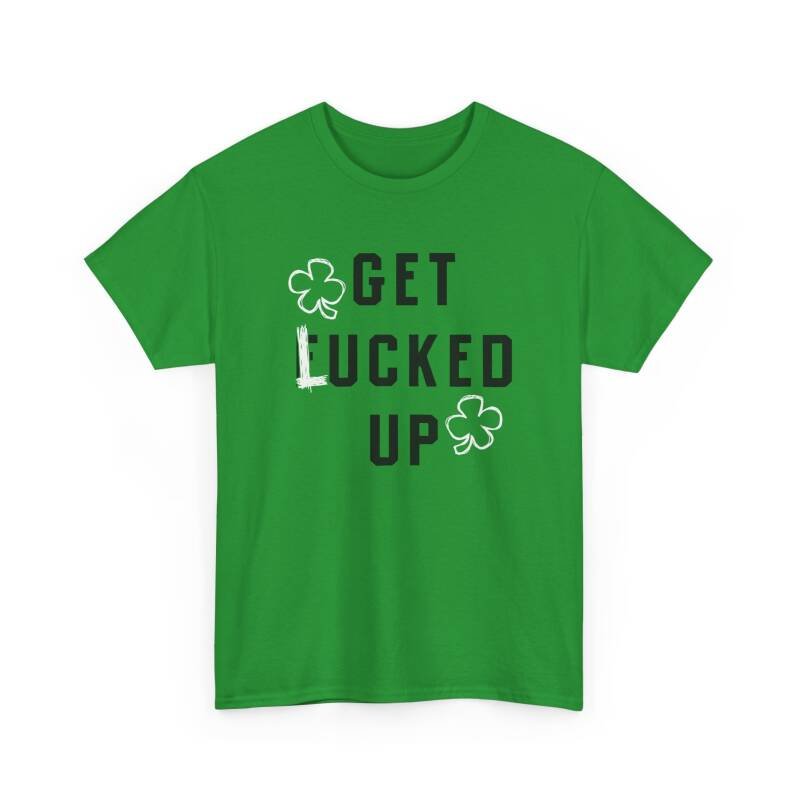
“Get Lucked Up” Unisex T-Shirt – Shamrock Shenanigans
Price range: $19.99 through $25.99 -
“Leprechaun Cat” Unisex T-Shirt – Purrfectly Lucky
Price range: $19.99 through $25.99 -

4-Leaf Clover USA Flag Unisex T-Shirt – Irish American Pride Tee in Green for Heritage & Gifting
Price range: $22.99 through $27.89 -

American Grown with Irish Roots Unisex T-Shirt – USA & Ireland Flag Heritage Tee
Price range: $22.99 through $27.89 -

Biting Lip Irish Pop Art Unisex T-Shirt – Sexy Green Shamrock Tee with Glitter Vibes
Price range: $22.99 through $27.89