The Man Behind the Monster
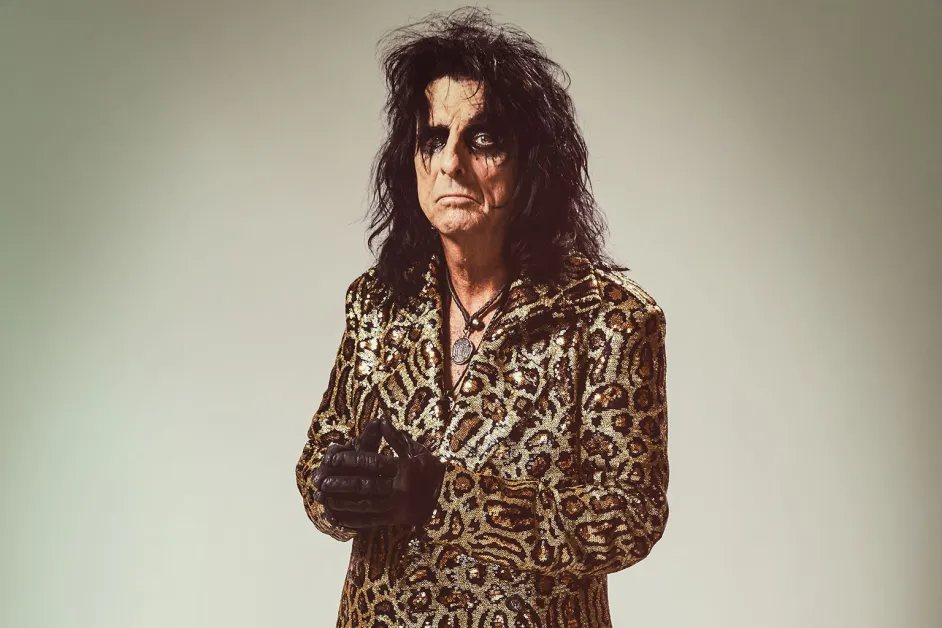
Alice Cooper—born Vincent Damon Furnier on February 4, 1948—isn’t just a rock legend. He’s the godfather of shock rock, the man who proved that rock concerts could be theatrical spectacles combining music, horror, and pure adrenaline. Since the late 1960s, Cooper has been scaring parents and thrilling audiences with a stage show that’s part rock concert, part Grand Guignol theatre.
His performances are the stuff of legend: guillotines, electric chairs, fake blood, boa constrictors, and enough theatrical mayhem to make Shakespeare jealous. But here’s the thing—beneath all that black eye makeup and theatrical menace lies a performer whose artistry draws from deep cultural wells, including his Irish ancestry.
Cooper’s musical legacy is just as impressive as his stage antics. “School’s Out,” “Poison,” “I’m Eighteen”—these aren’t just songs; they’re anthems that captured the rebellious spirit of multiple generations. He’s bridged hard rock, heavy metal, and mainstream pop culture with an ease that few artists manage, remaining relevant across decades that have seen countless musical revolutions.
But what many fans don’t realize is that Cooper’s complex persona—the blend of horror, humor, storytelling, and drama—may owe more to his Irish heritage than you’d think. Exploring his ancestral roots reveals fascinating connections between Irish culture and the theatrical rock tradition he pioneered.
The Furnier Family: Where Ministry Meets Mayhem
Vincent Damon Furnier—who would become Alice Cooper—entered the world in Detroit, Michigan, in 1948, into a family that couldn’t have been more unexpected as the launching pad for shock rock’s founding father.
His father, the Reverend Etheridge Furnier, was a minister in the Christian Church. Yes, you read that right—the man who would horrify audiences with mock executions and gothic theatrics was raised by a preacher. You can’t make this stuff up, and frankly, if you tried, nobody would believe you.
Cooper’s mother, Ella Mae, was a homemaker who provided a nurturing environment for young Vincent and his siblings. Growing up in a minister’s household meant structure, values, and religious teachings—all of which young Vincent absorbed before spectacularly rebelling against in his teenage years. The tension between his religious upbringing and his artistic rebellion would become fertile ground for his theatrical persona.
The Furnier family heritage is a tapestry of American and European ancestry, with Irish threads woven throughout. Like many American families of that era, the Furniers represented a blend of immigrant experiences, cultural influences, and the gradual process of becoming American while retaining echoes of the old country.
What’s particularly fascinating is how Cooper himself has acknowledged that his family history—including those Irish roots—plays a vital role in his artistry. The conflict between rebellion and tradition, between the sacred and the profane, between his minister father’s world and his own theatrical universe—these tensions aren’t just biographical details. They’re the engine of his creative expression.
Why Your Ancestors Matter More Than You Think
Here’s something worth considering: ancestry isn’t just names on a family tree or dates in a genealogy database. It’s the invisible architecture of your identity, the cultural DNA that shapes how you see the world and express yourself in it.
For public figures like Alice Cooper, understanding ancestry can unlock crucial insights into their artistic vision and public persona. Heritage provides narratives, values, historical context—all of which become raw material for creative work. It’s not about determinism; it’s about influence, about the subtle ways that cultural traditions seep into artistic expression.
In our globalized world, recognizing your roots creates connection—to family history, cultural narratives, and traditions that might otherwise be lost. This connection manifests in art, music, literature, performance. Alice Cooper, with his Irish ancestry, exemplifies how heritage enriches artistic work, allowing artists to tell stories that are both deeply personal and universally resonant.
For artists, the interplay between ancestry and identity often shapes their public image. They draw upon heritage to create authenticity that resonates with audiences. Cooper’s Irish roots might subtly influence his theatrical performances, his musical themes, his storytelling approach—creating a unique blend of cultural influences that captivates fans worldwide.
By embracing ancestry, artists validate their own experiences while contributing to a diverse cultural landscape. They provide representation for backgrounds that might otherwise remain invisible. For Alice Cooper, exploring his Irish heritage becomes a pivotal element of both personal and artistic expression, reinforcing the significance of knowing and honoring your roots in creating authentic art.
Tracing the Cooper Line to Ulster
Here’s where Alice Cooper‘s story connects to the Emerald Isle: beneath the flamboyant stage persona, there’s a lineage that traces back to Ireland, specifically to Ulster in Northern Ireland.
Research into the Cooper family history reveals ancestral roots in Ulster, that complex region with its own tumultuous history. Ulster’s story is one of cultural collision—Scottish migration during the 17th century significantly impacted the area’s demographics, creating a unique blend of Gaelic and Anglo-Norman influences. The surnames in Cooper’s family tree suggest connections to both traditions, reflecting Ireland’s complicated past of invasions, settlements, and cultural mixing.
The 19th century brought massive emigration waves from Ireland to America, driven largely by the Great Famine—An Gorta Mór—which devastated Ireland between 1845 and 1852. While we don’t have specific details about when Cooper’s ancestors made the Atlantic crossing, the broader pattern holds: Irish families seeking better opportunities in the New World, carrying their culture with them like precious cargo.
Cooper’s Irish heritage is interwoven with stories of resilience and adaptation that characterize the Irish-American experience. His ancestors likely faced the same challenges as millions of other Irish immigrants: prejudice, poverty, the struggle to maintain identity while assimilating into American culture, the tension between remembering home and building a new life.
Throughout his career, Cooper has occasionally referenced his Irish roots, illustrating how these ancestral ties influence his artistic identity. The blending of American rock music with storytelling traditions that echo Irish folklore can be seen in various aspects of his work—the dramatic narratives, the dark themes, the theatrical approach to performance.
Digging Through the Family Tree
Genealogical research is part detective work, part archaeology, part puzzle-solving—and in Alice Cooper’s case, it revealed fascinating connections to Irish heritage that add depth to understanding his artistic identity.
Genealogists typically start with census records, birth and death certificates, marriage licenses, immigration documents—the paper trail that maps family history. For Cooper’s family, extensive online databases and archives provided crucial information, gradually piecing together a picture that extended back across the Atlantic.
The research uncovered that Cooper’s great-great-grandfather hailed from Ireland—a discovery that provides a direct genealogical link to Irish heritage. This isn’t just trivia; it’s a connection to a specific cultural tradition, a particular historical experience, a set of influences that ripple forward through generations.
Modern DNA testing has revolutionized genealogical research, offering insights that traditional paper records can’t provide. Such testing has enabled Cooper’s family to trace lineage beyond documented records, revealing genetic ties to Irish regions that might not have been evident from historical documents alone. These findings suggest a rich cultural heritage that has likely influenced both his personal identity and artistic expression.
But genealogical research unearths more than just names and dates. It illuminates the lives of ancestors—their struggles, their journeys, the circumstances that led them to emigrate. Understanding why Cooper’s Irish ancestors left their homeland, what challenges they faced, how they adapted—this context deepens appreciation for the heritage itself.
For Cooper, embracing his Irish roots allows him to weave ancestral narrative into his public persona, creating connections with fans who similarly value their own family histories. It’s about belonging, about understanding where you came from as a way of understanding who you are.
The Irish Influence: Where Folklore Meets Rock and Roll
Here’s something that might surprise you: there’s a direct line between Irish cultural traditions and Alice Cooper’s theatrical rock style. No, really.
Irish folklore is obsessed with death, the supernatural, the darker aspects of existence—sound familiar? These themes saturate Cooper’s work, from his lyrics to his stage productions. The storytelling depth found in Irish narratives mirrors the theatrical narratives Cooper creates in his performances and albums.
Traditional Irish theatre and music are intensely performative, emphasizing emotion, expression, and audience engagement. Irish culture has a rich history of performance art, particularly the shanachie tradition—storytellers who captivated audiences through dramatic delivery and emotional resonance. Cooper’s elaborate stage shows, with their vivid storytelling and symbolism, echo this tradition. Both rely on drama and engagement to create immersive experiences.
Elements of Irish musicality occasionally surface in Cooper’s work—traditional instruments, melodic structures reminiscent of Irish folk music. This fusion adds authenticity and cultural resonance, enriching the overall experience while serving as subtle homage to his heritage. When Cooper collaborates with musicians who have Celtic roots, these connections become even more apparent.
The Irish gift for dark humor—that ability to laugh at death, to find comedy in horror—is absolutely present in Cooper’s work. His stage persona isn’t purely terrifying; it’s theatrical, knowing, often tongue-in-cheek. That’s very Irish: treating serious subjects with a mixture of gravity and gallows humor.
Irish culture also values the anti-hero, the rebel, the figure who challenges authority and convention. Cooper’s entire artistic identity is built on rebellion and subversion—against musical norms, against social expectations, against the sanitized version of rock music that preceded him. This rebellious streak connects directly to Irish cultural traditions of resistance and non-conformity.
Cooper Speaks: Embracing the Heritage
Alice Cooper has never been shy about his Irish ancestry—in fact, he’s expressed genuine pride in these roots and how they’ve shaped both his identity and his artistry.
In various interviews over the years, Cooper has reflected on how his Irish lineage influences his worldview and creative expression. For him, the heritage isn’t just genealogical trivia—it’s a living connection to stories, traditions, and cultural values passed down through generations. This connection provides a sense of belonging that informs his work.
Cooper often cites the resilience and spirit of the Irish people as influences on his music and stagecraft. The Irish cultural narrative of struggle and triumph, of persistence despite adversity, resonates deeply with him and finds expression in his artistic themes. His work frequently explores conflict, survival, and the darker aspects of human experience—themes that align with Irish cultural traditions of confronting harsh realities through art.
Beyond music, Cooper’s appreciation for Irish culture extends to traditional Irish music and storytelling. He views his ancestry not as mere historical fact but as a continuous narrative that informs his creativity. The Irish storytelling tradition—with its emphasis on drama, emotion, and moral complexity—clearly influences his theatrical approach to performance.
Cooper has also noted how his Irish roots contribute a particular sense of humor and a deeper understanding of the human condition to his work. Irish culture is famous for wit, for finding levity in darkness, for confronting serious subjects with clever irreverence. These qualities are integral to Cooper’s stage persona, which balances genuine theatricality with self-aware humor.
The interplay between his personal history and artistic journey exemplifies how cultural background shapes creative expression. Cooper’s Irish heritage isn’t separate from his rock persona—it’s foundational to it.
How the World Sees Cooper’s Irish Connection
The examination of Alice Cooper’s Irish ancestry has generated considerable interest among fans and media outlets alike. Over the years, interviews and documentaries have explored the rock legend’s roots, shedding light on how his heritage connects to his artistic identity.
Media coverage of Cooper’s ancestry often highlights the significance of Irish culture in shaping his life and music. Articles and critiques emphasize how his background influences his artistic expression—his stage persona, thematic choices, storytelling approach. This examination resonates with fans, illustrating how cultural heritage can transcend generations and add depth to an artist’s narrative.
The media’s portrayal tends to emphasize pride and fascination, providing audiences with a lens to appreciate not just the music but the historical and cultural context that shaped the artist. Coverage presents Cooper as more than just a shock rocker—he’s an individual deeply connected to his heritage, drawing from Irish cultural traditions in creating his unique artistic vision.
Documentaries featuring Alice Cooper frequently include segments exploring his ancestral roots, adding layers to his public persona. These media representations contribute to a narrative that connects the theatrical rock legend to broader cultural traditions, making him more multidimensional and relatable.
Fans engage enthusiastically with discussions about Cooper’s Irish background, particularly on social media. This engagement reflects curiosity and appreciation, demonstrating how heritage adds interest and depth to an artist’s story. The media plays a crucial role in shaping this perception, inviting audiences to explore the rich tapestry of cultural identity and its influence on artistic expression.
The overall effect is a more nuanced understanding of Alice Cooper—not just as the godfather of shock rock, but as an artist whose work draws from deep cultural wells, including the storytelling traditions, dark humor, and theatrical flair characteristic of Irish culture.
The Legacy: Why Cooper’s Irish Roots Matter
Alice Cooper’s Irish ancestry isn’t just a biographical footnote—it’s a crucial component of understanding his artistic legacy and the cultural forces that shaped one of rock’s most distinctive performers.
Understanding his heritage illuminates how cultural lineage influences artistic expression. Cooper’s Irish descent connects to his past while informing his creative output in tangible ways. The emotive storytelling found in traditional Irish music parallels the dramatic narratives Cooper presents in his songs and performances, demonstrating how elements of his lineage have permeated his work.
Cooper’s heritage serves as a prism through which we can appreciate the complexity of his artistic identity. His ability to fuse rock music with theatrical storytelling mirrors oral traditions prevalent in Irish culture—the shanachie tradition of dramatic storytelling, the emphasis on performance and audience engagement, the treatment of dark themes with both gravity and humor.
This exploration underscores the broader significance of ancestry in the artistic community. Many artists draw upon cultural backgrounds as sources of inspiration, creating deeper connections with their audiences. Cooper’s Irish roots testify to how ancestry contributes to the narrative of an artist’s life and work, fostering both personal identity and enhanced cultural dialogue across generations and boundaries.
The influence extends to how we understand shock rock itself. Cooper didn’t invent theatrical performance or dark themes in music—he drew from cultural traditions, including Irish ones, and transformed them into something uniquely suited to rock and roll. His Irish ancestry provided cultural tools and perspectives that he adapted to create something revolutionary.
For fans and scholars alike, recognizing Cooper’s Irish heritage offers insights into the multifaceted layers of his artistry. It reveals that his theatrical approach isn’t arbitrary or purely commercial—it’s rooted in cultural traditions of performance, storytelling, and confronting darkness with creativity and courage.
The Final Encore
Alice Cooper’s Irish ancestry is more than a genealogical curiosity—it’s an essential thread in the tapestry of his artistic identity. From Ulster to Detroit, from Irish storytelling traditions to shock rock theatrics, the connection reveals how cultural heritage shapes creative expression in profound and unexpected ways.
The journey from Vincent Damon Furnier, minister’s son, to Alice Cooper, godfather of shock rock, is remarkable enough. But understanding the Irish cultural influences—the storytelling traditions, the dark humor, the theatrical performance heritage, the resilience and rebellious spirit—adds crucial context to that transformation.
Cooper’s work demonstrates that ancestry isn’t destiny, but it is influence. The themes he explores, the theatrical approach he pioneered, the blend of horror and humor that defines his stage persona—these all connect, sometimes directly and sometimes subtly, to Irish cultural traditions that value dramatic storytelling, confronting mortality with creativity, and challenging authority through art.
For those who see Cooper only as a shock rocker with elaborate stage shows, understanding his Irish heritage provides a richer appreciation of his artistry. His work isn’t just spectacle—it’s rooted in cultural traditions of performance and storytelling that stretch back centuries. He took those traditions, filtered them through American rock and roll, and created something that’s influenced generations of artists.
In our current cultural moment, when questions of identity and heritage are increasingly complex, Cooper’s story offers a reminder: embracing your roots doesn’t limit your creativity—it enriches it. Your heritage provides tools, perspectives, and traditions that can fuel innovation rather than constrain it.
So here’s to Alice Cooper—a Detroit kid with Ulster blood, a minister’s son who became rock’s premier provocateur, and proof that the most interesting artists are often those who draw from deep cultural wells while creating something entirely new.
As the Irish would say: Ní neart go cur le chéile—there is no strength without unity. Cooper unified his Irish heritage with American rock and roll, creating a legacy that’s greater than the sum of its parts.
Sláinte to that, and to all the artists who honor their roots while blazing new trails.
Shop new arrivals
-

“Get Lucked Up” Unisex T-Shirt – Shamrock Shenanigans
Price range: $19.99 through $25.99 -
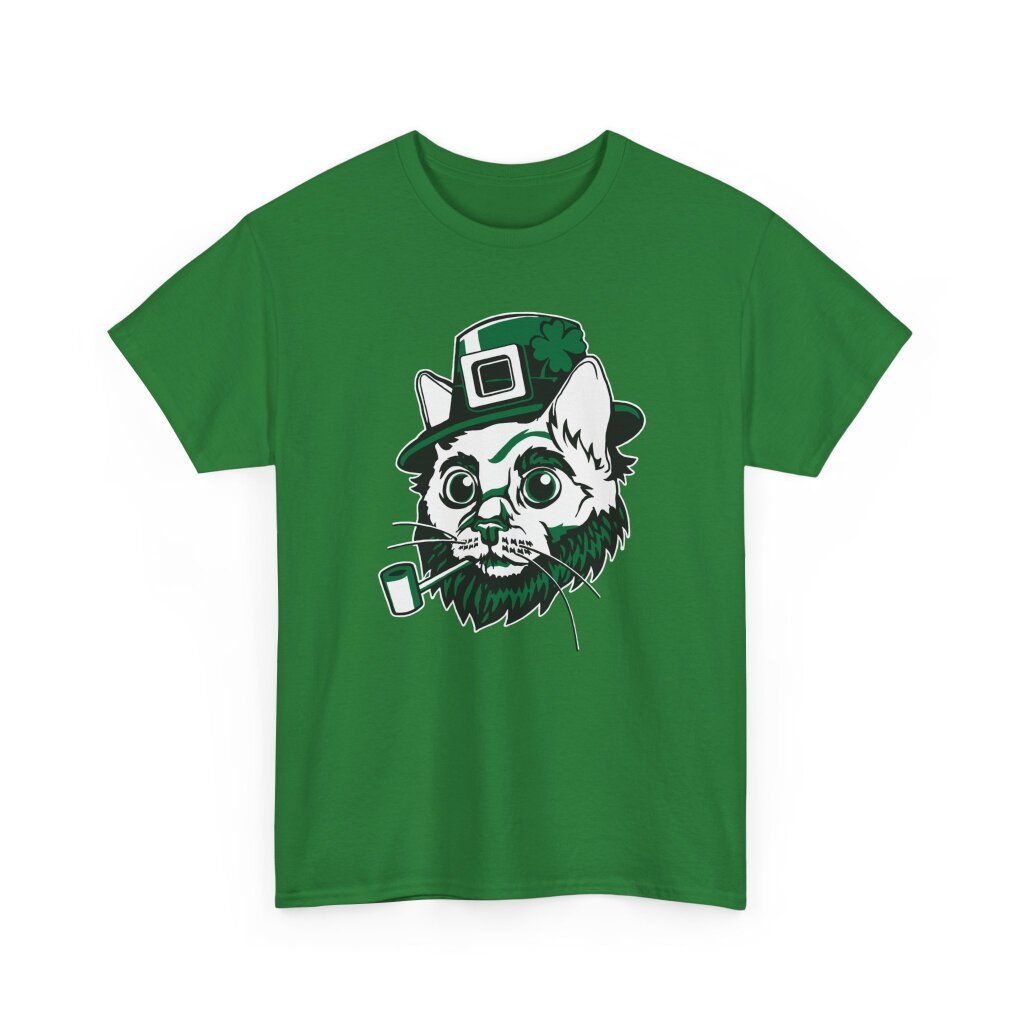
“Leprechaun Cat” Unisex T-Shirt – Purrfectly Lucky
Price range: $19.99 through $25.99 -

4-Leaf Clover USA Flag Unisex T-Shirt – Irish American Pride Tee in Green for Heritage & Gifting
Price range: $22.99 through $27.89 -

American Grown with Irish Roots Unisex T-Shirt – USA & Ireland Flag Heritage Tee
Price range: $22.99 through $27.89 -

Biting Lip Irish Pop Art Unisex T-Shirt – Sexy Green Shamrock Tee with Glitter Vibes
Price range: $22.99 through $27.89