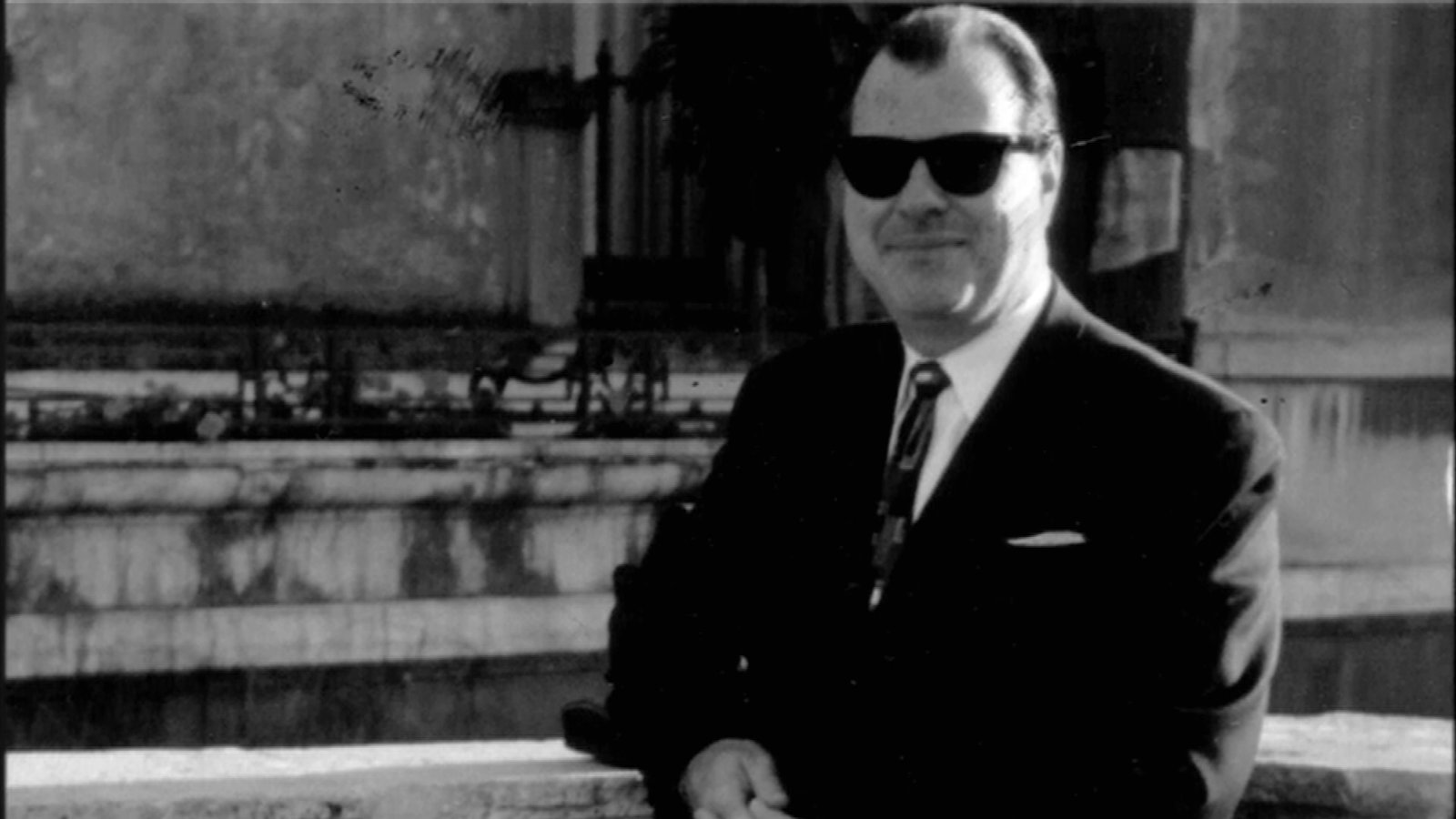
John Patrick O’Neill: The Irish-American Who Saw It Coming
A Prophet Without Honor in His Own Bureau
There’s an old Irish saying that the man who sees furthest is often the man nobody wants to listen to. John Patrick O’Neill would have understood that bitterly. Here was a man who spent years warning anyone who’d listen about the gathering threat of al-Qaeda, only to die in the very attack he’d spent his career trying to prevent. If that’s not a Greek tragedy wearing an Irish surname, I don’t know what is.
Born on February 6, 1952, in Atlantic City, New Jersey, O’Neill grew up with a singular obsession: he wanted to be an FBI agent. As a kid glued to the television drama “The F.B.I.,” young John decided early what he wanted from life, and unlike most childhood dreams, this one actually came true. That kind of stubborn, single-minded determination to chase down exactly what you set your sights on? That’s a trait the Irish have been perfecting for centuries, usually applied to slightly less legal pursuits, but O’Neill channeled it toward catching the bad guys instead.
He enrolled at American University in Washington, D.C., in 1971, and while still a student, started working at FBI headquarters as a fingerprint clerk and later a tour guide—not exactly the stuff of spy novels, but everyone starts somewhere. He graduated in 1974 with a degree in administration of justice, then went on to earn a master’s in forensics from George Washington University. The FBI finally hired him as a full special agent in 1976, and from there, a legend was slowly built.
The Long Road to Counter-Terrorism
O’Neill spent his first fifteen years at the Bureau working an assortment of cases—white-collar crime, foreign counterintelligence, the unglamorous grind that makes up most of law enforcement. But it was the rise of terrorism in the 1990s that gave O’Neill his true calling, the thing he’d end up known for.
In 1995, he became chief of the FBI’s counter-terrorism section in Washington, D.C. On practically his first day on the job, fate handed him the case that would define his early counter-terrorism career: tracking down Ramzi Yousef, the mastermind behind the 1993 World Trade Center bombing. That bombing—which killed six people and injured over a thousand—was America’s rude introduction to the idea that terrorism wasn’t just something that happened in far-off countries. O’Neill’s work helped bring Yousef to justice in 1995, and the experience shaped everything that came after.
In 1997, O’Neill became special agent in charge of the FBI’s national security division in New York—one of the most demanding postings in the entire Bureau. Over the following years, he investigated an alarming roster of attacks: the 1996 bombing of the Khobar Towers in Saudi Arabia, the 1998 U.S. embassy bombings in Kenya and Tanzania, and the 2000 bombing of the USS Cole in Yemen. Each case added another piece to a puzzle O’Neill was assembling faster than almost anyone else in American intelligence: the shape and scope of al-Qaeda.
The Man Who Wouldn’t Stop Shouting
Here’s where O’Neill’s story takes on that distinctly Irish flavor of the outspoken troublemaker who’s right but inconvenient. As the 1990s wore on, O’Neill became increasingly convinced that al-Qaeda represented an existential threat to American security—and increasingly frustrated that nobody in Washington wanted to hear it.
He pushed hard for better intelligence sharing between agencies, for more resources devoted to tracking Osama bin Laden’s network, for the kind of proactive, coordinated response that bureaucracies are notoriously bad at producing. He ruffled feathers. He clashed with colleagues, including a notable dispute with a CIA station chief over intelligence sharing that, in hindsight, might have made a tragic difference. He was the fellow at the meeting saying “this is going to get worse,” while everyone else nodded politely and moved on to the next agenda item.
That combination of foresight and frustration—being the person who can see the iceberg while everyone else is enjoying the band—is its own kind of exhausting heroism. O’Neill wasn’t always an easy man to work with, by most accounts. He was known for his big personality, his sharp suits, his late nights at Manhattan haunts like Elaine’s. But underneath the swagger was a man genuinely terrified of what was coming and furious that he couldn’t get anyone to move fast enough to stop it.
An Irish Name, An American Mission
O’Neill is about as Irish a surname as you’ll find outside of Dublin itself, and it places him within a long tradition of Irish-Americans who’ve found their calling in American law enforcement and public service. From the beat cops of 19th-century New York to the FBI directors of the 20th century, Irish surnames have populated American policing and intelligence work for generations—a legacy rooted partly in the immigrant experience of proving loyalty and worth to a new country, and partly in a cultural comfort with institutions, hierarchy, and public duty.
Whether O’Neill’s own family arrived from Ireland recently or generations back isn’t something I can pin down with confidence, but the broader pattern he fits into is well-documented: Irish-American families have long gravitated toward careers in policing and federal law enforcement, seeing it as both a path to respectability and a genuine calling to serve. The FBI itself, and the NYPD before it, absorbed wave after wave of Irish-American recruits who brought with them values that wouldn’t feel out of place in any accounting of Irish culture: loyalty to your people, suspicion of easy answers, and a bone-deep stubbornness when you believe you’re right.
That stubbornness—O’Neill’s refusal to let the al-Qaeda threat drop even when his own bureau seemed uninterested—reads like something bred in the bone rather than learned in a training academy. The Irish have never been shy about telling the room it’s wrong, even when the room includes their own bosses.
The Cruelest Irony
In August 2001, O’Neill retired from the FBI, frustrated by years of institutional resistance to his warnings, and took a new job: head of security for the World Trade Center. It was, by any measure, one of history’s most devastating twists of fate. The man who had spent years warning that al-Qaeda intended to strike at symbols of American power took a job protecting the very building that would become the group’s target.
He’d been in the position for only a few weeks when, on September 11, 2001, the towers he was sworn to protect came under attack. O’Neill died when the South Tower collapsed. He was 49 years old.
There’s something almost unbearably poetic about it—the watchman who spent his life shouting warnings, silenced at his post on the very morning those warnings came true. It’s the kind of ending that wouldn’t feel out of place in an old Irish ballad about a soldier who dies defending the thing he loved most, except this wasn’t a ballad. It was Tuesday morning in lower Manhattan, and it was real.
What He Left Behind
O’Neill’s story has been told and retold since his death—in Lawrence Wright’s Pulitzer Prize-winning book “The Looming Tower,” in Murray Weiss’s “The Man Who Warned America,” in Ali Soufan’s “The Black Banners,” in a PBS Frontline documentary titled, fittingly, “The Man Who Knew,” and in a television dramatization. He’s memorialized at the National 9/11 Memorial’s North Pool.
His legacy isn’t just personal tragedy—it’s a genuine case study in how bureaucracies fail to act on warnings that don’t fit neatly into existing frameworks. O’Neill saw the shape of the threat before almost anyone else in American intelligence, and the institutional friction that kept his warnings from translating into action has been studied extensively by the 9/11 Commission and countless historians since.
There’s a certain Irish fatalism in how his story is remembered: the brilliant, difficult man who was right when it counted most, dismissed and sidelined by the institutions he served, and ultimately consumed by the very disaster he tried to prevent. It’s not a happy story. But it is, in its way, a deeply Irish one—full of loyalty, frustration, stubborn conviction, and a tragic ending that nobody wanted and everybody, in hindsight, should have seen coming.
The Final Word
John Patrick O’Neill spent his career chasing an enemy that most of Washington refused to take seriously, armed with nothing but intelligence reports, institutional stubbornness, and a gut feeling that turned out to be devastatingly accurate. He didn’t get the ending any of us would have wanted for him—the warning heeded, the disaster averted, the credit given where it was due. Instead, he got the ending that history sometimes hands to the people who see too clearly and too soon.
So here’s to John P. O’Neill—an Atlantic City kid with an Irish name and a childhood dream, a man who spent years shouting into a bureaucratic wind that wouldn’t listen, and who died at his post trying to protect the very thing he’d warned about all along.
Sláinte to that, and to everyone who’s ever been right at the wrong time, and paid for it anyway.
Shop new arrivals
-

“Get Lucked Up” Unisex T-Shirt – Shamrock Shenanigans
Price range: $19.99 through $25.99 -

“Leprechaun Cat” Unisex T-Shirt – Purrfectly Lucky
Price range: $19.99 through $25.99 -

4-Leaf Clover USA Flag Unisex T-Shirt – Irish American Pride Tee in Green for Heritage & Gifting
Price range: $22.99 through $27.89 -

American Grown with Irish Roots Unisex T-Shirt – USA & Ireland Flag Heritage Tee
Price range: $22.99 through $27.89 -

Biting Lip Irish Pop Art Unisex T-Shirt – Sexy Green Shamrock Tee with Glitter Vibes
Price range: $22.99 through $27.89