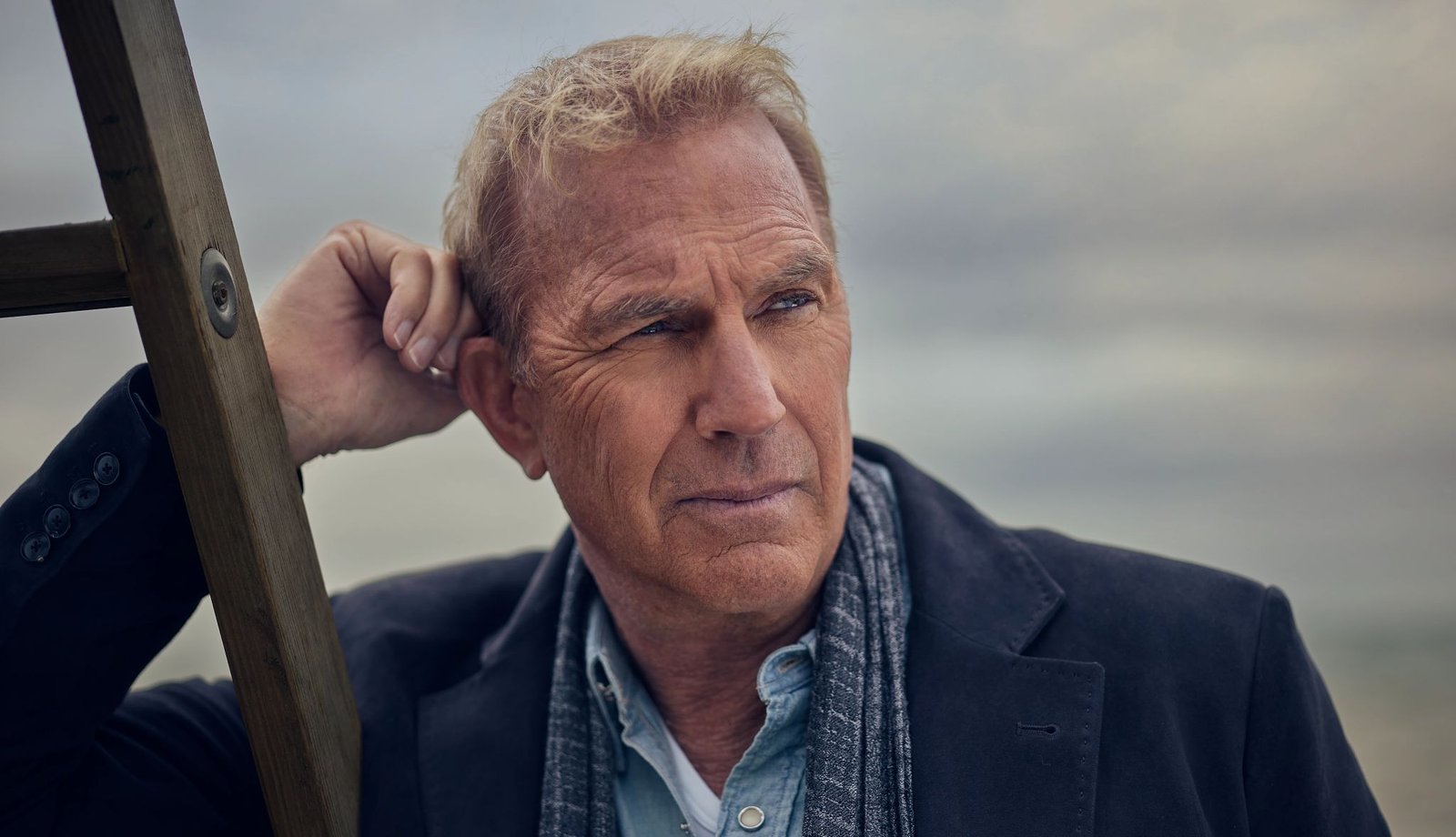
Kevin Costner’s Irish heritage, rooted in County Carlow and Kerry, adds a profound depth to his personal and creative journey.
The All-American Hero with an Irish Soul
Picture Kevin Costner—square-jawed, earnest, embodying certain kind of American masculinity that feels both timeless and specific to particular era. He’s the baseball player in “Field of Dreams” building diamond in cornfield because voices told him to. He’s the loyal bodyguard protecting Whitney Houston. He’s Lieutenant John Dunbar learning to see beyond his own culture in “Dances with Wolves.” He’s the hardened rancher in “Yellowstone” protecting legacy built on stolen land.
These characters feel quintessentially American—frontier mythology, baseball nostalgia, redemption narratives, the rugged individualist making hard choices in morally complex situations. But dig beneath surface and you’ll find something else, something that came across the Atlantic in the holds of famine ships: Irish soul expressing itself through American stories.
Born in 1952 in Southern California, Costner doesn’t immediately register as “Irish” the way a Kennedy or O’Brien might. He doesn’t have the accent, doesn’t wave the heritage flag, doesn’t make Irishness part of his public brand. But trace his family tree back far enough and you’ll find yourself in County Carlow and County Kerry, standing in landscapes that shaped ancestors who eventually produced one of Hollywood’s biggest stars.
His Irish ancestors didn’t leave Ireland on vacation—they fled. The Great Famine of the 1840s killed millions and forced millions more to make impossible choice: stay and likely die, or leave everything familiar and gamble on survival in foreign land. The Costner family’s Irish branches chose survival, chose America, chose future over past even though the price was abandoning homeland.
What they couldn’t leave behind: values, stories, ways of seeing the world that no customs inspection could confiscate. These traveled with them, got transmitted to children and grandchildren, survived even when Irish surnames anglicized and accents faded and explicit connection to old country weakened.
By the time Kevin Costner was born, his family was American—thoroughly, unquestionably American. But underneath that American identity: Irish foundations, Irish sensibilities, Irish ways of approaching honor, loyalty, family, storytelling. These influences show up in his work whether he consciously acknowledges them or not, shaping the kinds of stories he tells and how he tells them.
From Famine to California: The Journey
County Carlow and County Kerry sit on opposite sides of Ireland—Carlow in the east, inland and agricultural; Kerry in the southwest, coastal and dramatic. Both regions got devastated by the Great Famine. When potato blight destroyed the crop that most Irish depended on for survival, the result was humanitarian catastrophe of staggering proportions.
But here’s the darkest part: it didn’t have to be genocide. Ireland was producing plenty of food—grain, cattle, dairy. But British landlords continued exporting Irish-grown food for profit while Irish people starved. The British government’s response to famine was criminally inadequate, shaped by ideology that viewed Irish poverty as result of Irish character flaws rather than systemic oppression.
So Irish people died. And died. And died. An entire generation wiped out, not by natural disaster (though blight was natural) but by political decisions that valued profit over human life. Survivors faced choice: stay in country that had failed you catastrophically, or leave.
The Costner family’s Irish branches chose to leave. They joined the waves of immigrants packed into ships bound for America—the infamous “coffin ships” where disease killed thousands before they ever saw New World. Those who survived the crossing arrived with nothing but hope and determination, landing in ports like New York where Irish immigrants faced “No Irish Need Apply” signs and discrimination that treated them as barely human.
But they persisted. They took whatever jobs they could find—brutal labor that broke bodies but earned enough to survive. They built communities in American cities, preserving Irish culture while adapting to American reality. They maintained traditions while learning new ones. They stayed Irish while becoming American, refusing to choose between identities.
Over generations, the Costner family established roots in America. The explicit Irish identity may have faded—surnames anglicized, accents disappeared, daily life became thoroughly American. But underneath: values, stories, ways of being in the world that traced back to Irish origins even when family members stopped thinking of themselves as explicitly Irish.
The Stories We Tell Ourselves
Irish culture has always understood storytelling as essential human activity, not just entertainment. Stories preserve history when written records don’t exist. Stories teach values without preaching. Stories create community by giving people shared narratives. Stories make sense of suffering by placing it in larger context.
The Irish perfected oral storytelling during centuries when literacy was limited and their history was suppressed. They developed sophisticated narrative techniques—building suspense, creating memorable characters, using repetition and rhythm to make stories stick in memory. They understood that how you tell story matters as much as what story says.
This storytelling tradition survived immigration. Irish-American families continued telling stories—about old country, about crossing, about establishing new life in America. These narratives became part of family identity, ways of understanding who they were and where they came from.
Costner inherited this storytelling imperative, though he might not have consciously recognized its Irish origins. His films are fundamentally about storytelling—not just in sense that all films tell stories, but in deeper sense that they’re often about stories themselves, about why narratives matter, about how we make sense of our lives through the stories we tell.
“Field of Dreams” is literally about man following mysterious voice to build baseball field that becomes site where past and present meet, where fathers and sons reconcile through shared love of game. It’s about storytelling—the myths we create around baseball, the narratives families construct, the ways we use stories to heal.
“Dances with Wolves” tells story of man learning to see beyond his culture’s narratives, discovering that the stories he’s been told about “savages” are lies, creating new understanding through genuine connection. It’s fundamentally about competing narratives and which stories we choose to believe.
Even “Yellowstone,” his recent massive success, centers on family mythology—the stories the Dutton family tells about itself, about the land, about their right to it. The series explores how narratives shape identity and justify actions, how stories can both preserve and destroy.
Family, Honor, Loyalty: The Irish Trifecta
Watch Costner’s films and you’ll notice recurring themes: family bonds that transcend death, honor that requires personal sacrifice, loyalty that endures despite cost. These aren’t just random character traits—they’re values, specific cultural values that trace back to Irish tradition.
Irish culture has always placed extraordinary emphasis on family. Not just nuclear family but extended networks of cousins and connections that create support systems and obligations spanning generations. Family wasn’t just who you lived with—it was your identity, your safety net, your responsibility.
This emphasis on family appears constantly in Costner’s work. “Field of Dreams” is ultimately about father-son relationship, about making peace with the past. “The Bodyguard” shows man whose loyalty to his charge becomes all-consuming. “Yellowstone” revolves entirely around family—protecting it, preserving it, passing it to next generation.
Honor, too, is distinctly Irish value—not honor in aristocratic sense, but working-class honor, the dignity of keeping your word even when it costs you, the refusal to compromise core principles even when compromise would be easier. Irish immigrants brought this honor code to America, maintained it even when survival seemed to require abandoning it.
Costner’s characters consistently embody this honor. They make hard choices based on principle rather than convenience. They sacrifice for others. They do what’s right even when it hurts. This isn’t just good character writing—it’s specific cultural value system made manifest in fictional characters.
Loyalty operates similarly. Irish culture understood loyalty as fundamental virtue—loyalty to family, to community, to those who’d stood by you. Betrayal was unforgivable sin, but loyalty was honored even when inconvenient.
This shows up repeatedly in Costner’s work. His characters are loyal sometimes to their own detriment. They stand by commitments when walking away would be easier. They honor obligations even when circumstances change. This consistent portrayal of loyalty as cardinal virtue reflects cultural inheritance whether Costner consciously recognizes it or not.
The Redemption Arc: Irish Catholic Influence
Though Costner’s films aren’t explicitly religious, they frequently explore redemption—characters seeking second chances, trying to atone for past failures, finding ways to make peace with themselves. This redemption narrative has deep roots in Irish Catholic tradition.
Irish Catholicism (distinct from other Catholic traditions) developed particular character during centuries of oppression. When your religion was criminalized, when practicing faith could cost you everything, Catholicism became not just spiritual belief but identity marker, resistance against forced assimilation, way of maintaining dignity when everything else was stripped away.
This tradition emphasized certain themes: the possibility of redemption, the importance of confession and forgiveness, the understanding that suffering could have meaning. These weren’t just theological concepts—they were psychological frameworks for making sense of brutal reality.
These themes appear throughout Costner’s work. Characters who’ve made mistakes seeking redemption. Fathers and sons reconciling. People finding peace after tragedy. The understanding that past doesn’t have to determine future, that change is possible, that forgiveness—of others and yourself—matters.
“Field of Dreams” is fundamentally about redemption—Ray’s reconciliation with his father, the ballplayers getting another chance to play. “Dances with Wolves” shows man redeeming himself from complicity in cultural genocide by choosing authentic connection over colonial violence. Even “The Bodyguard” explores redemption through service, through protecting another life after failing to protect previous one.
This consistent exploration of redemption themes reflects Irish Catholic understanding that people are complex, that mistakes don’t define us permanently, that grace is possible. It’s spiritual framework secularized into narrative structure, religious values expressed through story rather than sermon.
The Land: Irish Connection to Place
Irish culture has always had intense relationship with land—not just as resource but as identity, as history made physical, as sacred connection between people and place. When British colonizers took Irish land, they weren’t just seizing property—they were attacking Irish identity itself.
This deep connection to land, this understanding that place matters beyond mere geography, appears in Costner’s work repeatedly. “Dances with Wolves” revolves around different cultures’ relationships to land—indigenous understanding of land as sacred versus American settler understanding of land as resource to exploit. “Field of Dreams” is literally about man compelled to transform piece of land into sacred space.
“Yellowstone” makes land central to everything—the ranch as legacy, as identity, as worth dying for. The Dutton family’s attachment to their land mirrors Irish attachment to Ireland, the sense that land is who you are, that losing it means losing yourself.
This isn’t just thematic coincidence. It’s cultural inheritance, Irish understanding of land’s significance transmitted across generations and finding expression in American stories. Costner’s characters aren’t just defending property—they’re defending identity, legacy, connection to past and future. That’s Irish relationship with land, transplanted to American West.
The Music of Dialogue
Listen carefully to dialogue in Costner’s films and you’ll hear something: rhythm, cadence, particular musicality in how characters speak. This isn’t accident—it reflects Irish linguistic heritage, the way Irish English carries different patterns than standard American English.
Irish English (whether in Ireland or among Irish-Americans) has distinctive qualities—the rhythms, the tendency toward colorful expression, the comfort with emotion in speech. Even when accent fades, these patterns often persist, shaping how people construct sentences and express themselves.
Costner’s films, particularly those he directed, feature dialogue with this musical quality. Characters don’t just exchange information—they speak in ways that have rhythm, that feel almost performative even when natural. This reflects Irish understanding that language is art form, that how you say something matters as much as what you say.
The Irish gift for language, for finding perfect phrase or perfect story to illuminate truth—this appears in Costner’s work through characters who speak memorably, who express themselves in ways that feel authentic yet elevated, everyday yet poetic.
The Public Costner: Honoring Heritage
In interviews, Costner has spoken about his Irish heritage with respect and appreciation. He’s explored his ancestry, traced family trees, acknowledged how this background influenced who he became. He’s not performatively Irish (doesn’t affect accent or wear green constantly), but he’s genuine about connection to these roots.
He’s spoken about how learning his Irish lineage enriched his understanding of himself, how discovering ancestors’ stories provided context for his own life. He’s discussed Irish cultural values—storytelling, family loyalty, honor—and recognized how these resonate with him personally and shape his artistic choices.
This public acknowledgment matters because it validates Irish heritage as something worth claiming, worth exploring, worth honoring. When successful, beloved figure like Costner says “this ancestry matters to me,” it encourages others to explore their own roots, to see heritage as resource rather than irrelevant past.
His philanthropic support for Irish cultural initiatives demonstrates that this isn’t just lip service. He puts resources behind preserving Irish arts and traditions, supporting organizations that maintain Irish cultural presence in America. This suggests genuine appreciation rather than mere genealogical curiosity.
Why His Irish Story Matters
Costner represents particular kind of American success—someone who became icon of American culture while carrying European immigrant heritage. His story isn’t unique (many American success stories trace back to immigration), but it’s important because it demonstrates how heritage shapes artistry even when connection seems distant.
He’s several generations removed from Ireland. He doesn’t speak Irish. He’s never lived there. By many measures, he’s thoroughly American with only tenuous connection to Irish roots. Yet those roots matter—they inform his values, shape his storytelling, influence his artistic choices in ways both obvious and subtle.
This matters in contemporary America where immigration debates often frame heritage as either/or proposition: you’re American or you’re not, assimilation means abandoning old identity, maintaining cultural connections is somehow suspect. Costner’s example suggests different model: you can be completely American while still drawing from ancestral heritage, you can honor roots while being fully engaged with present.
His Irish ancestry isn’t limitation or complication—it’s resource, well of stories and values and perspectives that enriches his work. The family loyalty, the emphasis on honor, the redemption narratives, the connection to land, the storytelling imperative—all of these trace back to Irish cultural traditions even when expressed through thoroughly American stories.
The Modern Genealogy Movement
Costner’s journey into his ancestry reflects broader contemporary phenomenon: millions of people using DNA testing and online databases to trace family trees, discover origins, connect with heritage they might not have known they possessed.
This genealogy boom serves multiple purposes. For some, it’s curiosity about where they came from. For others, it’s search for belonging, for connection to something larger than themselves. For many, it’s way of understanding how they became who they are, recognizing that present is built on past.
The resources now available make this exploration more accessible than ever. Websites like Ancestry.com provide access to historical records that would have required traveling to Ireland and searching through parish records by hand. DNA testing reveals ancestral origins with precision previous generations couldn’t access.
This democratization of genealogy means more people can pursue what was once hobby for wealthy with time and resources to dedicate to research. Regular people can trace family trees, discover immigrant ancestors, learn stories that were lost or never transmitted.
Costner’s example—successful person publicly valuing this research—validates the endeavor. It says heritage research isn’t frivolous hobby but meaningful exploration that can enrich understanding of identity and inform how we move through world.
Legacy Built on Immigrant Foundation
Every time Kevin Costner appears on screen, he’s carrying forward Irish legacy whether audience recognizes it or not. The values his characters embody, the stories his films tell, the themes he returns to repeatedly—these trace back to Irish cultural inheritance transmitted across generations.
From County Carlow and Kerry to American cities where immigrants established communities, from survival-mode poverty to Hollywood success—the journey represents Irish-American dream realized. Not that every Irish immigrant’s descendants become movie stars (obviously), but that Irish cultural values and perspectives could not just survive in America but thrive, finding expression through quintessentially American medium of film.
Costner’s work proves that heritage doesn’t limit—it liberates. Drawing from Irish traditions of storytelling, family loyalty, honor, redemption, connection to land—these don’t constrain his artistry. They enrich it, give it depth and resonance that might not exist if he were working from blank slate.
His films speak to universal human experiences—love, loss, redemption, family, belonging—but they approach these themes through lens shaped partly by Irish cultural inheritance. The specificity creates universality; the particular makes possible the transcendent.
The Continuing Story
At 70-plus years old (as of this writing), Costner continues working, continues telling stories, continues embodying values that trace back to Irish ancestors he never met. “Yellowstone” has introduced him to new generation of fans who might not have seen “Dances with Wolves” or “Field of Dreams” but who respond to same themes: family loyalty, honor, connection to land, the weight of legacy.
His longevity in entertainment industry itself reflects Irish immigrant value: persistence, refusal to quit, determination to keep working even when circumstances are difficult. Irish ancestors who survived famine and discrimination would recognize this stubbornness, this refusal to accept defeat.
The story continues because stories always continue in Irish tradition. Ending isn’t point—continuation is. Passing down stories, preserving values, maintaining connection across generations—these are what matter. Costner does this through his films, creating narratives that will outlive him, that will continue speaking to audiences about themes that Irish culture has always understood as essential.
Why We Need These Stories Now
In fractured America struggling with questions of identity, belonging, what it means to be American—Costner’s example offers valuable perspective. His Irish heritage doesn’t make him less American; it makes him distinctly American, someone whose identity is built on immigrant foundation like so much of America itself.
His work reminds us that American stories can be enriched by European roots, that heritage provides depth rather than limitation, that the best art often comes from drawing on multiple traditions rather than pretending to emerge from nowhere.
As America grows more diverse, as more people navigate hyphenated identities and complex heritage, examples like Costner’s become increasingly relevant. He shows that you can honor ancestry while being fully present in contemporary culture, that past and present can coexist and strengthen each other.
The Irish gift for storytelling, transmitted across Atlantic and across generations, found expression in Kevin Costner’s films. Those films, in turn, became part of American cultural fabric, proving that Irish contributions to American culture didn’t end with immigration—they continue, evolve, find new forms while maintaining essential character.
From famine survivors to Hollywood director. From County Carlow and Kerry to California. From Irish storytelling traditions to American cinema. The journey continues, the legacy persists, and the stories—the stories keep being told, keep mattering, keep connecting us to past while illuminating present.
That’s not just Kevin Costner’s legacy—it’s Irish-American legacy, proof that heritage survives, that culture persists, that the gifts our ancestors carried with them keep giving across generations, enriching American culture in ways both obvious and subtle, creating art that speaks to everyone while remaining true to particular roots.
And every time we watch his films, every time we respond to themes of family loyalty and honor and redemption and connection to land—we’re participating in that legacy, proving that Irish stories, Irish values, Irish ways of understanding the world can speak across all boundaries when told with skill and authenticity.
The Irish journey to America continues in every frame Kevin Costner directs, every character he portrays, every story he chooses to tell. And we’re all richer for it.
Shop new arrivals
-

“Get Lucked Up” Unisex T-Shirt – Shamrock Shenanigans
Price range: $19.99 through $25.99 -

“Leprechaun Cat” Unisex T-Shirt – Purrfectly Lucky
Price range: $19.99 through $25.99 -

4-Leaf Clover USA Flag Unisex T-Shirt – Irish American Pride Tee in Green for Heritage & Gifting
Price range: $22.99 through $27.89 -

American Grown with Irish Roots Unisex T-Shirt – USA & Ireland Flag Heritage Tee
Price range: $22.99 through $27.89 -

Biting Lip Irish Pop Art Unisex T-Shirt – Sexy Green Shamrock Tee with Glitter Vibes
Price range: $22.99 through $27.89