An Irish Inventor’s Extraordinary Journey Beneath the Waves
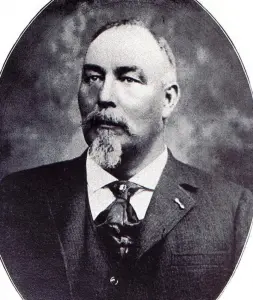
John Phillip Holland wasn’t your typical 19th-century Irishman—while his countrymen were famous for poetry and politics, this lad from County Clare was busy dreaming up ways to sail under the ocean rather than on top of it. Born on February 29, 1841 (a leap year baby, naturally—even his birth was unconventional), Holland would go on to revolutionize naval warfare and maritime exploration with a persistence that would make any Irishman proud.
His journey from the rugged west coast of Ireland to the cutting edge of American naval engineering is the stuff of legend. After emigrating to the United States in 1873, Holland threw himself into the world of underwater craft with the kind of single-minded determination his ancestors had shown facing down centuries of adversity.
In 1881, he built the Fenian Ram—yes, named after the Irish revolutionary movement, because apparently even his submarines had to be Irish—which became one of the first successful submarine prototypes. But his crowning achievement came in 1897 with the Holland VI, the first submarine purchased by the U.S. Navy. This wasn’t just another boat; it was a game-changer that set the template for every submarine that followed.
Holland’s genius lay not just in making submarines that could dive and surface (though that was impressive enough), but in the details: torpedo tubes, improved propulsion systems, better submerged navigation. These weren’t mere gadgets—they fundamentally transformed how naval warfare would be conducted for the next century and beyond.
A County Clare Childhood: Where It All Began
Picture this: 1841, County Clare, on Ireland’s wild western coast where the Atlantic crashes against limestone cliffs with the kind of drama that either inspires you or drives you mad. This was where young John Phillip Holland took his first breath, in a modest household where his father worked as a schoolmaster.
Now, being the son of a schoolmaster in 19th-century Ireland was a bit like winning a small lottery. It didn’t make you wealthy, but it gave you something arguably more valuable: access to books, ideas, and the radical notion that education could be your ticket to somewhere better. Holland’s father created an environment where curiosity wasn’t just tolerated—it was encouraged.
Growing up on the coast, Holland couldn’t help but be captivated by the sea. While other lads were content to watch fishing boats come and go, young Holland was pondering the mechanics of it all. How do vessels float? How do they move through water? Could they perhaps move under water? These weren’t idle daydreams—they were the early stirrings of an engineering mind at work.
The landscape itself seemed designed to inspire grand thinking. County Clare’s dramatic coastline, with its hidden coves and mysterious depths, fired Holland’s imagination in ways a landlocked upbringing never could. The sea wasn’t just scenery—it was a puzzle waiting to be solved, a challenge beckoning him forward.
But it wasn’t all romantic vistas and intellectual pursuits. Nineteenth-century Ireland was a hard place to grow up, marked by political unrest and economic struggle. These challenges bred resilience in Holland, a quality that would prove absolutely essential when he later faced the countless setbacks that come with inventing something the world has never seen before.
His County Clare childhood gave Holland more than just inspiration—it gave him grit, curiosity, and an unshakeable belief that impossible problems could be solved with enough creativity and determination. Not a bad foundation for a future revolutionary inventor.
Ireland in 1841: A Nation on the Brink
To understand John Phillip Holland, you need to understand the Ireland he was born into—a place teetering on the edge of catastrophe. The year 1841 might have seemed ordinary enough, but it was merely the calm before an apocalyptic storm.
Just four years after Holland’s birth, the Great Famine—An Gorta Mór—would begin its devastating sweep across Ireland. The potato blight that struck in 1845 wasn’t just an agricultural problem; it was a humanitarian catastrophe of staggering proportions. When your entire population depends on a single crop and that crop fails spectacularly, the results are nothing short of biblical.
In the 1840s, Ireland was overwhelmingly rural and agricultural, with the potato serving as the staple food for the majority of the population. When the blight hit, it didn’t just cause inconvenience—it caused mass starvation. Approximately one million people died, and another million emigrated, forever changing the demographic and cultural landscape of Ireland.
But here’s what often gets lost in the statistics: the British government’s response was woefully inadequate, marked by policies that ranged from ineffective to actively harmful. While people starved, food was still being exported from Ireland. This wasn’t just a natural disaster—it was a political failure that burned itself into Irish memory for generations.
The result? A wave of emigration that would reshape nations across the globe, particularly the United States, Canada, and Australia. Irish families packed up what little they had and sailed toward uncertain futures, driven by the simple need to survive. This exodus created the Irish diaspora—a global network of Irish communities that would maintain cultural ties while building new lives in new lands.
The political atmosphere was equally charged. The perceived British abandonment during the famine fueled nationalist sentiments and a burning desire for self-governance. Land rights, freedom, identity—these weren’t abstract concepts but urgent, visceral concerns that shaped the consciousness of an entire generation.
Holland grew up in this cauldron of crisis and resilience. The struggles his countrymen faced, the emigration he would eventually undertake himself—these weren’t disconnected from his later innovations. They were part of the same story: Irish people refusing to accept their circumstances, seeking instead to reimagine what was possible.
Family Roots: The Making of an Inventor
John Phillip Holland’s family tree tells a distinctly Irish Catholic story—one of modest means, strong values, and an almost defiant belief in the power of education to transform lives. Born in 1841 in County Clare, Holland came from people who understood that knowledge was the one thing poverty couldn’t take from you.
His father, a schoolmaster, wasn’t wealthy by any measure, but in the landscape of mid-19th century Ireland, he occupied a position of respect and modest influence. More importantly, he created a home where learning wasn’t just about rote memorization—it was about curiosity, inquiry, and the radical idea that understanding how things work could lead to making them work better.
This emphasis on education wasn’t mere middle-class aspiration; it was survival strategy. In a society where most paths were closed to Irish Catholics, education offered one of the few routes to social mobility and self-improvement. Holland’s father understood this instinctively, and he passed that understanding to his son along with a love of learning.
The Irish Catholic tradition Holland grew up in also carried with it certain values: perseverance in the face of adversity, community solidarity, and a healthy skepticism of established authority. These weren’t abstract principles—they were lived realities, shaped by centuries of Irish history and reinforced by the ongoing struggles of the 1840s and beyond.
Consider what Holland’s ancestors had witnessed: conquest, colonization, religious persecution, economic marginalization. Yet here they were, still standing, still striving, still believing that the next generation could do better. That kind of resilience doesn’t just happen—it’s cultivated, passed down like a family heirloom more valuable than silver or land.
The Great Famine that struck during Holland’s childhood would have profoundly affected his family and community. Even if they weren’t among the worst affected, the catastrophe reshaped Irish society entirely. Families were torn apart, communities devastated, dreams deferred or abandoned. Yet from this crucible emerged a generation of Irish people—including Holland—who refused to be defined by their circumstances.
Holland’s family heritage gave him more than just genealogy—it gave him a framework for understanding the world. The hardships his forefathers endured taught him that innovation wasn’t a luxury but a necessity. The emphasis on education showed him the tools. The examples of perseverance demonstrated the attitude.
When Holland later spent years perfecting submarine designs, facing repeated failures and skepticism, he was drawing on more than just engineering knowledge. He was channeling generations of Irish stubbornness, the kind that says, “We’ve survived worse than this, and we’ll solve this too.”
Crossing the Atlantic: Emigration and Aspiration
In 1873, John Phillip Holland made a decision that countless Irish people before and after him would make: he packed up his life and sailed for America. But unlike many emigrants fleeing immediate starvation or persecution, Holland’s journey was fueled by something more specific—the hunger for opportunity to pursue his engineering ambitions.
The Ireland Holland left behind was still reeling from the aftershocks of the Great Famine. Though the worst had passed by the 1870s, the devastation had fundamentally altered Irish society. Emigration had become not just an emergency response but an expected part of Irish life. If you had ambition and talent, America beckoned with the promise of possibilities that simply didn’t exist back home.
For Holland, the Atlantic crossing wasn’t merely a geographic relocation—it was a leap of faith. He was leaving behind everything familiar: his family, his community, his homeland. But he was also escaping limitations that had nothing to do with his abilities and everything to do with the circumstances of his birth.
America in the 1870s was hungry for innovation. The industrial revolution was in full swing, and there was an openness to new ideas and unconventional thinkers that Ireland, still struggling under colonial rule and economic hardship, couldn’t match. For an aspiring engineer with radical ideas about underwater navigation, the United States offered resources, facilities, and—crucially—people willing to listen.
Yet Holland never truly left Ireland behind. How could he? His Irish heritage wasn’t something he wore on special occasions—it was woven into the fabric of who he was. The resilience and ingenuity of the Irish people, their ability to adapt and overcome, these weren’t abstract qualities he admired from afar. They were his inheritance, his operating system.
The work ethic instilled by his schoolmaster father, the problem-solving creativity born from generations of making do with less, the stubborn refusal to accept that something couldn’t be done—all of this traveled with Holland across the Atlantic. His Irish roots didn’t just inspire his work; they enabled it.
There’s something particularly Irish about Holland’s story: leaving home to find opportunity, but carrying home with you wherever you go. The amalgamation of his Irish identity and American experience created something unique—an inventor who brought Old World persistence to New World possibilities.
His journey also embodied the sacrifices of those who came before him. Every Irish family that survived the famine, every parent who scraped together money for their children’s education, every emigrant who crossed the ocean in steerage—they were all part of Holland’s story. He wasn’t just building submarines; he was vindicating their faith that the next generation could achieve something extraordinary.
The Irish Influence: Culture Meets Engineering
Here’s something you might not expect: the key to understanding John Phillip Holland’s submarine designs might lie in Irish folklore and storytelling. Bear with me on this.
Holland’s engineering genius didn’t emerge from a vacuum—it was deeply rooted in his Irish cultural heritage. Born in County Clare in 1841, Holland grew up immersed in a culture that valued resourcefulness, adaptability, and the kind of lateral thinking that comes from centuries of navigating impossible situations.
Ireland’s tumultuous history—marked by conflicts, occupations, and the constant struggle for independence—fostered a particular kind of strategic thinking in its people. Holland internalized this. His submarines weren’t just engineering marvels; they were strategic innovations born from understanding that sometimes the best way to win isn’t to confront your enemy head-on, but to approach from an unexpected angle. Like, say, underneath.
The Irish storytelling tradition also played a more significant role than you might think. Irish culture celebrates tales of cleverness overcoming brute force, of underdogs using wit to defeat stronger opponents. These weren’t just entertaining stories—they were cultural lessons in creative problem-solving. When Holland designed submarines, he was applying this same principle: creating vessels that used stealth and innovation to level the playing field against more powerful surface ships.
There’s also something to be said for the Irish relationship with the sea. Irish folklore is filled with maritime mythology—selkies, merrows, tales of what lies beneath the waves. The sea represented both danger and possibility, mystery and opportunity. Holland’s dedication to conquering underwater travel echoes this dual nature. He wasn’t just building boats; he was literally diving into the unknown, exploring realms that had captured Irish imagination for centuries.
The community-centric values of Irish culture likely influenced Holland’s collaborative approach as well. Despite being the primary inventor, Holland was remarkably willing to engage with other innovators, to share ideas, to learn from contemporaries. This reflects an Irish cultural ethos that prizes collective effort alongside individual achievement. The pub tradition of gathering to discuss, debate, and build on each other’s ideas? That’s essentially what Holland did with fellow engineers, just with less whiskey and more technical drawings.
Moreover, Holland’s persistence in the face of repeated failures speaks to a particularly Irish form of stubbornness. The Irish have centuries of practice in being told something can’t be done and responding with, “Watch me.” When Holland’s early submarine designs failed, when investors pulled out, when critics dismissed his ideas as fantasy—he kept going. That’s not just determination; that’s cultural DNA.
His work also carried symbolic weight that connected to his Irish identity. Submarines represented a way for smaller forces to challenge larger ones, for the outmatched to compete with the mighty. For someone whose people had spent centuries under the thumb of a larger power, there’s something deeply resonant about creating a weapon of asymmetric warfare.
The interplay between Holland’s cultural identity and his professional innovations wasn’t coincidental—it was essential. His submarines were, in a very real sense, Irish engineering: practical, clever, resilient, and designed to punch well above their weight class.
Ireland Remembers: Honoring a Native Son
John Phillip Holland left Ireland in 1873, but Ireland never forgot him. Today, the man who revolutionized submarine warfare is celebrated as one of Clare’s—and Ireland’s—most significant contributors to global engineering and innovation.
In his hometown, a memorial stands as a testament to Holland’s remarkable journey from County Clare to the cutting edge of naval technology. It’s not just a statue or plaque—it’s a statement of pride, a reminder that Irish ingenuity has shaped the modern world in profound ways.
The recognition of Holland’s achievements has grown significantly in recent years, reflecting a broader appreciation for the Irish diaspora’s global impact. Universities and educational institutions across Ireland now include Holland’s story in their curricula, using his life as an example of how Irish innovation and determination can change the world. Students learn not just about his technical achievements, but about the journey that made them possible—the emigration, the perseverance, the refusal to give up on an idea that many considered impossible.
Holland has become a symbol of Ireland’s contribution to engineering and technology, a field where Irish people have consistently punched above their weight. His story resonates particularly strongly in discussions about the Irish diaspora—those millions who left Ireland but carried their heritage with them, achieving extraordinary things while never forgetting where they came from.
Various commemorative events and initiatives keep Holland’s legacy alive. Engineering societies, historical associations, and cultural organizations regularly celebrate his contributions, ensuring that new generations understand the magnitude of what this County Clare schoolmaster’s son accomplished. These aren’t dusty academic exercises—they’re living celebrations of Irish innovation and the enduring impact of Irish emigrants on world history.
What makes Holland’s recognition particularly meaningful is how it connects past and present. When Irish schoolchildren learn about the man who invented the modern submarine, they’re not just learning history—they’re seeing proof that Irish people can achieve anything, that their heritage is something to be proud of, that limitation is often just a failure of imagination.
The global engineering community has also come to appreciate Holland’s Irish roots as essential to understanding his achievements. His story isn’t just “Irish man becomes successful inventor”—it’s “Irish heritage shapes revolutionary thinking that transforms naval warfare.” There’s a difference, and it matters.
Through memorials, educational programs, and cultural celebrations, Ireland continues to honor John Phillip Holland not just as a great inventor, but as a great Irishman whose work demonstrated the power of combining cultural heritage with innovative thinking. His legacy strengthens the connection between Ireland and its place in the history of global technological progress.
The Green Thread in Engineering’s Tapestry
John Phillip Holland’s story isn’t unique in one crucial respect: he’s part of a long, distinguished lineage of Irish engineers who’ve left their mark on the world. The Irish contribution to engineering is both profound and extensive, spanning centuries and encompassing virtually every field of the discipline.
Consider the breadth of Irish engineering achievement. In the 18th century, you had figures like Sir Hovenden Walker making significant contributions to canal construction, improving infrastructure and facilitating trade in ways that fundamentally shaped Ireland’s development. These weren’t minor improvements—they were transformative projects that demonstrated Irish engineering prowess even under challenging political circumstances.
The tradition continued through the centuries. Irish engineers played pivotal roles in building railways, bridges, and infrastructure not just in Ireland but across the British Empire and beyond. They brought creativity, resourcefulness, and that particularly Irish ability to make much from little—skills honed by necessity back home.
What’s fascinating is how Irish engineers often excelled in different fields while sharing common traits: innovation born from constraint, cleverness in problem-solving, and a work ethic that bordered on stubborn. Whether designing submarines like Holland, constructing canals like Walker, or advancing other engineering disciplines, there’s a recognizable Irish approach that values practical solutions and creative thinking.
Modern Ireland has embraced and built upon this heritage. Engineering education in Ireland is world-class, deliberately fostering the next generation of innovators who’ll carry forward this tradition. Irish universities produce engineers who work globally, contributing to everything from software development to sustainable energy solutions, from aerospace to biomedical engineering.
The emphasis on sustainable practices and new technologies among contemporary Irish engineers reflects both a forward-looking mindset and a connection to heritage. After all, sustainability is just a modern term for what Irish people have always done—making the most of what you have, thinking long-term, and considering the impact of your work on the community and environment.
What unites Holland with other Irish engineering pioneers, past and present, is a commitment to innovation that serves a purpose beyond mere technical achievement. Irish engineers have historically seen their work as contributing to something larger—improving lives, advancing society, creating opportunities. It’s engineering with a social conscience, and it’s distinctly Irish.
The stories of these engineers serve as inspiration for future generations, proving that Irish contribution to global progress extends far beyond literature and music. The Irish have shaped the physical infrastructure of the modern world, from the submarines that patrol the oceans to the bridges that span rivers, from the canals that facilitate commerce to the technologies that power contemporary life.
Why Your Roots Matter More Than You Think
John Phillip Holland’s story ultimately teaches us something profound: innovation doesn’t happen in a cultural vacuum. Your ancestry, your heritage, your roots—these aren’t just interesting footnotes to your biography. They’re the soil from which your ideas grow.
Holland’s Irish ancestry wasn’t incidental to his success as an inventor—it was integral. The values instilled by generations of Irish resilience, the creative problem-solving born from centuries of navigating adversity, the strategic thinking developed through historical necessity—all of this shaped how Holland approached the challenge of submarine design.
Throughout history, inventors and innovators have drawn deeply from their cultural backgrounds. These influences manifest in unexpected ways: in work ethic, in design philosophy, in how you approach seemingly impossible problems. Holland’s Irish roots gave him a particular lens through which to view engineering challenges, one that valued cleverness over brute force, adaptability over rigid adherence to convention.
The maritime traditions of Ireland, the storytelling culture that celebrated wit and resourcefulness, the historical experience of confronting more powerful adversaries—these weren’t abstract cultural artifacts. They were practical lessons that Holland applied to his engineering work, whether he realized it consciously or not.
But there’s something broader here too. Innovation rarely happens in isolation. It’s almost always a product of collective experiences and values passed down through generations. When you understand your ancestry, you gain access to a wealth of accumulated wisdom—ways of thinking, approaching problems, and persevering that have been refined over centuries.
Holland’s journey from County Clare to revolutionizing naval warfare demonstrates how embracing your heritage can fuel creativity and innovation. By integrating his Irish identity into his work, he carved out a distinct approach that set him apart from other engineers of his era. His submarines weren’t just technically superior—they reflected a fundamentally different way of thinking about naval power.
For anyone working in creative or innovative fields today, Holland’s story offers an important lesson: your background isn’t baggage to overcome but potential to unlock. Those family stories, those cultural traditions, those values passed down from grandparents—they’re not just nostalgia. They’re resources you can draw upon, perspectives that might help you see solutions others miss.
Celebrating and understanding your ancestry allows you to honor your roots while exploring the unique potential within those traditions. It’s about recognizing that you’re part of a continuous story, one that extends backward through generations and forward into the future you’re creating.
The Final Dive
John Phillip Holland’s legacy is a testament to the power of heritage meeting opportunity, of Irish ingenuity finding expression on a global stage. His journey from County Clare to revolutionizing submarine technology represents more than just personal achievement—it’s a story about how cultural identity shapes innovation, how roots provide strength, and how the experiences of one small island nation can ripple across the world.
Holland’s story reminds us that we’re all products of where we come from, shaped by the struggles and triumphs of those who came before us. His Irish heritage wasn’t a quaint detail in his biography—it was the foundation upon which his extraordinary achievements were built. The resilience, creativity, and strategic thinking that characterize Irish culture found perfect expression in Holland’s submarines, vessels that embodied the Irish knack for punching above their weight.
In our increasingly globalized world, where traditions sometimes feel diluted or lost, Holland’s story carries particular resonance. It shows that reconnecting with ancestral ties—whether Irish, Italian, Chinese, or any other heritage—provides not just a sense of belonging but actual practical value. Understanding your roots can unlock perspectives and approaches that enrich your work and deepen your sense of purpose.
For engineers, inventors, and innovators today, Holland offers proof that technical excellence and cultural identity aren’t separate domains but complementary forces. The best innovations often come from those who bring unique perspectives shaped by their heritage, who draw on cultural wisdom while pushing technological boundaries.
John Phillip Holland left Ireland, but he never left his Irishness behind. He carried it with him beneath the waves, into every design, through every failure and success. He proved that you can be fully American and fully Irish, that these identities can strengthen rather than diminish each other, that your heritage is an asset in innovation, not a limitation.
So here’s to John Phillip Holland—a County Clare lad who changed naval warfare forever, an Irish engineer who showed the world what happens when cultural heritage meets brilliant innovation, and a reminder that the best way to honor where you’re from is to carry those values forward into doing something extraordinary.
May his story inspire anyone who’s ever wondered whether their background matters, whether their heritage has value, whether their roots can help them reach new heights. Holland proved the answer is yes—emphatically, innovatively, brilliantly yes.
Sláinte to that, and to all the Irish engineers who came before and after, proving that a small island can produce ideas as vast as the ocean itself.
Shop new arrivals
-

“Get Lucked Up” Unisex T-Shirt – Shamrock Shenanigans
Price range: $19.99 through $25.99 -

“Leprechaun Cat” Unisex T-Shirt – Purrfectly Lucky
Price range: $19.99 through $25.99 -

4-Leaf Clover USA Flag Unisex T-Shirt – Irish American Pride Tee in Green for Heritage & Gifting
Price range: $22.99 through $27.89 -

American Grown with Irish Roots Unisex T-Shirt – USA & Ireland Flag Heritage Tee
Price range: $22.99 through $27.89 -

Biting Lip Irish Pop Art Unisex T-Shirt – Sexy Green Shamrock Tee with Glitter Vibes
Price range: $22.99 through $27.89