Introduction: The Groundbreaking Bishop with Celtic Blood
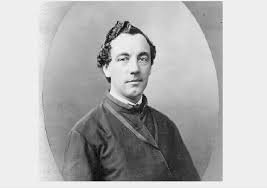
Patrick Francis Healy—born March 27, 1834, in Georgia—was one of those extraordinary individuals who shattered barriers so thoroughly that historians are still marveling at his achievements. In 1874, he became the first African American to earn the title of bishop in the United States when appointed Bishop of Portland, Maine. But that’s just one line in a resume that includes becoming president of Georgetown University, transforming American Catholic education, and advocating tirelessly for marginalized communities.
But here’s what makes Healy’s story even more complex and fascinating: he was born to an Irish immigrant father and a mixed-race enslaved mother, creating an identity that straddled multiple worlds in 19th-century America—a time when such complexity could be both advantage and enormous liability.
Healy’s father, Michael Healy, immigrated from Ireland during that great wave of Irish emigration driven by famine and economic desperation. He came from counties Kilkenny and Wexford, regions in Ireland’s southeast known for their rich history, agricultural traditions, and people who valued education despite crushing poverty. Michael brought with him Irish cultural values—emphasis on education, strong Catholic faith, determination to improve circumstances for his children—that would profoundly shape his son’s trajectory.
The intersection of Patrick’s Irish and African American heritage created unique challenges in a society obsessed with racial categorization. Under the racial laws of his time, he was considered Black despite his Irish father and light complexion. Yet his Irish heritage provided access to Catholic education and community that might otherwise have been denied. This dual identity—Irish and African American, privileged by education yet marginalized by race—shaped everything about Healy’s life and mission.
So grab your beverage of choice (and given we’re exploring Irish heritage in the context of 19th-century Catholic education and civil rights pioneering, I’m assuming something appropriately thoughtful), and let’s explore how a man carrying Irish blood from Kilkenny and Wexford became a groundbreaking bishop, university president, and advocate for equity in education—all while navigating the brutal racial politics of post-Civil War America.
Fair warning: this journey involves discussion of slavery, racial discrimination, and the kind of historical complexity that resists simple narratives. But we’ll also celebrate resilience, the transformative power of education, and that particularly Irish refusal to let circumstances—however dire—determine your destiny.
From Kilkenny and Wexford to Georgia: The Healy Family Journey
To understand Patrick Francis Healy, we must start with his father Michael’s journey from Ireland to America—because that Irish immigrant story set the foundation for everything that followed.
Michael Healy emigrated from Ireland during the mid-19th century, specifically from counties Kilkenny and Wexford. These southeastern counties were agricultural regions where tenant farming dominated and poverty was endemic even before the Great Famine devastated Ireland.
The Great Famine (1845-1852) was the catalyst for massive Irish emigration, killing over a million people and forcing another million to flee. But economic hardship existed before the famine and persisted after. British colonial policies had created systems where Irish Catholics owned virtually no land, paid crushing rents to absentee landlords, and survived on potatoes because that was the only crop that could feed a family from a small plot.
When the potato blight hit, it wasn’t just crop failure—it was catastrophe. People starved to death while Ireland continued exporting food to England. The British government’s response was criminally inadequate, rooted in ideologies that blamed Irish poverty on Irish moral failings rather than systemic oppression.
Michael Healy left this nightmare, boarding one of those infamous “coffin ships”—overcrowded, disease-ridden vessels where passengers died so regularly that bodies were thrown overboard throughout the crossing. If you survived the Atlantic (and many didn’t), you arrived in America to face “No Irish Need Apply” signs, anti-Catholic discrimination, and brutal working conditions.
But Michael had something many Irish immigrants lacked: some education and resources that allowed him to establish himself more successfully than most. He eventually became a plantation owner in Georgia—a choice that’s morally complicated and historically significant. As an Irish immigrant, he’d experienced discrimination and oppression. Yet he participated in the enslavement of African Americans, including the woman who’d become mother to his children.
This moral complexity is important context. Irish immigrants’ relationship with slavery and racial politics in America is fraught and contradictory. Some, having experienced oppression, became allies in abolitionist movements. Others, desperate to establish themselves in American society, participated in or tacitly supported slavery and later Jim Crow systems. Michael Healy’s choices reflect this complicated history.
Michael and his enslaved partner, Mary Eliza Smith, had ten children together, including Patrick. Under slavery laws, the children inherited their mother’s enslaved status regardless of their father’s freedom or Irish heritage. Michael, however, refused to accept this. He sent his children north to be educated, ensuring they’d have opportunities he’d fought to create for them.
Irish Values, American Education: Cultural Influence on Identity
The Irish cultural values Michael Healy brought from Kilkenny and Wexford profoundly shaped how he approached his children’s futures—and those values, in turn, shaped Patrick Francis Healy’s identity and mission.
Irish culture places enormous emphasis on education. Partly this stems from centuries when education was pathway to advancement for people otherwise systematically excluded from power and opportunity. Under British rule, Catholics were denied education; hedge schools (illegal outdoor schools) taught Irish children in secret. This history created cultural reverence for learning—education wasn’t just practical tool; it was resistance, preservation, advancement.
Michael Healy embodied this value. Despite the enormous risks involved in sending his mixed-race children to northern schools (they could have been kidnapped and sold into slavery), he prioritized their education above safety. He understood that education was the only inheritance that couldn’t be taken away, the only advantage that might protect them in hostile world.
Irish Catholicism also profoundly influenced the family. The Catholic Church, despite its many failings, provided community and structure for Irish immigrants. For the Healy children, Catholicism offered institutional framework within which they could pursue education and careers—the Church, for all its problems, was less rigidly racist than many American Protestant institutions.
Irish culture values storytelling, community, and maintaining dignity despite hardship. These values appear throughout Patrick’s life: his emphasis on education as transformative force, his commitment to uplifting marginalized communities, his refusal to let racial discrimination destroy his sense of purpose or worth.
The Irish understanding of oppression—centuries of occupation, famine, discrimination—might have given Patrick framework for understanding his own experiences with racism. Irish people knew what it meant to be considered inferior, to face systematic exclusion, to survive through resilience and community support. While Irish and African American experiences of oppression differed enormously in specifics, some underlying dynamics resonated.
Irish culture also emphasizes paradox and complexity—the ability to hold contradictory truths simultaneously. Patrick’s life was defined by paradox: son of Irish immigrant and enslaved woman, legally Black but culturally formed by Irish Catholicism, educated in institutions that served white elites while committed to serving marginalized communities. His ability to navigate these contradictions might reflect Irish cultural comfort with complexity.
Breaking Barriers: Georgetown and Beyond
Patrick Francis Healy’s achievements were extraordinary by any measure, made more remarkable by the racial barriers he navigated throughout his career.
After graduating from Georgetown University in 1850 (itself a significant achievement), Healy pursued further studies and entered the priesthood. His intellectual brilliance was undeniable—he earned a doctorate in philosophy from Belgium’s Catholic University of Louvain, becoming one of the most educated men in America regardless of race.
In 1874, Healy became Georgetown University’s president—effectively the first African American to lead a major American university, though this fact was largely obscured during his lifetime because he could pass for white and rarely discussed his mother’s race publicly.
As Georgetown’s president, Healy transformed the institution. He modernized curriculum, expanded academic programs (particularly in law and medicine), improved facilities, and elevated Georgetown’s academic reputation significantly. His educational philosophy emphasized inclusivity and access—he believed education should uplift all students, not just wealthy elites.
This commitment to educational equity directly reflected his Irish heritage. Irish Catholics had been systematically denied education for centuries; Michael Healy had risked everything to educate his children; Patrick understood personally that education was transformative power, pathway to advancement for marginalized communities.
Healy’s presidency also marked him as scholar—particularly in philosophy and theology. His scholarship reflected his Irish Catholic formation: emphasis on rigorous intellectual inquiry combined with moral and spiritual development, belief that education should form character as well as intellect.
His appointment as Bishop of Portland, Maine, in 1874 made him the first African American bishop in the United States. This groundbreaking achievement highlighted the complex intersection of race and religion in 19th-century America. The Catholic Church, while hardly free from racism, sometimes created spaces where talent and dedication could overcome racial barriers—at least partially.
Throughout his ecclesiastical career, Healy emphasized education and moral development, advocating for schools serving both boys and girls. He promoted rights of underrepresented communities, working toward more equitable society. These commitments reflected values absorbed from Irish Catholic upbringing: education as sacred duty, service to community, defending the marginalized.
Irish Ancestry, Catholic Faith, and Social Justice
Patrick Francis Healy’s Irish heritage profoundly shaped his Catholic faith and his approach to leadership—in ways both obvious and subtle.
Irish Catholicism isn’t just religious practice; it’s cultural identity, community structure, historical continuity. For Irish people, Catholicism survived centuries of British attempts to eradicate it. Maintaining Catholic faith was itself resistance, preservation of Irish identity against colonial erasure.
Healy inherited this understanding of Catholicism as more than just personal spirituality—it was communal identity, framework for resistance against injustice, source of values that transcended individual circumstances.
The Irish Catholic emphasis on humility, service, and community responsibility shaped Healy’s leadership style. He wasn’t interested in power for its own sake; he viewed leadership as opportunity to serve, to create positive change, to uplift those with fewer advantages.
His commitment to educational reform traced directly to Irish immigrant experience. Irish immigrants faced discrimination, were denied opportunities, struggled against systems designed to exclude them. Healy understood these dynamics personally and applied them to his advocacy for educational access for all students, particularly those from disadvantaged backgrounds.
Irish Catholicism also emphasizes suffering as transformative, as potentially redemptive when met with faith and resilience. This theological framework might have helped Healy navigate the enormous challenges of being a Black man (legally if not visibly) in positions typically reserved for white men. He understood suffering not as divine punishment but as crucible that could forge character and purpose.
The Irish Catholic tradition of social justice—standing up for the poor, defending the marginalized, challenging unjust systems—informed Healy’s work throughout his career. This wasn’t abstract theology; it was practical commitment to creating more equitable society.
Healy’s faith and his Irish heritage combined to create leadership characterized by inclusivity and compassion—marking departure from more exclusive practices common in 19th-century American Catholicism. He challenged racial and socioeconomic barriers because his faith and his heritage both taught him that dignity belongs to all people regardless of circumstance.
Legacy: Honoring Complexity
Patrick Francis Healy’s legacy is complex, multifaceted, and profoundly important—particularly in understanding the intersections of Irish immigration, African American history, Catholic education, and American social justice movements.
Today, Healy is commemorated in multiple ways. Georgetown University honors him prominently—Healy Hall, the university’s iconic building, bears his name. The Patrick Francis Healy Chair in Religious Studies continues his commitment to academic excellence and inclusivity.
The annual “Healy Award” recognizes individuals exemplifying leadership, academic excellence, and commitment to social justice—values Healy embodied throughout his career. Commemorative events and lectures periodically celebrate his life and contributions.
But Healy’s legacy also prompts difficult questions. Georgetown University, which he led so effectively, has had to confront its own involvement in slavery—the university sold enslaved people to fund its operations, including during periods connected to Healy’s tenure. This uncomfortable history complicates simple celebration of his achievements.
Healy himself navigated these complexities by largely obscuring his African American heritage, passing for white throughout much of his career. This choice was survival strategy in viciously racist society, but it also meant his groundbreaking achievements as first African American university president and bishop weren’t fully recognized during his lifetime.
His Irish heritage provided advantages—access to Catholic education and institutions, ability to pass for white, cultural framework that valued education and faith. Yet his African American heritage meant he faced barriers, discrimination, and dangers that Irish immigrants, despite their own struggles, didn’t experience.
Understanding Healy’s legacy requires holding these complexities simultaneously: celebrating his extraordinary achievements while acknowledging the tragic necessity of obscuring his full identity, honoring his Irish heritage while recognizing his African American roots, appreciating his transformative work in education while confronting the institutions’ complicity in slavery.
Conclusion: Heritage as Foundation, Not Limitation
So what have we learned from exploring Patrick Francis Healy’s Irish ancestry? Perhaps most importantly, that heritage provides cultural foundation—values, perspectives, frameworks—but doesn’t determine destiny. How we engage with heritage, what we make of our inheritance, remains profoundly personal choice.
Healy’s Irish roots, traced through his father Michael from Kilkenny and Wexford, provided crucial advantages: access to Catholic education, cultural values emphasizing learning and moral development, community that might support his advancement. These Irish cultural gifts combined with his mother’s strength and his own extraordinary intellect to create someone who could navigate impossible circumstances and achieve remarkable things.
The journey from famine-era Ireland to Georgetown’s presidency spans continents, crosses racial boundaries, challenges simple narratives about identity and achievement. Michael Healy couldn’t have imagined his son would lead a major university and become a bishop. But he’d recognize the values: education as sacred duty, faith as moral foundation, service to community, resilience through adversity.
Patrick Francis Healy’s story reminds us that heritage is complex, that identity is multifaceted, that the most important historical figures often embody contradictions we’d rather not confront. He was Irish and African American. He benefited from racial passing while legally being Black. He led institutions while advocating for those excluded from them. He achieved extraordinary things while navigating extraordinary constraints.
For those of us exploring Irish heritage, Healy’s story offers important lessons: our ancestors’ experiences of oppression don’t automatically make us allies to other marginalized groups—that’s choice we must make consciously. Our cultural values around education, faith, community can be powerful forces for good, but only if we apply them equitably and inclusively.
So here’s to Patrick Francis Healy—scholar, bishop, university president, and bearer of Irish and African American heritage who used education to challenge injustice and create opportunities for those denied them.
Here’s to Michael Healy, who left Kilkenny and Wexford seeking better life and ensured his children received the education that would transform their possibilities.
Here’s to the complexity of American history, where Irish immigration, African American experience, Catholic education, and social justice movements intersect in ways both inspiring and uncomfortable.
And here’s to all of us with Irish ancestry—may we honor our heritage not just through celebration but through commitment to the values at their best: education, service, justice, dignity for all people regardless of circumstance.
As the Irish would say: Sláinte to heritage that challenges us, to histories that complicate simple narratives, to ancestors whose choices created our opportunities, and to the ongoing work of creating more just and equitable society. And may we all have the courage to confront our histories honestly while building futures that honor the best of what our ancestors taught us.
Now if you’ll excuse me, I need to sit with the complexity of this story—of a man who carried Irish blood from Kilkenny, who led Georgetown University, who became America’s first Black bishop, whose achievements were groundbreaking precisely because they challenged every assumption about who could achieve such things. Healy’s legacy reminds us that the most important stories resist simple telling, and that’s exactly why they’re worth exploring deeply.
Erin go Bragh—Ireland forever, even when Irish heritage intersects with other identities in complex ways, even when the story challenges comfortable narratives, even when honoring the past requires confronting uncomfortable truths. The spirit persists where we engage it honestly.
Staff picks
-

“Get Lucked Up” Unisex T-Shirt – Shamrock Shenanigans
Select optionsPrice range: $19.99 through $25.99 -

“Leprechaun Cat” Unisex T-Shirt – Purrfectly Lucky
Select optionsPrice range: $19.99 through $25.99 -

4-Leaf Clover USA Flag Unisex T-Shirt – Irish American Pride Tee in Green for Heritage & Gifting
Select optionsPrice range: $22.99 through $27.89 -

American Grown with Irish Roots Unisex T-Shirt – USA & Ireland Flag Heritage Tee
Select optionsPrice range: $22.99 through $27.89