Introduction: The Firebrand with Celtic Blood
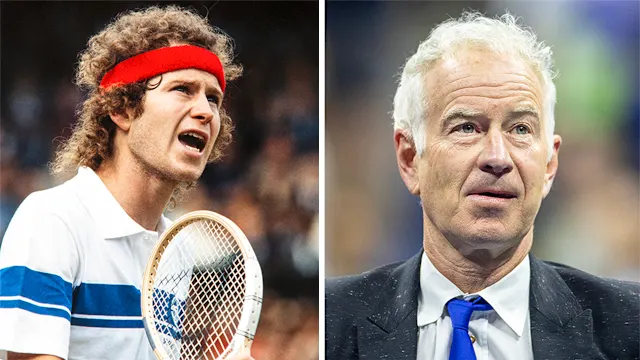
John McEnroe—born February 16, 1959, in Wiesbaden, West Germany (where his father was stationed with the U.S. Air Force)—is one of those athletes whose name transcends sport. He’s not just a tennis legend; he’s a cultural icon whose personality became as famous as his groundbreaking left-handed serve-and-volley game.
With seven Grand Slam singles titles and nine Grand Slam doubles titles, McEnroe dominated tennis during the late 1970s and 1980s, engaging in epic rivalries with Björn Borg and Jimmy Connors that defined an era. But statistics alone don’t capture McEnroe’s impact. His fiery temperament, his passionate outbursts at umpires, his infamous “You cannot be serious!” exclamation—these made him simultaneously the most loved and most hated player in tennis, depending on who you asked and when you asked them.
McEnroe’s on-court intensity challenged tennis’s traditional country-club gentility. He wore his emotions openly, argued calls passionately, and played with an intensity that made every match feel like warfare conducted with rackets. Critics called him a brat; fans called him authentic. Either way, nobody could look away when McEnroe was on court.
Beyond his playing career, McEnroe transitioned seamlessly into television commentary, where his candid insights and sharp wit continue engaging tennis fans worldwide. He’s remained relevant across multiple decades—an achievement almost as impressive as his athletic accomplishments.
But here’s something that adds fascinating dimension to understanding McEnroe’s intensity and passion: he’s deeply, authentically Irish. His paternal family traces back to County Antrim in Ulster, and the McEnroe surname itself derives from the Gaelic “Mac Eain Ruaidh,” meaning “son of the red-haired one” (which is delightfully appropriate given McEnroe’s fiery temperament).
Now, you might be thinking, “Does Irish ancestry really explain why someone yells at tennis umpires?” Fair question. But understanding Irish cultural values—the passion, the emotional expressiveness, the refusal to accept injustice quietly, the fierce competitive spirit—actually provides interesting context for what made McEnroe so distinctive on court.
So grab your beverage of choice (and given we’re exploring Irish heritage in the context of tennis’s most volatile genius, I’m assuming something strong enough to handle the intensity), and let’s explore how a New Yorker with Ulster roots became tennis’s most compelling firebrand, how Celtic cultural influences might have shaped one of sport’s most fascinating personalities, and why heritage matters even when you’re dominating Wimbledon Centre Court.
Fair warning: this journey involves discussion of Irish emigration, passionate emotional expression, and the kind of intensity that makes most people’s commitment to anything look half-hearted. But we’ll also celebrate authenticity, competitive spirit, and that particularly Irish refusal to suppress genuine emotion even when propriety demands it—which is exactly what made McEnroe revolutionary.
The McEnroe Name: From Ulster to America
Let’s start with the name itself, because “McEnroe” carries centuries of Irish history and cultural meaning in its syllables.
The surname McEnroe derives from the Gaelic “Mac Eain Ruaidh,” which translates to “son of Eain the red” or “son of the red-haired one.” This patronymic naming convention is classically Irish—identifying family through male lineage and often including physical descriptors that became hereditary surnames even when subsequent generations didn’t share the original trait.
The McEnroe family’s origins trace to County Antrim in Ulster, the northern province of Ireland. Antrim is fascinating historically—sitting in Ireland’s northeast, it’s been cultural crossroads for centuries, influenced by Scottish proximity (just 13 miles across the North Channel at its closest point), waves of plantation and settlement, and complex political dynamics that shaped Irish history.
Ulster generally, and Antrim specifically, experienced significant upheaval during the 17th-century Plantation period when British and Scottish settlers were given Irish land, displacing native Irish families. The resulting cultural mixing created complex identities—Ulster Scots, Anglo-Irish, native Irish Catholic—that persist today and contributed to Northern Ireland’s troubled 20th-century history.
The McEnroe family would have navigated these complexities, maintaining Irish identity through periods when that identity was politically fraught. Like many Irish families, they eventually emigrated—part of waves of Irish people leaving throughout the 19th and early 20th centuries seeking opportunities their homeland couldn’t provide.
John McEnroe’s paternal grandfather made the journey from Antrim to America, settling in the United States and establishing the American branch of the McEnroe family. He brought with him Irish cultural values, traditions, and stories that would be passed down through generations—including to a grandson who’d become one of tennis’s most unforgettable personalities.
Irish Emigration: The Broader Context
To understand the McEnroe family’s journey from Antrim to America, we need context about why millions of Irish people made similar journeys throughout the 19th and early 20th centuries.
The Great Famine (1845-1852) was the catalyst for the largest emigration wave, killing over a million people and forcing another million to flee. But Irish emigration continued long after the famine, driven by ongoing economic hardship, limited opportunities, and political dynamics that made staying in Ireland feel impossible for many families.
In Ulster specifically, the situation was complex. The region was more industrialized than southern Ireland, with linen manufacturing and shipbuilding (Belfast built the Titanic) providing employment. But economic opportunities weren’t distributed equally, and many families still faced crushing poverty, limited advancement prospects, and political tensions that made emigration attractive.
Irish emigrants faced brutal challenges in America. “No Irish Need Apply” signs might have become less common by the early 20th century, but discrimination persisted. Irish Catholics were considered racially inferior by many Americans, religiously suspect, culturally backward. They took difficult jobs—construction, factory work, domestic service—building American infrastructure while facing constant prejudice.
But Irish immigrants had remarkable resilience. They built tight-knit communities in American cities—particularly New York, Boston, Chicago—where cultural identity could survive, where you could find work through connections, where familiar accents and traditions provided comfort in hostile environment.
The Irish emphasis on education became particularly important in America. Education was pathway out of poverty, route to advancement, way to ensure children had better opportunities than parents. Irish-American families often sacrificed enormously to educate their children, understanding that knowledge was the only inheritance that couldn’t be taken away.
The McEnroe family embodied this immigrant experience: leaving Antrim, establishing themselves in America, maintaining Irish identity while building American lives, prioritizing education and advancement, passing down cultural values that would persist across generations.
Irish Cultural Values and the McEnroe Temperament
Now here’s where it gets fascinatingly speculative: how might Irish cultural values have contributed to John McEnroe’s distinctive personality and playing style? More profoundly than you might think.
Emotional expressiveness: Irish culture values authentic emotional expression. We’re not a culture that suppresses feelings or maintains stiff upper lips (that’s British, and we spent centuries resisting them). Irish people express joy loudly, mourn deeply, argue passionately. This cultural comfort with emotional expression appears throughout McEnroe’s career—he didn’t hide frustration, suppress anger, or fake composure. He was authentically, visibly emotional, which was revolutionary in tennis’s traditionally restrained environment.
Passion and intensity: Irish culture values passion—caring deeply about things, engaging fully rather than maintaining cool detachment. McEnroe’s intensity on court, his complete investment in every point, his inability to play casually—these reflect cultural values that prize passion over cool reserve.
Challenging injustice: Irish history is full of resistance against oppression, of speaking up when things are wrong, of refusing to accept injustice quietly. McEnroe’s willingness to challenge umpire calls, argue what he perceived as wrong decisions, speak up when he felt wronged—this aligns with Irish cultural tradition of vocal resistance to perceived injustice. Whether the calls were actually wrong matters less than the cultural framework that said speaking up was appropriate response.
Competitive spirit: Irish culture is intensely competitive—from sports to music to storytelling, there’s cultural appreciation for excellence and winning. McEnroe’s ferocious competitiveness, his hatred of losing, his drive to dominate opponents—these reflect values absorbed from Irish cultural upbringing where winning matters and half-hearted effort is disrespectful.
Authenticity over propriety: Irish culture values being genuine over being polite when the two conflict. You’re supposed to be yourself, express what you actually feel, maintain authenticity even when it makes others uncomfortable. McEnroe’s refusal to conform to tennis’s country-club etiquette, his insistence on being himself even when it generated criticism—very Irish approach to social expectations.
Community and loyalty: Despite his individual sport success, McEnroe always emphasized team aspects—his Davis Cup commitment, his doubles partnerships, his coaching relationships. Irish culture’s emphasis on community and loyalty appears in how he approached these collaborative elements of tennis.
Quick wit: Irish culture values sharp, clever verbal expression—the ability to think quickly, phrase things memorably, use language as weapon and shield. McEnroe’s legendary one-liners, his sharp commentary, his quick verbal responses—these reflect Irish cultural appreciation for wit.
The Irish Diaspora in American Sports
John McEnroe exists within much larger tradition of Irish-Americans who’ve profoundly influenced American sports—and understanding this context enriches appreciation of his particular contribution.
Irish immigrants and their descendants have dominated numerous American sports. Boxing, for instance, was heavily Irish-American sport in early 20th century. Baseball saw legendary Irish-American players and managers. Basketball, football, hockey—all feature significant Irish-American representation and influence.
This Irish-American sporting tradition brought certain cultural values: toughness, resilience, competitive intensity, working-class pride, team loyalty, entertaining personality. These weren’t just individual traits; they were cultural patterns reflecting Irish immigrant experience and values.
McEnroe, competing in tennis—traditionally upper-class, WASP-dominated sport—brought distinctly Irish-American energy to country-club environment. His working-class emotional expressiveness, his refusal to conform to genteel expectations, his intense competitiveness—these challenged tennis’s traditional cultural assumptions about how players should behave.
The Irish-American community embraced McEnroe enthusiastically, recognizing him as one of their own who’d succeeded in elite environment while maintaining authentic Irish-American personality. He represented Irish-American values—passion, competitiveness, authenticity, refusal to suppress identity to fit in—in sport that traditionally excluded those values.
McEnroe’s success opened doors for more diverse personalities in tennis, demonstrating that you didn’t need to conform to country-club gentility to excel. His Irish-American authenticity made tennis more accessible, more exciting, more human.
Public Embrace of Irish Heritage
John McEnroe hasn’t just acknowledged his Irish ancestry—he’s actively celebrated and embraced it throughout his career and beyond.
During the 1991 Davis Cup, McEnroe famously wore an Ireland shirt while competing, publicly declaring his Irish allegiance and resonating powerfully with Irish and Irish-American fans. This wasn’t subtle nod to heritage; it was bold public statement about identity and cultural pride.
McEnroe regularly attends St. Patrick’s Day celebrations and events honoring Irish culture, using his platform to promote positive image of Irish identity. These aren’t just celebrity appearances; they’re genuine engagement with cultural community that shaped his family and values.
In interviews, McEnroe frequently discusses his Irish background with evident pride, sharing family stories and explaining how Irish heritage influenced his identity and personality. He’s spoken about visiting County Antrim, connecting with his family’s ancestral homeland, experiencing the landscapes and culture his grandparents knew before emigration.
Relatives have shared family artifacts—letters, photographs—documenting the McEnroe family’s journey from Ireland to America, preserving immigration story across generations. McEnroe has honored these family histories publicly, acknowledging the sacrifices previous generations made to create opportunities he enjoyed.
The Irish community has reciprocated enthusiastically, viewing McEnroe as representative of their culture on global stage. Irish people take pride in countrymen who achieve greatness internationally, and McEnroe—with his fiery spirit and competitive nature—embodies the passionate intensity commonly associated with Irish identity.
This reciprocal relationship between McEnroe and Irish community has enhanced his appeal beyond tennis fans. He’s cultural icon transcending sport, representing Irish-American identity authentically and proudly.
Irish Influence on Personality and Legacy
McEnroe’s Irish heritage profoundly influenced his personality, playing style, and ultimate legacy in tennis—in ways both obvious and subtle.
His emotional expressiveness—the visible frustration, the passionate celebrations, the inability to hide feelings—reflects Irish cultural comfort with authentic emotional display. In sport and culture that valued emotional restraint, McEnroe’s Irish-influenced authenticity was revolutionary.
His competitive intensity, his hatred of losing, his complete investment in every point—these reflect Irish cultural values around competition and excellence. Half-hearted effort is disrespectful in Irish culture; you compete with everything you have or you don’t compete at all.
His willingness to challenge authority, argue calls, speak up when he felt wronged—this aligns with Irish historical tradition of resistance to perceived injustice. Whether specific calls were wrong matters less than the cultural framework that said vocal protest was appropriate response.
His quick wit, his memorable one-liners, his sharp commentary—these reflect Irish cultural appreciation for clever verbal expression. The Irish have been using language as weapon and entertainment for centuries; McEnroe continued that tradition on tennis courts.
His loyalty to Davis Cup, his commitment to team competition despite being individual sport star, his long-term partnerships in doubles—these reflect Irish cultural values around community and loyalty. Individual achievement matters, but so does supporting your people.
McEnroe’s legacy extends beyond statistics. He changed tennis by being authentically himself, by refusing to conform to expectations about how champions should behave, by demonstrating that passion and intensity weren’t incompatible with excellence. That’s very Irish—maintaining authentic identity even when conformity would be easier.
Symbol of Irish Pride
John McEnroe has become symbol of Irish pride both within tennis and in broader cultural context—representing Irish-American identity authentically and unapologetically.
His philanthropic work includes supporting Irish causes—educational initiatives, cultural programs—using his influence to give back to community that shaped his values. This commitment to community support reflects Irish cultural values around helping your own.
His public advocacy for Irish culture, his attendance at cultural events, his willingness to discuss heritage openly—these promote positive image of Irish identity internationally. When someone of McEnroe’s stature embraces Irish heritage proudly, it elevates cultural visibility and challenges negative stereotypes.
For young athletes of Irish descent, McEnroe serves as role model—proof that you can achieve elite success while maintaining authentic Irish-American identity, that you don’t need to suppress cultural personality to excel, that passion and intensity are strengths rather than weaknesses.
His story resonates particularly powerfully with Irish-Americans who’ve navigated between cultures—maintaining Irish identity while succeeding in American contexts, honoring heritage while building contemporary lives. McEnroe embodies this balance, demonstrating that Irish and American identities aren’t contradictory but complementary.
Conclusion: Passion, Heritage, and Authenticity
So what have we learned from exploring John McEnroe’s Irish ancestry? Perhaps most importantly, that cultural heritage profoundly shapes personality, values, and approach to challenges—often in ways we don’t consciously recognize.
McEnroe’s Irish roots, traced through his paternal family back to County Antrim, represent more than genealogical facts. They represent cultural inheritance—values about emotional authenticity, competitive intensity, challenging injustice, maintaining genuine personality despite social pressure—that shaped one of tennis’s most revolutionary figures.
The journey from Antrim to American tennis dominance spans oceans, cultures, and social contexts. McEnroe’s grandfather couldn’t have imagined his descendant would dominate Wimbledon while arguing with umpires in ways that would become legendary. But he’d recognize the values: authenticity over conformity, passion over restraint, speaking up when you believe something’s wrong, competing with everything you have.
How does Irish heritage influence a tennis champion? Through cultural values absorbed through family, through frameworks for understanding emotion and competition, through models of how to navigate between maintaining authentic identity and achieving success in elite environments.
McEnroe revolutionized tennis by being authentically himself—emotionally expressive in restrained sport, passionately intense in genteel environment, vocally challenging in deferential culture. These weren’t just personality quirks; they reflected Irish cultural values that shaped his understanding of authenticity, competition, and self-expression.
For those of us with Irish ancestry (or any immigrant heritage), McEnroe’s story reminds us that heritage matters not as limitation but as foundation, not as nostalgia but as living influence informing present identity. Those Irish ancestors who crossed the Atlantic, who maintained cultural values while building American lives, who ensured cultural heritage survived across generations—their courage and authenticity live on in descendants who refuse to suppress identity to conform.
So here’s to John McEnroe—tennis legend, cultural icon, TV commentator, and unapologetically Irish-American firebrand who changed sport by being authentically himself.
Here’s to the McEnroe family, who carried Ulster values across the ocean and through generations, ensuring Irish cultural identity survived American assimilation.
Here’s to County Antrim and all the Irish places that sent their people abroad while remaining alive in hearts, values, and personalities that refuse to be suppressed.
And here’s to all of us with Irish ancestry—may we honor our ancestors by being authentically ourselves, by competing passionately, by speaking up when things are wrong, by refusing to suppress genuine personality to meet others’ expectations.
As the Irish would say: Sláinte to heritage, to the passion that makes life worth living, to the authenticity that creates genuine connection, to the competitive spirit that drives excellence, and to the refusal to suppress who you really are just because it makes others uncomfortable.
Now if you’ll excuse me, I need to watch McEnroe highlights with entirely new appreciation for how Irish cultural values around emotional authenticity, competitive intensity, and challenging injustice might inform the most passionate tennis the world has ever seen. He made it impossible to look away for decades—and I suspect that’s exactly what his Antrim ancestors would have wanted: descendants who compete with everything they have, who speak their truth loudly, who refuse to be anyone other than authentically themselves.
Erin go Bragh—Ireland forever, even when you’re dominating Wimbledon while yelling “You cannot be serious!” at umpires, even when heritage manifests through fiery temperament rather than obvious cultural markers. The spirit persists where we honor it, and John McEnroe honored it through every passionate outburst, every intense competition, every moment of glorious, authentic, unapologetically Irish self-expression.
🎾 🍀
Shop new arrivals
-

“Get Lucked Up” Unisex T-Shirt – Shamrock Shenanigans
Price range: $19.99 through $25.99 -

“Leprechaun Cat” Unisex T-Shirt – Purrfectly Lucky
Price range: $19.99 through $25.99 -

4-Leaf Clover USA Flag Unisex T-Shirt – Irish American Pride Tee in Green for Heritage & Gifting
Price range: $22.99 through $27.89 -

American Grown with Irish Roots Unisex T-Shirt – USA & Ireland Flag Heritage Tee
Price range: $22.99 through $27.89 -

Biting Lip Irish Pop Art Unisex T-Shirt – Sexy Green Shamrock Tee with Glitter Vibes
Price range: $22.99 through $27.89